
What is the best AI for pest control in Ann Arbor?
Short answer
The best AI for pest control in Ann Arbor is a unified, fully managed system rather than a collection of DIY software plugins. A connected architecture backed by dedicated deployment engineers prevents integration breakdown during the intense late-August UMich rental turnover and spring Huron River flood season. Pest AI builds and maintains these tailored AI systems so local operators can capture every call, satisfy institutional compliance standards, and scale across Washtenaw County.
the ann arbor operating environment and seasonal demand spikes
Ann Arbor presents an operational curve unlike any other market in Washtenaw County. Thousands of University of Michigan student rentals near Kerrytown, South University, and Central Campus turn over on a single late-August lease date. This single week produces an intense surge of cockroach and bed bug calls that can easily overwhelm a standard dispatch office. Before the August turnover arrives, spring snowmelt and seasonal rainfall push the Huron River over its banks near Gallup Park and along the Argo Pond millrace. This rising water table drives moisture and camel cricket complaints in nearby basements, creating a localized call spike tied directly to flood-crest timing. Meanwhile, historic neighborhoods like the Old West Side and Burns Park contain homes built between 1890 and 1920. Their original wood siding, root cellars, and fieldstone foundations create continuous entry points for carpenter ants and box elder bugs. These historic structures require completely different service protocols than the newer residential subdivisions in Pittsfield Township or Scio Township. Selecting the best AI for pest control in Ann Arbor requires an architecture capable of absorbing these severe volume swings without dropping calls, misclassifying structural pest risks, or failing during the late-August turnover window.
- UMich rental turnover concentrates call volume into a single week in late August
- Spring Huron River flooding near Gallup Park drives localized basement moisture calls
- Century-old housing stock in Old West Side requires specific structural pest intake
- Suburban expansion in Scio and Pittsfield Townships demands flexible route scheduling
the lattice problem in local pest control operations
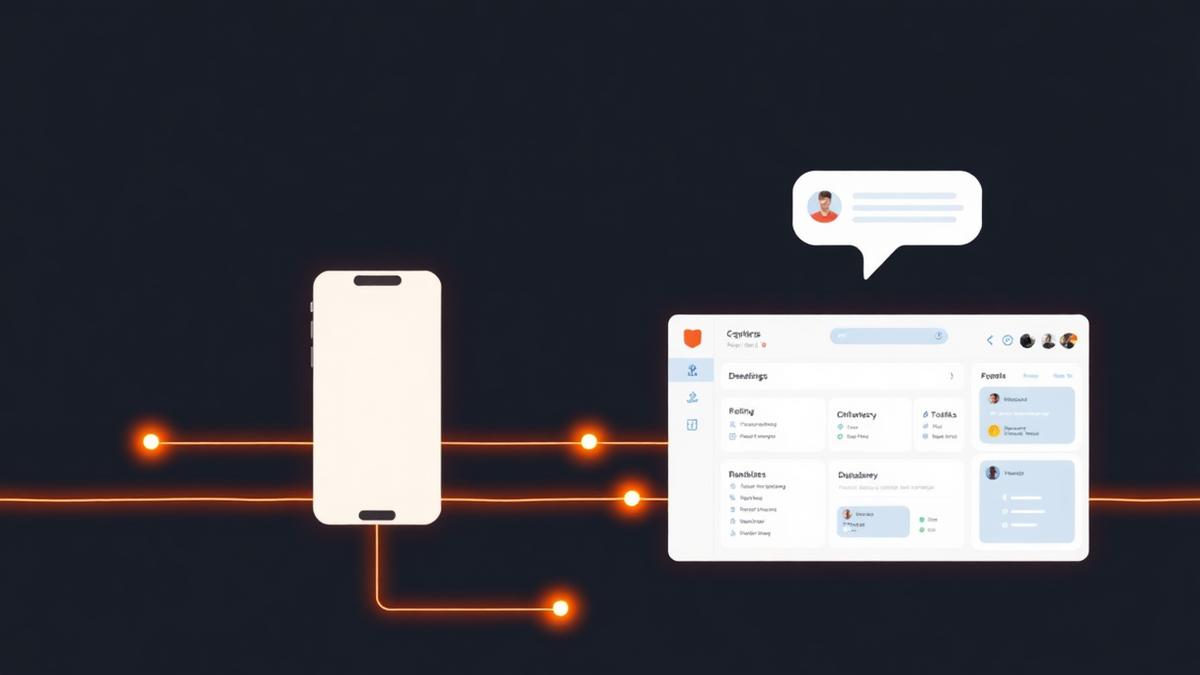
When pest operators attempt to modernize, they often assemble a lattice of single-purpose software plugins. One vendor handles web chat, another provides automated phone answering, a third manages route optimization, and a fourth handles direct mail campaigns. In Ann Arbor, this fragmented approach creates integration debt that nobody owns. When the August UMich rental move-in week strikes, API connections between disconnected plugins break under the heavy call volume. A lead captured by a third-party chat widget fails to sync with FieldRoutes or PestPac, causing missed appointments in South University while incoming calls ring unanswered. When Huron River flooding drives camel crickets into Old West Side basements, separate routing and marketing tools fail to coordinate targeted outreach. Instead of running a cohesive business, the operator spends high-demand weeks managing software glitches. The solution is not buying more software subscriptions, but implementing a unified AI system backed by dedicated deployment engineers. Pest AI acts as an implementation partner, building connected AI systems where the AI Sales System, known as PestCRM, seamlessly handles inbound inquiries, coordinates with scheduling workflows, and triggers offline outreach without creating technical debt.
- Disconnected software plugins create unowned integration debt across your tech stack
- API failures during peak August volume lead to dropped leads and lost rental contracts
- Isolated tools fail to coordinate geographic responses to spring flood conditions
- A managed implementation model replaces software maintenance with engineering support
evaluating ai systems against university and healthcare standards
A major portion of commercial revenue in Ann Arbor flows through institutional properties, including University of Michigan research laboratories and the Michigan Medicine hospital complex. These facilities operate under rigorous compliance frameworks, institutional biosafety guidelines, and strict accreditation standards. Generic off-the-shelf software tools cannot generate the structured, auditable service documentation these institutional accounts require. A point-solution chatbot might capture an initial inquiry from a laboratory facility manager, but it cannot verify whether the incoming request matches specific compliance protocols or trigger the proper documentation workflow. An operator evaluating AI systems must demand complete integration with compliance reporting mechanisms. Pest AI designs AI systems specifically to meet these institutional standards. When a call or service request originates from a research campus, our deployment engineers configure the AI Sales System to log detailed account notes, capture regulatory requirements, and route urgent service requests directly to certified commercial technicians. Because Pest AI operates as an implementation partner rather than a DIY software vendor, we build, maintain, and refine these specialized workflows so the operator can deliver documented, accreditation-grade pest service across every high-value commercial account.
- Institutional accounts require auditable service logs matching biosafety standards
- Generic AI tools lack the customization needed for Michigan Medicine compliance
- Engineered workflows route commercial calls to certified specialists instantly
- Implementation partners maintain reporting accuracy so operators avoid compliance gaps
technical criteria for handling spring flooding and historic housing stock
Evaluating AI systems for Ann Arbor requires looking closely at how technology handles unique geography and housing stock. In neighborhoods bordering the Huron River, flood-driven basement moisture generates predictable seasonal demand. An effective AI system must identify when an incoming call from the Gallup Park or Argo Pond area represents a moisture-driven infestation, allowing dispatchers to offer appropriate perimeter and basement treatments immediately. In the Old West Side and Burns Park, century-old wood-frame construction and fieldstone foundations demand accurate pest identification during the initial call. An AI intake channel must distinguish between box elder bugs congregating on historic wood siding and carpenter ants active inside fieldstone cellars. Furthermore, geography changes rapidly as technicians move outward toward the Dexter border or south into Pittsfield Township, where newer housing developments require standard maintenance programs rather than historic remediation. Operators should evaluate AI systems based on their ability to ingest geographical and structural context during intake. The best AI system uses this contextual data to price services accurately, assign technicians with appropriate expertise, and adjust schedule routes based on localized demand drivers across Washtenaw County.
- Intake systems must recognize river flood zones to offer targeted basement treatments
- Automated qualification differentiates century-home pests from modern subdivision issues
- Contextual pricing accounts for fieldstone foundations and historic wood siding
- Dynamic routing balances dense central Ann Arbor routes with township coverage
why managed ai systems outperform software subscriptions
Software vendors often sell point solutions that require pest operators to perform their own system integration, setup, and troubleshooting. When August lease turnovers create a massive call surge, local operators do not have time to fix broken workflows or reconfigure phone trees. Pest AI provides an engineered implementation model where our team builds the infrastructure, monitors data pipelines, and maintains the integrations. Rather than leaving the operator to manage disconnected software, we deliver unified AI systems tailored to Ann Arbor's market dynamics. Inbound call answering, web lead conversion, and database reactivation are managed through PestCRM, the AI Sales System. When seasonal outreach is needed before spring river thaws or fall lease renewals, our partners deploy PestMail, a dedicated direct mail system that targets specific historic neighborhoods or township developments with physical print pieces. Unlike digital ads that get ignored by busy property managers, PestMail puts physical offer cards directly into the hands of landlords near South University and homeowners in Burns Park. By pairing PestCRM with PestMail under a fully managed implementation model, operators eliminate technical overhead while maintaining consistent call capture and outbound growth year-round.
- Pest AI operates as an implementation partner, taking full ownership of system architecture
- PestCRM, the AI Sales System, unifies call intake, booking, and database reactivation
- PestMail delivers physical direct mail print campaigns ahead of seasonal demand spikes
- Eliminating technical troubleshooting frees operators to focus on service delivery
building an architecture for long term growth across washtenaw county
Building a scalable pest control business in Ann Arbor requires unifying diverse market segments into a single operational framework. An operator must balance high-volume, short-duration student rental turnover in Kerrytown with steady commercial hospital contracts at Michigan Medicine, seasonal flood responses along the Huron River, and recurring residential routes in Scio Township. Attempting to manage these distinct service profiles across isolated software tools creates operational friction and limits revenue potential. A managed AI architecture solves this by serving as the central nervous system for the business. As incoming calls and digital leads enter the business, the AI Sales System evaluates the submarket, housing age, and service urgency to assign the proper protocol instantly. Routine residential sign-ups in Pittsfield Township are booked automatically, while high-value institutional requests are routed directly to commercial account managers with full documentation pre-populated. As the company expands toward the Dexter border, the AI system continuously learns from local route data to improve scheduling efficiency. Partnering with Pest AI gives local operators the custom infrastructure needed to capture market share, protect profit margins, and scale smoothly.
- Unifies commercial hospital contracts and student rental turnovers in one system
- Automates routine suburban bookings while escalating complex commercial inquiries
- Scales seamlessly across Scio Township, Pittsfield Township, and the Dexter border
- Provides custom engineering support to ensure operational reliability year-round
Signals to check in your own Ann Arbor numbers
- Unanswered call spikes during the late-August University of Michigan student rental move-in week
- Seasonal increase in camel cricket and basement moisture calls following Huron River spring high-water events
- Higher average technician transit times between central historic districts and Pittsfield Township developments
- Rejection or delayed approval of commercial service logs by University of Michigan or hospital facility managers
Where this leads
For most Ann Arbor operators this decision points at the AI Sales System. We are an implementation partner, not a DIY platform, we build the AI systems around how your market actually behaves, hand them over documented, and your team runs them. The national version of this question, without the local specifics, is covered in our AI guide.
Ann Arbor questions we get asked
More Ann Arbor guides
- Should you use AIShould I use AI in my Ann Arbor pest control business?
- Will customers talk to AIWill pest control customers in Ann Arbor talk to AI?
- Speed to leadHow can Ann Arbor pest control companies win with speed-to-lead?
- Best software stackWhat is the best pest control software for Ann Arbor operators?
- Local marketingHow should pest control companies in Ann Arbor market themselves locally?
- Reviews & reputationHow can Ann Arbor pest control companies get more reviews and protect their reputation?
- Seasonal playbookWhat is the seasonal pest control playbook for Ann Arbor?
- Commercial AIHow does AI help commercial pest control accounts in Ann Arbor?
- Hiring vs AIShould Ann Arbor pest control operators hire office staff or use AI?
Related guides in your area
More reading for operators working Ann Arbor, MI and the markets around it.
The same question in nearby markets
More for Ann Arbor
Across Michigan
Want a straight read on your own Ann Arbor numbers? A discovery call is a conversation, not a demo, and we will tell you if you are better off waiting.
Book a Discovery Call