
What is the best AI for pest control in Sebring?
Short answer
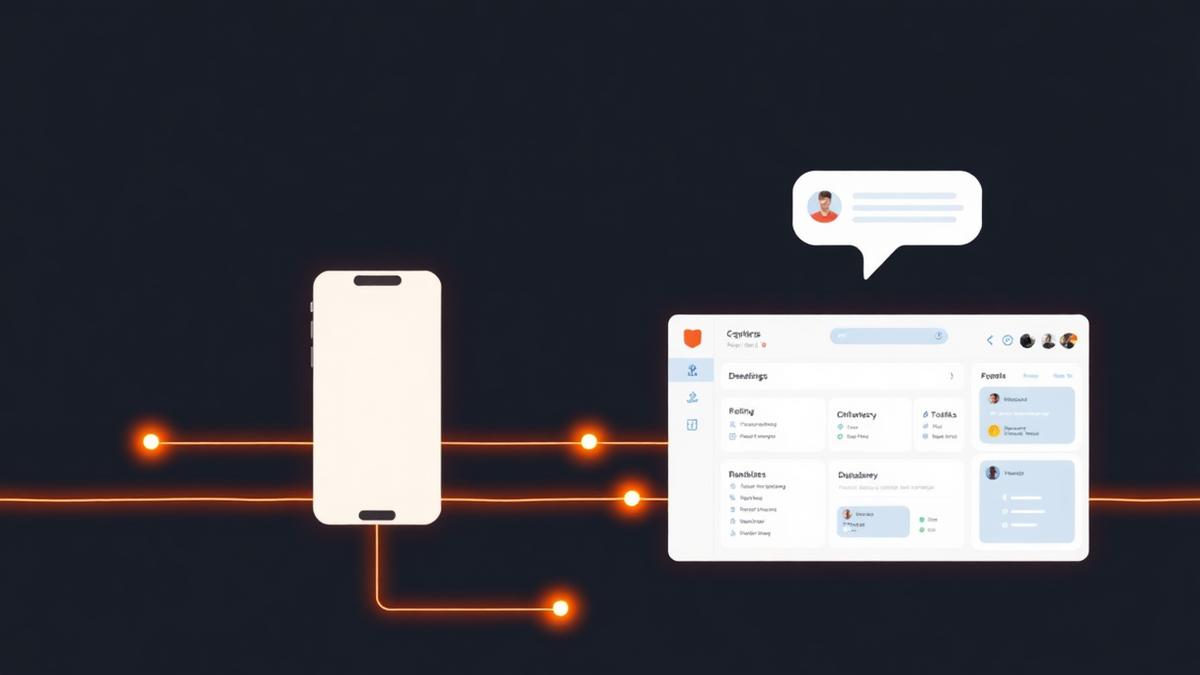
The best AI for pest control in Sebring is a unified, fully managed implementation that connects intake, route intelligence, and customer communications directly into your field management platform. Rather than stitching together disconnected plugins that create technical debt, independent operators benefit most from an AI partner that configures and maintains customized AI systems. This ensures accurate call intake, smart routing across Highlands County, and reliable booking during seasonal population shifts.
the AI landscape in highlands county and why off-the-shelf plugins fail
Operating a pest control company across Highlands County requires balancing distinct customer profiles without adding administrative overhead. A small office staff in Sebring often fields calls from citrus grove managers monitoring Asian citrus psyllid activity along State Road 64, cattle ranchers near Lorida dealing with horn flies and feed storage rodents, and seasonal retirees in Sun N Lake needing palmetto bug treatments. When operators attempt to automate these interactions, they frequently buy standalone point solutions. They might acquire a website chatbot plugin, an automated SMS reminder tool, and a third-party answering script. This strategy creates a fragmented tech stack where no individual vendor takes responsibility for the end-to-end customer workflow. A chatbot might capture an address near Lake Jackson, but fail to route the ticket into FieldRoutes or PestPac with the correct commercial tag for a citrus grove inspection. The office manager ends up manually double-checking every record, defeating the purpose of automation. The best AI systems for Sebring operators eliminate this fragmentation by unifying call intake, route context, and customer records under a single architecture managed by dedicated implementation engineers.
solving the lattice problem in sebring pest control operations
The lattice problem occurs when multiple disconnected plugins are stitched together across a pest control operation, leaving the business owner with integration debt that nobody owns. In a geographically dispersed market like Highlands County, where driving from Avon Park down to Venus can consume an hour of a technician's schedule, integration gaps directly impact profit margins. If an AI call parser misclassifies a cattle ranch property west of town as a standard residential lot, it dispatches a residential rig without the equipment required for large-scale fly and rodent management. The technician arrives, realizes the error, and burns valuable drive time along US 27 returning to the shop. Disconnected plugins fail because they pass raw text strings without contextual awareness of local geography, seasonal residency, or agricultural requirements. When an implementation partner builds and maintains the AI infrastructure, every intake channel feeds into the AI Sales System and existing CRM without loss of detail. The partner assumes responsibility for mapping data fields, keeping APIs synchronized during platform updates, and ensuring that caller intent translates into an accurate, properly routed service ticket every time.
evaluating inbound call handling across citrus groves and lake homes
Evaluating AI systems for a Sebring pest control business requires strict criteria centered on operational context rather than generic conversational features. First, the platform must instantly distinguish between residential pest inquiries and complex agricultural or commercial requests. When a grove manager calls about psyllid vector control near Spring Lake, the system should not offer a standard residential perimeter spray package. Instead, it must collect acre count, crop status, and urgency, tagging the lead for immediate priority dispatch. Second, the intake mechanism must handle complex local property types, such as lakeside homes along Lake Placid that require specific gate codes, dock inspections, or seasonal entry protocols. Third, the system must integrate natively with legacy field management platforms like PestPac, Briostack, or FieldRoutes without requiring custom Zapier webhooks maintained by the operator. Fourth, the deployment must include active engineering support rather than a self-serve administrative dashboard. In a lean Sebring office where two people manage phone calls, route sheets, and billing, expecting staff to configure prompt engineering or troubleshoot failed API connections guarantees system failure during peak spring pest surges.
- Intelligent classification between residential, commercial, and agricultural intake requirements.
- Native bi-directional integration with FieldRoutes, PestPac, and Briostack without middleware plugins.
- Dynamic route-aware scheduling that protects technician drive time across rural county lines.
- Dedicated engineering oversight to maintain system health, prompt accuracy, and API updates.
field route efficiency across US 27 lorida and venus
Route optimization across Highlands County depends heavily on accurate geographic awareness embedded directly into the dispatch engine. Drive times between Sebring, Lorida, Avon Park, and Lake Placid can easily erode daily margin if calls are booked without considering spatial cluster density. When a prospective customer in Venus calls for subterranean termite or ghost ant control, a standalone AI booking tool might select any open calendar slot without analyzing existing technician positioning along US 27 or US 98. An integrated AI system, however, reads real-time route commitments inside the CRM before offering arrival windows. It groups residential calls around Lake Jackson together while scheduling agricultural site visits in outlying rural sectors during dedicated route blocks. By constraining service windows based on technician location rather than arbitrary calendar availability, the system reduces unproductive windshield time and fuel consumption. This intelligent scheduling protects the schedule when sudden rainstorms or intense summer heat slow down field operations, allowing technicians to complete more revenue-generating stops per day across wide rural territories.
managing seasonal vacancies and race weekend demand spikes
Highlands County experiences distinct operational shifts dictated by the seasonal residency cycle and event calendars. Snowbird homeowners returning to Lake Jackson and Lake Placid between October and April frequently request immediate home reopening inspections to eliminate accumulated palmetto bugs, mud daubers, and rodents. Simultaneously, events at Sebring International Raceway create sudden demand spikes from short-term rental managers needing rapid turn-around treatments for bed bugs or German cockroaches before race weekends. A traditional office staff quickly gets overwhelmed by these sudden volume surges, leading to missed calls and delayed response times. Off-the-shelf plugins handle overflow by taking basic messages, but fail to close sales or schedule service visits dynamically. A connected AI system handles hundreds of concurrent interactions across phone lines, web forms, and PestMail direct mail responses without dropping quality. The system recognizes seasonal reactivation requests, verifies property history, books service appointments directly into available route slots, and sends confirmation details automatically, keeping the schedule full without expanding office headcount.
implementation partner model versus unsupported software
The fundamental difference between self-serve software and Pest AI lies in ongoing technical ownership and custom engineering. Software vendors sell login credentials and leave pest control operators to build rules, write prompts, and diagnose API failures on their own. In contrast, Pest AI operates as a dedicated implementation partner that designs, deploys, and maintains the entire AI architecture for the operator. We configure PestCRM, the AI Sales System, and PestMail direct mail integration to match the exact operational realities of Highlands County. When local pest pressures shift from spring subterranean termite swarms to summer mosquito and ghost ant outbreaks, our engineering team updates prompt structures and workflow logic without requiring action from the operator. If a field management platform updates its backend API, our team resolves the integration changes behind the scenes. This managed approach ensures that independent operators in Sebring gain enterprise-grade technology without taking on integration debt, allowing their office team to focus on customer service while our AI systems maintain reliable route density and lead conversion.
Signals to check in your own Sebring numbers
- Reduction in non-productive drive time along US 27 between Avon Park and Lake Placid.
- Elimination of unassigned commercial leads for agricultural properties near Lorida and Venus.
- Higher inbound booking conversion rates during October and November snowbird returns.
- Increased response rate on postcard reactivation campaigns launched through PestMail direct mail.
Where this leads
For most Sebring operators this decision points at the AI Sales System. We are an implementation partner, not a DIY platform, we build the AI systems around how your market actually behaves, hand them over documented, and your team runs them. The national version of this question, without the local specifics, is covered in our AI guide.
Sebring questions we get asked
More Sebring guides
- Should you use AIShould I use AI in my Sebring pest control business?
- Will customers talk to AIWill pest control customers in Sebring talk to AI?
- Speed to leadHow can Sebring pest control companies win with speed-to-lead?
- Best software stackWhat is the best pest control software for Sebring operators?
- Local marketingHow should pest control companies in Sebring market themselves locally?
- Reviews & reputationHow can Sebring pest control companies get more reviews and protect their reputation?
- Seasonal playbookWhat is the seasonal pest control playbook for Sebring?
- Commercial AIHow does AI help commercial pest control accounts in Sebring?
- Hiring vs AIShould Sebring pest control operators hire office staff or use AI?
Related guides in your area
More reading for operators working Sebring, FL and the markets around it.
The same question in nearby markets
More for Sebring
Across Florida
Want a straight read on your own Sebring numbers? A discovery call is a conversation, not a demo, and we will tell you if you are better off waiting.
Book a Discovery Call