
Poultry and food-processing facilities need aggressive commercial pest programs
Springdale's large poultry industry brings strict sanitation requirements, keeping commercial fly, rodent and stored-product pest contracts in steady demand.
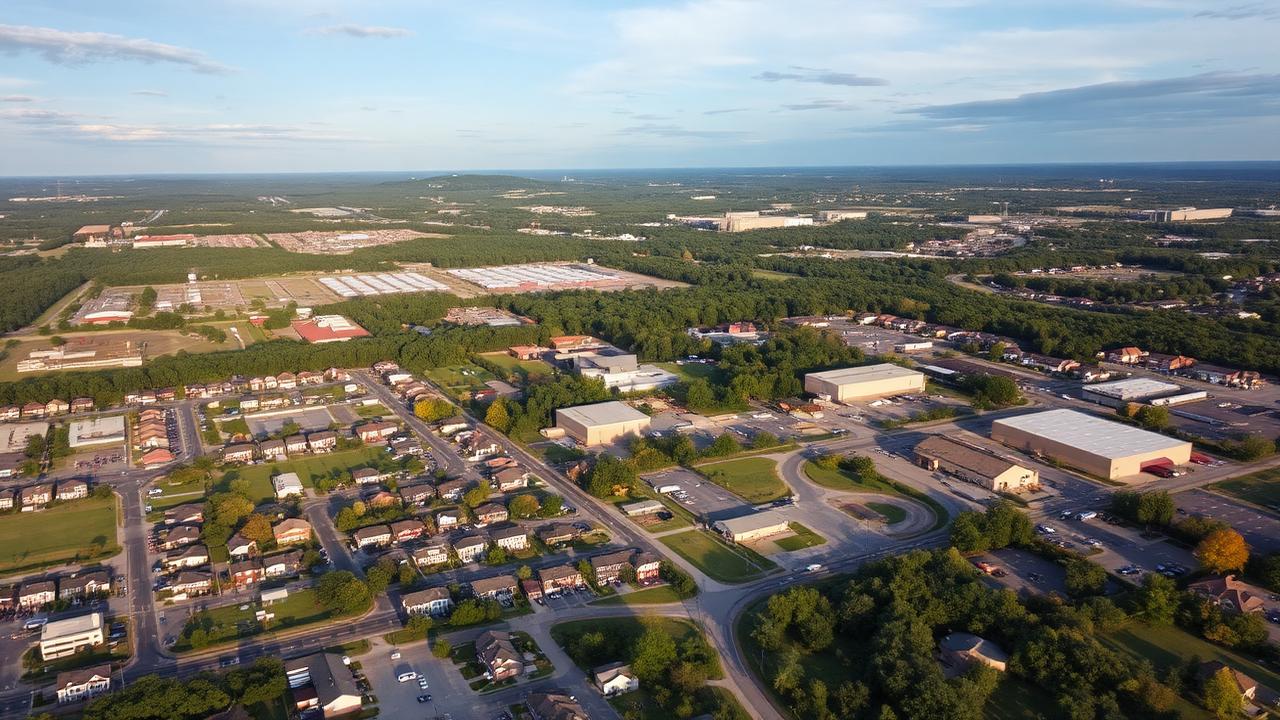
Humid summers, a major poultry-processing industry, and rapid residential growth keep Springdale crews busy across new subdivisions and established neighborhoods near downtown. Our AI systems answer every call while your team is out on routes.
Typical Springdale implementation goes live in about 30-90 days.
A major poultry-processing presence, humid Ozark summers, and one of Northwest Arkansas's fastest-growing populations shape a market with heavy commercial and residential demand.
Springdale's large poultry industry brings strict sanitation requirements, keeping commercial fly, rodent and stored-product pest contracts in steady demand.
Neighborhoods throughout Springdale see steady termite inspection and treatment activity tied to the region's warm, moist conditions.
Springdale's expanding subdivisions on the north and west sides create ongoing demand for new-construction termite pre-treatment and first-year service.
Waterways and drainage areas near residential and industrial zones keep mosquito and fly pressure high through the summer months.
We configure around commercial food-industry contracts, new-construction volume, and residential termite scheduling.
Voice AI routes urgent commercial pest sightings from poultry and food-processing accounts ahead of routine residential calls.
See Voice AIMessaging AI follows up with builders and new homeowners so pre-treatment scheduling keeps pace with growth.
See Messaging AIThe AI Sales System keeps termite inspections and summer mosquito requests scheduled efficiently across your routes.
See the AI Sales SystemWant to see what this looks like against your own Springdale call volume? We will walk through it on a 30-minute call.
Book a Discovery CallService areas from Springdale out through Lowell, Elm Springs and Tontitown are configured during onboarding.
We have a deep, purpose-built FieldRoutes integration, and over 1,000 API connections available for everything else, so your Springdale operation keeps one source of truth instead of four.
All third-party product names, logos, and brands are property of their respective owners. Use of these names does not imply endorsement or affiliation.
Springdale operators work a market shaped by a major poultry industry, humid Ozark summers, and rapid residential growth. AI intake keeps commercial contracts and new-construction demand covered without missing a call.
Deciding whether AI is right for your business at all is a separate question from which market you are in. We answer it honestly, including when the answer is not yet, in our AI decision guides, starting with should I use AI in my pest control business.
Springdale's poultry-industry backbone keeps commercial demand steady year-round, but residential pest pressure still follows the Ozark seasons closely. Understanding both calendars together is what keeps crews staffed correctly through the year.
Warming clay soils across Springdale, especially in older neighborhoods near downtown and Har-Ber, trigger subterranean termite swarms as reproductive alates emerge looking for new colony sites. Homeowners spotting swarmers around window frames or foundation cracks generate a sharp spring call spike for inspections. This is also when odorous house ants and pavement ants become active in new subdivisions on the north and west sides, and builders finishing spring construction schedule pre-treatment work ahead of slab pours and foundation backfill.
Humid Ozark summers push mosquito populations up sharply near creeks and drainage areas around Springdale, including waterways close to residential neighborhoods and industrial zones alike. Poultry and food-processing facilities see their highest fly and stored-product pest pressure of the year during the hottest months, when strict sanitation audits make any commercial pest sighting an urgent same-day priority. Residential termite activity continues steadily underground even as swarm season passes, since Springdale's warm, moist clay soils keep colonies active through the full summer.
As surrounding fields and pastures dry out heading into fall, deer mice and roof rats start moving toward homes and outbuildings in neighborhoods bordering agricultural land near Elm Springs and Tontitown. New-construction subdivisions still expanding on Springdale's growth corridors generate ongoing first-year service calls as builders complete homes and buyers move in. Poultry facility contracts also shift focus this time of year toward exterior rodent bait station servicing ahead of cooler weather driving pests indoors.
Cooler winter months bring cluster flies and stink bugs seeking warmth inside older homes near downtown Springdale and Johnson, entering through gaps around siding and window trim. Subterranean termite activity slows but doesn't stop entirely in Springdale's clay soils, since underground colonies stay insulated from freezing temperatures. Commercial poultry and food-processing accounts maintain their contracted service schedules through winter regardless of season, since sanitation compliance requirements don't ease up just because outdoor pest pressure drops.
As temperatures warm through late April, brown recluse spiders become more active in the crawlspaces and storage areas of older homes near downtown Springdale and Har-Ber, a regional concern that draws more anxious calls than most other spider species in the Ozarks. Pest control operators typically see a distinct spike in inspection requests tied specifically to recluse identification, separate from the general spring ant and termite swarm activity happening at the same time.
Peak summer heat inside grain storage and feed-processing buildings tied to Springdale's poultry industry accelerates the breeding cycle of stored-product pests like Indian meal moths and flour beetles, pushing commercial contracts to add extra inspection visits during the hottest weeks of July. This is a distinct commercial concern from the fly and rodent pressure typically associated with the processing floor itself, requiring different treatment protocols for warehouse and silo areas.
Springdale's crews split time between tightly scheduled commercial poultry accounts and residential routes stretching across fast-growing subdivisions. Interstate 49 and the local road network both shape how well that split works in practice.
Interstate 49 runs through Springdale connecting it to Lowell, Johnson and the broader Northwest Arkansas region, and it carries heavy commuter and freight traffic during peak hours. A crew finishing a downtown Springdale residential stop and needing to reach a poultry-facility appointment in Johnson benefits from routing that accounts for I-49's rush-hour slowdowns rather than assuming a quick highway hop between the two.
Poultry and food-processing facilities require strict scheduling adherence tied to sanitation audit windows, and mixing these appointments into a general residential route risks late arrivals that jeopardize compliance timing. Dedicating specific technicians and route blocks to commercial food-industry accounts, separate from the residential rotation through Har-Ber and Elm Springs, keeps both service types running on their own reliable schedule.
Springdale's expanding subdivisions toward Tontitown and the west side add new streets faster than static routes can track, and crews unfamiliar with recently built neighborhoods can lose time navigating unmarked or newly named roads. Routes need regular updates to reflect new-construction growth, especially for pre-treatment and first-year service work that clusters heavily in these expanding areas.
Balancing strict commercial compliance scheduling against seasonal residential spikes, like the spring termite swarm rush or summer mosquito calls, requires cross-trained staff who can shift between the two without disrupting either. Adding seasonal residential capacity ahead of spring swarm season, while keeping core commercial technicians dedicated to poultry accounts, prevents compliance-critical food-industry work from being squeezed by residential demand spikes.
Servicing food-processing plants around Springdale requires technicians who understand sanitation documentation and audit-ready reporting, a skill set that takes longer to train than standard residential pest work. Operators competing for talent against the region's large poultry employers, including Tyson Foods' Springdale headquarters and processing operations, often find it easier to retain commercial-track technicians by offering a predictable schedule tied to fixed compliance visits rather than rotating them through unpredictable residential routes.
As developers finish new phases of subdivisions on Springdale's north and west sides, homeowner associations and builders often expect a single point of contact for scheduling first-year termite service across dozens of new homes at once. Operators that assign a dedicated coordinator to these builder relationships, rather than routing each new address through general intake, keep pre-treatment and warranty renewal scheduling from falling behind as new phases open.
More reading for operators working Springdale, AR and the markets around it.
Location-specific guides written for the pest pressure, routes, and customer behavior of this market.
A short one-pager on the Springdale market, the systems we build for operators here, and how implementation runs, written to be printed and passed around.
Last updated 2026-09-17
Try the messaging AI that answers texts, webchat, and social for pest control teams.
Start a ChatUse our free pest control AI assistant today, no contract, no setup call.
Try PestGPT FreePull last quarter's commercial pest sighting calls. We'll show you how many took longer than an hour to get a callback.
The Arkansas guide covers statewide pest pressure, licensing and call patterns, and links every Arkansas city guide we publish, including this one.