
What is the best AI for pest control in Aurora, IL?
Short answer
The best AI for pest control in Aurora, IL is a fully connected, engineer-supported AI system built specifically for your service footprint rather than a patchwork of DIY software plugins. A single connected architecture handles Aurora's unique operational demands, including Kane-DuPage county line routing, historic downtown mill cavities, and spring Fox River flood surges, without creating integration debt.
Evaluating the Aurora pest control landscape
Aurora presents a distinct operational footprint that standard off-the-shelf software plugins fail to address. The Fox River bisects the city, causing predictable spring snowmelt flooding that creates severe moisture pest pressure downtown and near McCarty Park. At the same time, the housing stock ranges from converted 19th-century industrial mill lofts near the Paramount Theatre district to brand-new subdivisions rising along the Route 59 corridor. Furthermore, the city straddles the Kane County and DuPage County border on its eastern flank, introducing regulatory and geographic dispatch challenges for growing operations. When an operator in Aurora evaluates technology to handle inbound call volume, sales follow-ups, and field dispatching, generic plugins often fail to capture this hyper-local context. Answering a call properly requires immediate recognition of whether the property is an older brick building with timber voids or a slab-on-grade home on disturbed soil near Sugar Grove or Montgomery. Operators who attempt to solve these distinct problems by stitching together third-party chat widgets, phone wrappers, and route planners quickly run into what we call the lattice problem, where disconnected software tools fragment customer data and disrupt service delivery.
- McCarty Park spring flood surges creating localized moisture pest calls
- Paramount Theatre district historic timber lofts harboring hidden nests
- Kane and DuPage county line boundary splits affecting daily technician dispatch
- Route 59 growth corridor generating new-construction termite and ant inquiries
The integration lattice problem versus a single connected system
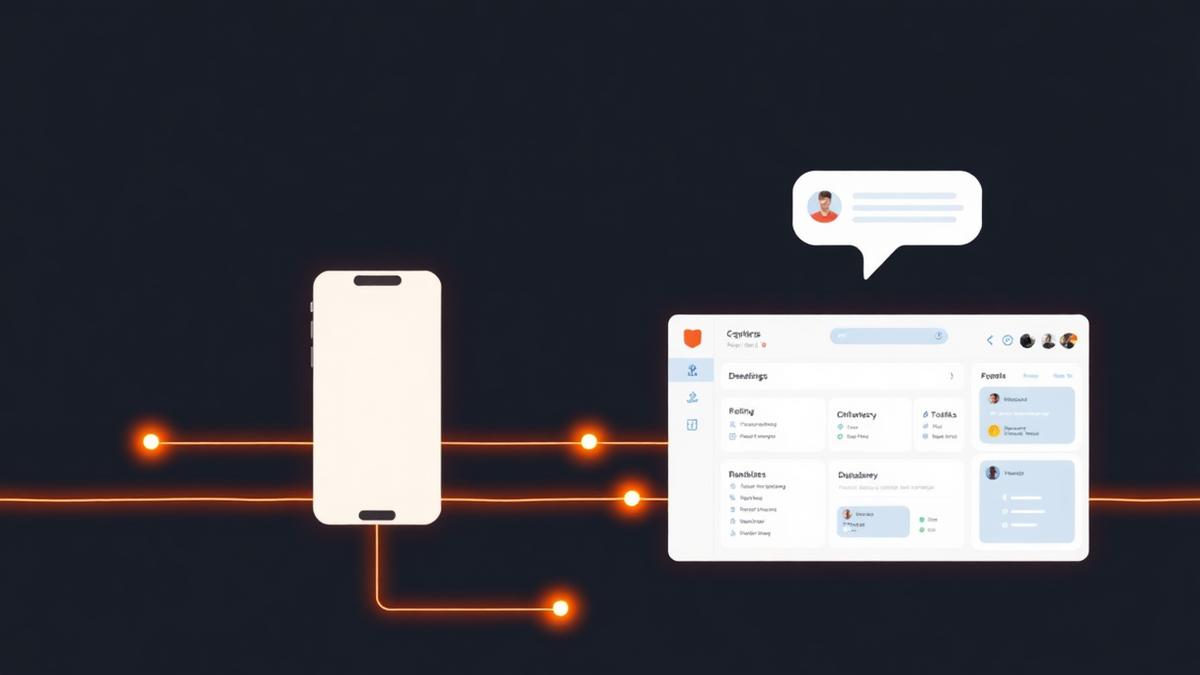
Many pest control operators in the Fox Valley region build their technology stack piece by piece. They purchase a standalone web chat plugin, add an automated email sequence tool, layer on a third-party call answering service, and attempt to sync everything back into FieldRoutes or PestPac. This creates a brittle software lattice. When a call comes in from a homeowner near North Aurora dealing with spring camel cricket outbreaks, the chat plugin fails to share property history with the dispatch system. The resulting integration debt falls squarely on the pest control business owner, who must manually reconcile duplicate records, fix missed appointment slots, and resolve misrouted technicians. Pest AI approaches the market differently as an implementation partner. Rather than selling a self-serve software tool, we design, deploy, and maintain custom AI systems tailored to your service area. By replacing fragmented point solutions with the AI Sales System, known as PestCRM, and our DIRECT MAIL system, known as PestMail, your operations run on a single unified data architecture. Our engineers own the maintenance and setup, eliminating integration debt so your office staff and field crews can focus entirely on executing service calls across Kane and DuPage counties.
- Elimination of disconnected software plugins and fragmented data silos
- Engineering team ownership of system maintenance and workflow updates
- Unified connection between PestCRM intake and field scheduling
- Seamless integration with existing industry enterprise platforms
Intake context for historic buildings and new subdivisions
Inbound phone calls in Aurora demand immediate local understanding. A prospect calling from a renovated 19th-century mill building near Galena Boulevard requires a completely different intake conversation than a homeowner in a newly constructed subdivision along the Route 59 corridor. Historic downtown structures feature multi-wythe brick walls and heavy timber framing that harbor persistent Oriental cockroach and carpenter ant colonies inside deep wall cavities. If an intake system treats these structures like standard single-family residential homes, the technician arrives with incorrect treatment protocols and inaccurate job timing. Conversely, new residential developments near Oswego and the far east side generate high volumes of termite pretreat inquiries and pavement ant calls on recently disturbed soil. Our AI systems ask targeted questions tailored to Aurora's structural archetypes during the very first call. By identifying structural details, property age, and environmental risk factors at intake, the AI Sales System accurately quotes job times, sets clear customer expectations, and equips field staff with exact situational notes before the truck leaves the yard. This level of intake precision prevents callback loops and protects operational margins.
- Automated identification of historic downtown structural construction types
- Targeted intake workflows for new-construction soil disturbance inquiries
- Accurate initial job time estimation based on building age and wall depth
- Detailed situational notes pushed directly to technician dispatch feeds
Solving the Kane-DuPage county line routing challenge
Routing field technicians through Aurora requires an intelligent understanding of local geography that basic GPS applications lack. Because Aurora spans across Kane and DuPage counties, a technician assigned to morning jobs near downtown McCarty Park can easily lose hours of billable time if dispatched inefficiently to an afternoon call near Fox Valley Mall without taking traffic corridors into account. Crossing back and forth over the Fox River bridges during peak commuter hours creates unnecessary fuel burn and windshield time. Furthermore, routing across county borders requires tracking service density to ensure technicians complete clustered stops within the same municipal grid. Our connected AI systems integrate directly with your primary service management software to execute intelligent, county-aware dispatching. The system analyzes real-time route geometry, river crossing points, and historical job durations across North Aurora, Montgomery, and Sugar Grove. By automatically grouping service appointments by structural zone and geographic corridors, the system optimizes route density, reduces idle time between stops, and ensures your crews maximize the number of completed stops per day without crisscrossing county lines unnecessarily.
- County-aware grouping to minimize unnecessary multi-county back-and-forth travel
- Bridge crossing optimization to avoid peak Fox River traffic choke points
- Clustered scheduling around major hubs like Fox Valley and McCarty Park
- Reduction in daily windshield time and fuel costs per service technician
Managing seasonal pest shifts along the Fox River basin
Pest pressure in Aurora moves in predictable seasonal waves tied directly to the Fox River watershed. As winter snowmelt raises river levels each spring, low-lying properties downtown and around McCarty Park experience immediate surges in basement moisture, mold beetles, and camel crickets. As the summer progresses, pest pressure shifts to the elevated terrain on the city's west side, where dry soil conditions drive pavement ants and wasps toward residential foundations. A static sales process or generic automated follow-up campaign fails to capitalize on these micro-seasonal shifts. Pest AI builds AI systems that dynamically adjust outreach, intake scripts, and marketing execution based on local environmental conditions. For instance, PestMail, our automated DIRECT MAIL system, triggers physical neighborhood mailings to flood-prone sectors right as water tables rise, while the AI Sales System tailors digital follow-ups for dry-weather pest campaigns on the west side. By aligning intake conversations and direct marketing with the exact timing of local biological surges, your business captures high-intent leads at the precise moment homeowners notice pest activity on their properties.
- Dynamic intake scripting aligned with spring Fox River snowmelt moisture surges
- Automated DIRECT MAIL campaigns targeting specific flood-prone blocks
- Seasonal campaign pivots between river valley moisture pests and west-side ant pressure
- Higher conversion rates through contextually relevant customer messaging
Evaluation criteria for Aurora pest control AI implementations
When evaluating AI solutions for an Aurora-based pest control business, operators must look beyond marketing claims and focus on real operational capability. A viable system must demonstrate deep integration capability with established industry platforms like PestPac and FieldRoutes, ensuring zero data loss during intake and scheduling. It must feature geographic intelligence capable of recognizing Aurora's unique street grid, river crossings, and multi-county boundaries. Furthermore, the solution must handle complex, multi-family, commercial, and historic residential intake scenarios without defaulting to generic call scripts. Most importantly, operators should avoid self-serve software vendors that drop code on your server and walk away. A true implementation partner takes complete accountability for system performance, building custom integrations and refining conversational pathways as your service area grows into neighboring markets like Sugar Grove, Oswego, and Montgomery. Choosing a single connected platform managed by dedicated engineers eliminates software debt, ensures consistent call capture during seasonal spikes, and turns incoming operational complexity into a sustained competitive advantage across the entire Fox Valley region.
- Full compatibility and bidirectional sync with PestPac and FieldRoutes
- Geographic awareness of river bridges, county lines, and local submarkets
- Dedicated engineering partner support rather than self-serve software tools
- Unified data flow connecting direct mail, sales intake, and technician dispatch
Signals to check in your own Aurora numbers
- Average technician windshield time logged when traveling between Kane and DuPage county jobs
- Inbound phone call response rates during peak spring Fox River snowmelt moisture surges
- Callback percentage rates for downtown historic timber lofts compared to modern slab homes
- Conversion velocity on new-construction termite pretreat leads along the Route 59 corridor
Where this leads
For most Aurora operators this decision points at the AI Sales System. We are an implementation partner, not a DIY platform, we build the AI systems around how your market actually behaves, hand them over documented, and your team runs them. The national version of this question, without the local specifics, is covered in our AI guide.
Aurora questions we get asked
More Aurora guides
- Should you use AIShould I use AI in my Aurora, IL pest control business?
- Will customers talk to AIWill pest control customers in Aurora, IL talk to AI?
- Speed to leadHow can Aurora, IL pest control companies win with speed-to-lead?
- Best software stackWhat is the best pest control software for Aurora, IL operators?
- Local marketingHow should pest control companies in Aurora, IL market themselves locally?
- Reviews & reputationHow can Aurora, IL pest control companies get more reviews and protect their reputation?
- Seasonal playbookWhat is the seasonal pest control playbook for Aurora, IL?
- Commercial AIHow does AI help commercial pest control accounts in Aurora, IL?
- Hiring vs AIShould Aurora, IL pest control operators hire office staff or use AI?
Related guides in your area
More reading for operators working Aurora, IL and the markets around it.
The same question in nearby markets
Across Illinois
Want a straight read on your own Aurora numbers? A discovery call is a conversation, not a demo, and we will tell you if you are better off waiting.
Book a Discovery Call