
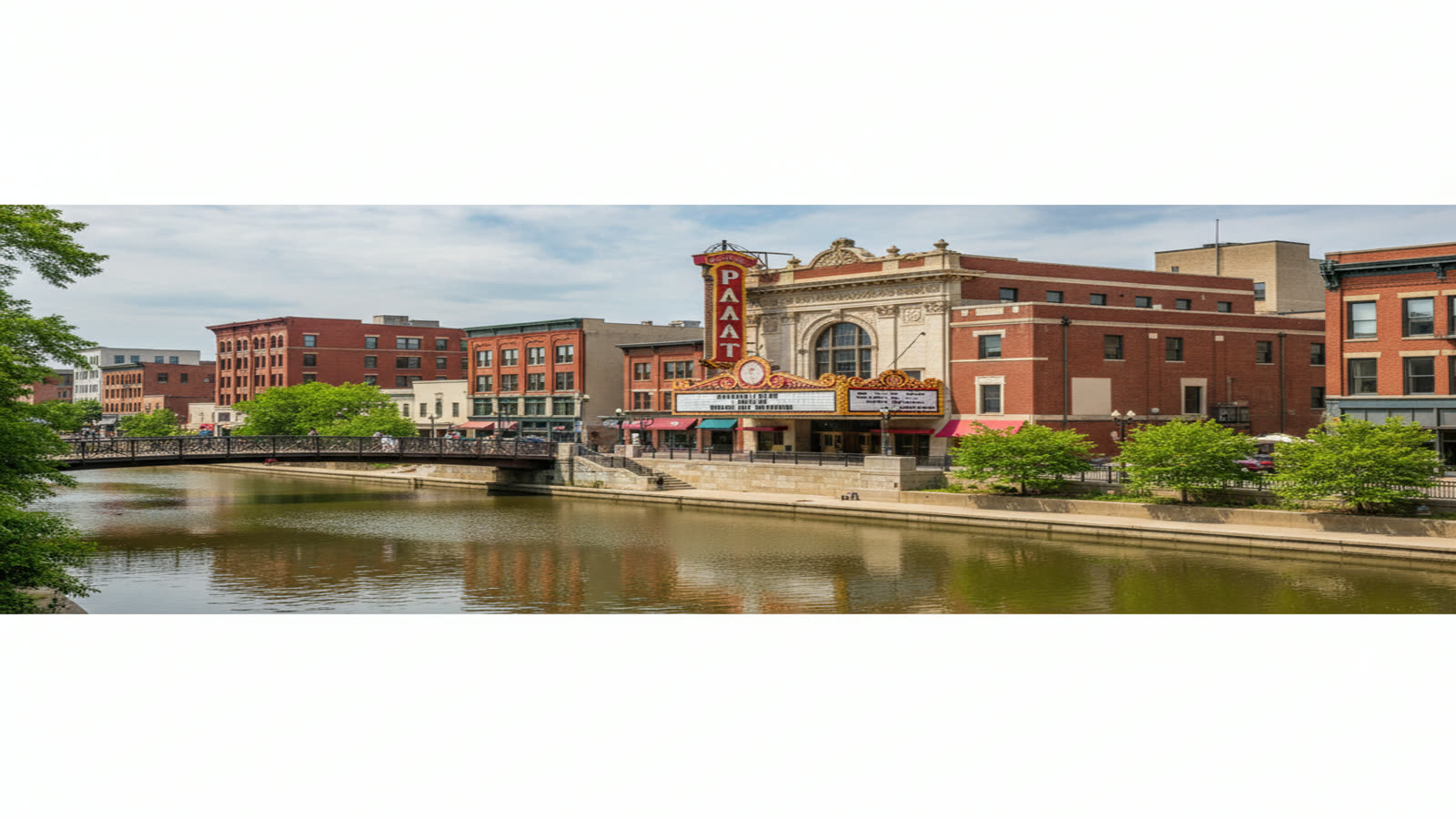
Downtown Aurora, Illinois along the Fox River with the historic Paramount Theatre district
    Aurora, Illinois

    Pest Control Software Built for Aurora, IL Operators

    The Fox River splits Aurora down the middle and floods its lowest blocks after spring snowmelt, converted 19th-century mill buildings near the Paramount Theatre district hold pests in old brick and timber cavities, and the city straddles the Kane-DuPage county line in a way that changes which suburbs a crew hits on the way to a job. Our AI systems answer every Aurora call as soon as it rings.

    Typical Aurora implementation goes live in about 30-90 days.

    Why Aurora work follows the river and the county line

    A river town with a 19th-century industrial core and a service area that spans two counties produces pest patterns a copy-paste suburban script does not handle well.

    Fox River floodplain blocks flood on a schedule crews have to plan around

    Low-lying stretches near the river downtown and around McCarty Park see basement moisture and camel cricket surges after spring snowmelt and heavy rain, a pattern distinct from the dry-summer ant pressure crews see on the city's higher west side.

    Converted mill buildings near the Paramount Theatre hold pests in old timber cavities

    Aurora's downtown historic district includes 19th-century industrial buildings converted into lofts and offices, where original timber framing and brick voids give roaches and carpenter ants places to nest that a standard slab-on-grade suburban home does not have.

    The city straddles Kane and DuPage counties, and routing has to know it

    Aurora's footprint crosses into DuPage County on its eastern edge near Naperville, so a crew dispatched without county-aware routing can end up crossing back and forth across the line instead of clustering stops efficiently.

    New subdivisions on the far east and southeast side keep adding fresh construction pest calls

    Growth areas near Route 59 and the Fox Valley outskirts add new-build termite pretreat and ant pressure on disturbed soil, a different call type than the older housing stock closer to downtown.

    What we build for you

    What that means for your phones and your crews

    We configure around a city where a river-flood basement call and a downtown loft roach complaint need different handling than a new-build pretreat request.

    Flag Fox River floodplain calls for moisture-driven scheduling

    Voice AI captures address proximity to the river and flags basement moisture complaints separately, so crews can anticipate the seasonal surge after snowmelt instead of reacting call by call.

    See Voice AI

    Route downtown loft and mill-building jobs to techs who know the construction

    Messaging AI tags historic-district addresses so dispatch can send techs familiar with timber-frame and brick-void treatment rather than a standard slab-home approach.

    See Messaging AI

    Keep county-aware routing tight across the Kane-DuPage line

    The AI Sales System tracks service area by ZIP and county, so bookings near the eastern edge of Aurora cluster with nearby stops instead of forcing a crew back and forth across the county line.

    See the AI Sales System

    Want to see what this looks like against your own Aurora call volume? We will walk through it on a 30-minute call.

    Book a Discovery Call

    Operators across the Aurora area

    Service areas from the downtown riverfront out to the Route 59 growth corridor are configured during onboarding.

    • Downtown Aurora
    • McCarty Park
    • Fox Valley
    • Far East Side
    • North Aurora
    • Montgomery
    • Sugar Grove
    • Oswego

    Connected to the software you already run

    We have a deep, purpose-built FieldRoutes integration, and over 1,000 API connections available for everything else, so your Aurora operation keeps one source of truth instead of four.

    All third-party product names, logos, and brands are property of their respective owners. Use of these names does not imply endorsement or affiliation.

    What AI adoption looks like in Aurora

    Aurora operators work a market shaped by a river that floods predictably, a downtown built on 19th-century industrial construction, and a service footprint that crosses a county line. Getting address context right at intake matters more here than in a market with uniform housing stock and a single-county service area.

    • Fox River floodplain blocks see moisture pest surges after spring snowmelt
    • Downtown mill buildings near the Paramount Theatre district hold pests in old timber and brick cavities
    • The city crosses the Kane-DuPage county line, which routing has to account for
    • Route 59 growth areas generate new-construction termite and ant pressure calls

    Deciding whether AI is right for your business at all is a separate question from which market you are in. We answer it honestly, including when the answer is not yet, in our AI decision guides, starting with should I use AI in my pest control business.

    Aurora, IL's pest calendar: the Fox River, the county line, and Chicago-suburb winters

    Aurora's pest calendar runs on Fox River snowmelt timing, the compressed swarm windows of a true four-season Illinois climate, and the seasonal rhythm of its downtown restaurant and event district.

    March - April

    Fox River snowmelt and spring rain raise the water table under low-lying blocks near McCarty Park and the riverfront, driving camel crickets and sowbugs into basements days after the thaw, while carpenter ants begin foraging out of the timber-frame mill buildings downtown.

    May - June

    Termite swarms emerge from moisture-prone foundations near the river and older Near East Side homes, overlapping with the first wave of mosquito complaints tied to standing water in drainage ditches along the Route 59 growth corridor.

    July - August

    Humid Illinois summer heat pushes ant activity into kitchens across the Far East Side subdivisions, while restaurants and outdoor patios near the Paramount Theatre district field steady fly and yellowjacket complaints tied to trash and outdoor dining.

    September - October

    As harvest wraps up on farmland surrounding Sugar Grove and Montgomery, field mice move toward the nearest structure, and the first cool nights send box elder bugs and cluster flies looking for gaps in older Aurora homes with original wood siding.

    November - January

    Once Fox Valley winter sets in, rodent activity moves indoors almost entirely, with mice reported in wall voids of converted mill lofts downtown and in crawl spaces of split-level homes on the west side; cluster flies that got inside in October reappear on sunny window sills.

    Deep-freeze stretches

    Extended sub-zero periods push mice sheltering in outbuildings near the Kane-DuPage county line harder toward attached garages and mudrooms, while icy conditions on the Route 59 corridor and I-88 approach slow response times to the farthest east-side calls.

    Running crews across the Fox Valley and the county line

    Aurora's territory covers a historic river-centered core, fast-growing eastern subdivisions, and a boundary that splits the market between Kane and DuPage counties, each demanding a different routing logic.

    I-88 and Route 59 define the growth-corridor routing pattern

    New subdivisions keep filling in around the Route 59 corridor and I-88 interchange, and grouping those far-east stops on the same day as Naperville-adjacent DuPage County jobs keeps a single loop from doubling as two separate trips.

    Downtown's one-way streets and parking limit slow inner-city stops

    The historic core around the Paramount Theatre has narrow one-way streets and metered parking, so a technician working a loft or restaurant call downtown needs more buffer time built into the schedule than a suburban cul-de-sac stop.

    Fox Valley Park District and school facilities need scheduled after-hours access

    Aurora's park district facilities and East Aurora and West Aurora school district buildings often require pest service after hours or during scheduled maintenance windows, which means those accounts need a separate booking track from residential same-day requests.

    Older Near East Side housing stock runs on different service needs than new construction

    Homes near downtown with original wood siding, older foundations, and mature trees see more carpenter ant and cluster fly pressure than the newer stucco-and-vinyl construction on the Far East Side, so technicians benefit from knowing which side of town a call is coming from before they arrive.

    Fox River spring flooding creates a predictable seasonal cluster

    Properties along the river's low-lying stretch near downtown and McCarty Park see recurring spring moisture issues, and crews who know which blocks flood every year can get ahead of camel cricket and sowbug calls instead of reacting one at a time.

    Aurora pest control questions we get asked

    Aurora AI guides

    Location-specific guides written for the pest pressure, routes, and customer behavior of this market.

    Aurora overview
    Free 48 KB PDF

    Download the Aurora, IL Pest Control AI Playbook

    A short one-pager on the Aurora market, the systems we build for operators here, and how implementation runs, written to be printed and passed around.

    • A Aurora market snapshot, the pressure that drives your call volume
    • The AI systems we run for operators here, in plain language
    • What a 30-day implementation actually looks like
    • Printable, so you can hand it to your office team

    Last updated 2026-09-17

    Loading the Aurora playbook form

    Three ways to see it working in Aurora

    Book a demo

    A 30-minute walkthrough against your own Aurora call volume.

    Book a Discovery Call

    Start a chat

    Try the messaging AI that answers texts, webchat, and social for pest control teams.

    Start a Chat

    Start free with PestGPT

    Use our free pest control AI assistant today, no contract, no setup call.

    Try PestGPT Free
    Final step

    Let's look at your Fox River seasonal call spike

    Pull last spring's basement moisture and camel cricket calls. We can show you how many came in as isolated tickets versus a predictable seasonal pattern crews could staff ahead of.

    • A real review of your intake, not a canned demo
    • 30 minutes, and a typical implementation runs about 30-90 days
    • No contract to talk. We never share your details.

    Request your Aurora walkthrough

    Prefer to pick a time yourself? Book a Discovery Call