
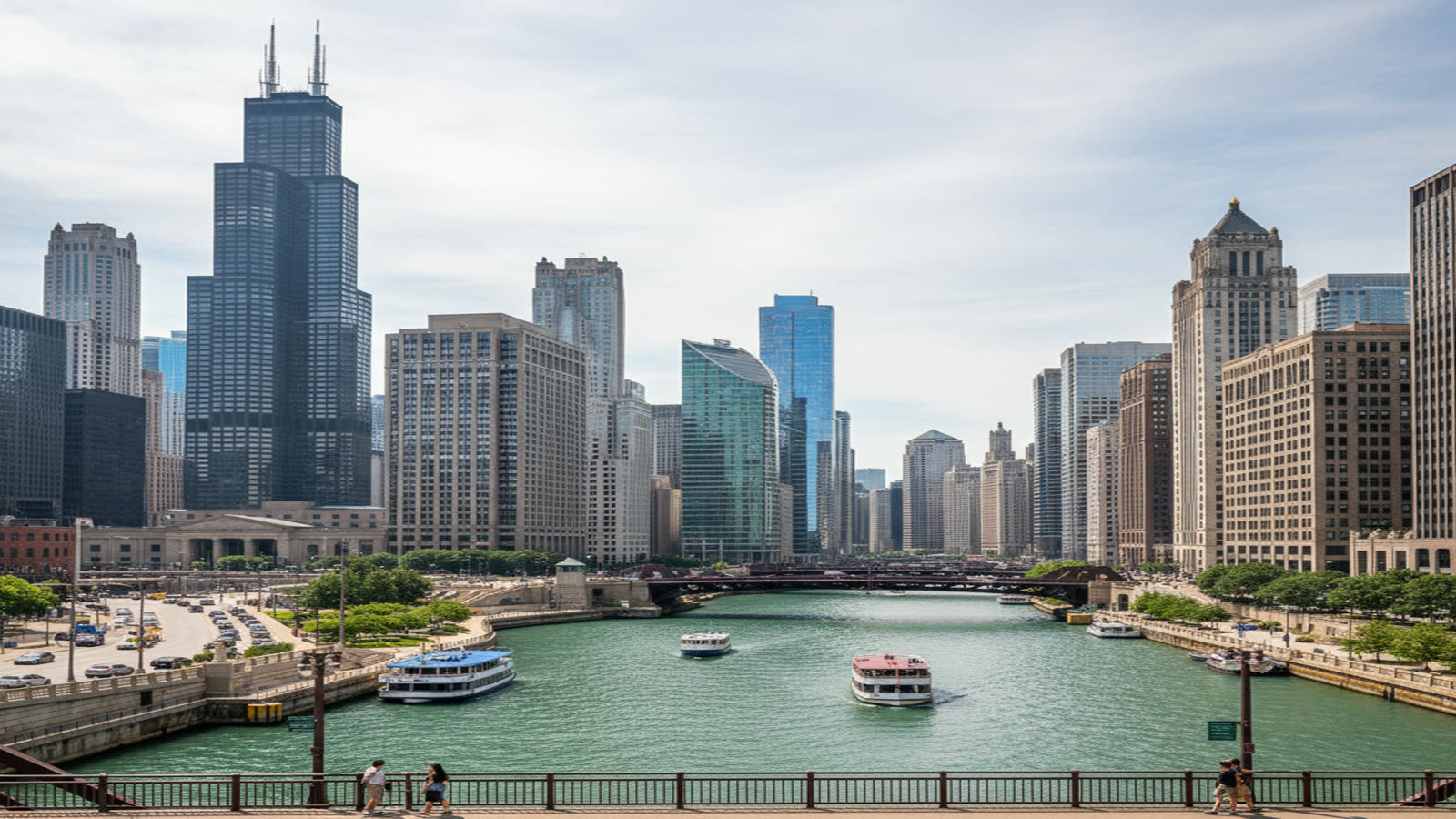
Chicago skyline along the Chicago River with the Willis Tower visible on a clear day
    Chicago, Illinois

    Pest Control Software Built for Chicago Operators

    Alleys and garbage enclosures across the South Side and West Side keep Norway rat burrows active twelve months a year, six-flat courtyard buildings from Rogers Park to Pilsen pass roaches through shared plumbing chases, and a call volume split across dozens of neighborhoods and languages does not fit one intake script. Our AI systems answer every Chicago call the moment it comes in.

    Typical Chicago implementation goes live in about 30-90 days.

    Why Chicago pest work does not run like a suburban route

    A city built on alley infrastructure, dense pre-war courtyard buildings, and a lakefront freeze-thaw cycle produces call patterns that a generic answering service was never built to sort.

    Alley rat burrows stay active through the winter downtown and in the wards

    Garbage cart enclosures behind two-flats in Bridgeport, Back of the Yards, and Austin give Norway rats a year-round food source, so a single knockdown visit rarely holds unless the crew treats the whole alley segment and the neighboring properties that share it.

    Courtyard six-flats move roaches through shared plumbing chases

    Pre-1930s courtyard buildings common in Rogers Park, Uptown, and Pilsen route pipes through common chases between units, so a German cockroach complaint on the third floor usually traces back to a unit two floors below that has never called in.

    Condo associations add a board vote to a job that would otherwise be a same-day yes

    Buildings converted from rental to condo along Lincoln Park and the Gold Coast route pest decisions through property managers and association boards, so a caller asking for pricing on a common-area bed bug job needs to be identified as tenant, unit owner, or board contact before a quote goes out.

    The Loop and River North commercial core runs on health-inspection stakes

    Restaurants and food retailers packed into the Loop, River North, and the West Loop restaurant corridor need documented, dated service records on hand, because a single roach or mouse sighting during a City of Chicago health inspection can shut down service for the day.

    What we build for you

    What that means for your phones and your crews

    We configure around a city where an alley rat complaint, a six-flat roach call, and a River North restaurant account all need different handling on the same afternoon.

    Route alley and burrow calls to a recurring program, not a one-off

    Voice AI captures alley access, cart location, and whether neighboring buildings share the enclosure, so dispatch can sell the ongoing monitoring visit an alley infestation actually needs instead of booking a single treatment.

    See Voice AI

    Sort tenant, owner, and board callers before anyone quotes a price

    Messaging AI asks who is authorized to approve the job on every Lincoln Park or Gold Coast condo inquiry, so a CSR is not reworking a quote after finding out the caller had no authority to book it.

    See Messaging AI

    Keep Loop and West Loop restaurant accounts audit-ready

    The AI Sales System logs every visit and device check with a timestamp, so a River North kitchen manager can pull the service history the moment a health inspector asks for it.

    See the AI Sales System

    Want to see what this looks like against your own Chicago call volume? We will walk through it on a 30-minute call.

    Book a Discovery Call

    Operators across Chicago neighborhoods

    Service areas from the Loop out through the wards and the lakefront are configured during onboarding to match how your crews actually route.

    • The Loop
    • River North
    • Lincoln Park
    • Pilsen
    • Rogers Park
    • Bridgeport
    • Austin
    • Hyde Park

    Connected to the software you already run

    We have a deep, purpose-built FieldRoutes integration, and over 1,000 API connections available for everything else, so your Chicago operation keeps one source of truth instead of four.

    All third-party product names, logos, and brands are property of their respective owners. Use of these names does not imply endorsement or affiliation.

    What AI adoption looks like in Chicago

    Chicago operators juggle a residential base spread across dozens of distinct neighborhoods, a commercial core with health-inspection stakes, and a condo and rental market where the person calling is rarely the person who can approve the job. Getting the caller sorted correctly in the first ninety seconds matters more here than in a market with a simpler customer base.

    • Alley garbage enclosures keep Norway rat burrows active through winter in wards across the South and West Sides
    • Pre-1930s courtyard six-flats route roaches between units through shared plumbing chases
    • Condo association buildings require identifying tenant, owner, or board authority before quoting
    • Loop and West Loop restaurant accounts need documented service logs for health inspections

    Deciding whether AI is right for your business at all is a separate question from which market you are in. We answer it honestly, including when the answer is not yet, in our AI decision guides, starting with should I use AI in my pest control business.

    Chicago's pest calendar: alleys, lakefront freeze-thaw, and the condo cycle

    Chicago's pest pressure tracks the lakefront freeze-thaw cycle, alley infrastructure that never fully shuts down, and a rental calendar built around September 1st and May 1st lease turns.

    March - April

    Lake-effect freeze-thaw cycles crack alley pavement and foundation seams across Bridgeport, Back of the Yards, and Austin, giving Norway rats fresh entry points just as they emerge from winter burrows. Carpenter ants also start showing up in older Bungalow Belt homes on the Southwest Side as sap starts running in parkway trees.

    May 1st and September 1st lease turns

    Chicago's traditional May 1st moving day, still observed in pockets of Lakeview, Wrigleyville, and Rogers Park, stacks a huge share of the city's rental turnover into a single weekend, and the fall semester move-in around Labor Day compresses a second wave near DePaul, UIC, and Loyola. Both weekends flood dispatch with roach and bed bug inspection requests from incoming tenants and outgoing landlord walkthroughs.

    June - August

    Humid lakefront summers push German cockroach complaints in courtyard six-flats to their peak, since shared plumbing chases carry moisture and food odor between units. Mosquito complaints spike near standing water in Forest Preserve-adjacent neighborhoods like Portage Park and Norwood Park, and rooftop deck and patio wasp nests keep North Side callers busy through July.

    September - October

    As temperatures drop, cluster flies and multicolored Asian lady beetles start working their way into brick two-flats and greystones looking for a place to overwinter, particularly in neighborhoods with mature parkway trees like Beverly and Jefferson Park. Alley rat activity often peaks here too, as burrows near garbage enclosures get one last push of foraging before cold weather locks in.

    November - February

    Once temperatures drop below freezing, rats move from alley burrows into building foundations, utility chases, and heated garages, and calls shift from outdoor burrow treatment to indoor exclusion work. Steam-heated older buildings downtown and on the North Side also see a rise in German cockroach reports as warmth concentrates activity near boiler rooms and shared walls.

    Convention and event weekends

    McCormick Place and Navy Pier events, along with Cubs and Sox homestands, push short-term visitor volume through nearby hotels and short-term rentals in the South Loop, Near North, and Bridgeport, generating same-day bed bug and general pest requests tied to guest turnover rather than the calendar.

    Running crews across Chicago's wards and the collar suburbs

    Chicago routing has to account for expressway congestion, alley access rules, and a customer base split between board-approved condo work and single-family homes, often within the same square mile.

    Expressway timing dictates which neighborhoods pair on a route

    The Dan Ryan, Kennedy, and Eisenhower expressways all carry predictable rush-hour slowdowns, so a tech scheduled for a morning Hyde Park stop and an afternoon Austin stop can lose an hour just crossing the city if dispatch does not build in buffer around 7-9am and 4-6pm.

    Alley access windows shape burrow treatment scheduling

    Garbage enclosure and alley work in wards across the South and West Sides sometimes requires coordinating with building management or the ward's Streets and Sanitation schedule, so crews handling Bridgeport or Back of the Yards burrow accounts need appointment windows that account for cart pickup days.

    Condo board approval adds lead time most residential jobs don't need

    A common-area job in a Gold Coast or Lincoln Park high-rise typically needs board sign-off before work starts, so a quote that would close same-day in a single-family neighborhood can take a week or more to convert, and dispatch benefits from tracking that lag separately from residential average close time.

    Streets and Sanitation permitting affects commercial kitchen work

    Restaurant accounts in the Loop, River North, and the West Loop restaurant corridor often need pest service scheduled around health inspection cycles and loading dock access rules unique to each building, so recurring commercial routes benefit from notes tied to each property's specific access quirks rather than a generic commercial template.

    Winter parking bans and snow routes complicate January and February dispatch

    Overnight parking bans on major arterials during heavy snow can strand a service vehicle blocks from a job site, and alley plowing delays can make rear-entry buildings temporarily unreachable, so crews working the Northwest Side and Southwest Side bungalow belts build extra time into winter routes.

    Chicago pest control questions we get asked

    Chicago AI guides

    Location-specific guides written for the pest pressure, routes, and customer behavior of this market.

    Chicago overview
    • Should you use AIShould I use AI in my Chicago pest control business?Coming soon.
    • Will customers talk to AIWill pest control customers in Chicago talk to AI?Coming soon.
    • Best AI for pest controlWhat is the best AI for pest control in Chicago?Coming soon.
    • Speed to leadHow can Chicago pest control companies win with speed-to-lead?Coming soon.
    • Best software stackWhat is the best pest control software for Chicago operators?Coming soon.
    • Local marketingHow should pest control companies in Chicago market themselves locally?Coming soon.
    • Reviews & reputationHow can Chicago pest control companies get more reviews and protect their reputation?Coming soon.
    • Seasonal playbookWhat is the seasonal pest control playbook for Chicago?Coming soon.
    • Commercial AIHow does AI help commercial pest control accounts in Chicago?Coming soon.
    • Hiring vs AIShould Chicago pest control operators hire office staff or use AI?Coming soon.
    Free 49 KB PDF

    Download the Chicago, IL Pest Control AI Playbook

    A short one-pager on the Chicago market, the systems we build for operators here, and how implementation runs, written to be printed and passed around.

    • A Chicago market snapshot, the pressure that drives your call volume
    • The AI systems we run for operators here, in plain language
    • What a 30-day implementation actually looks like
    • Printable, so you can hand it to your office team

    Last updated 2026-09-17

    Loading the Chicago playbook form

    Three ways to see it working in Chicago

    Book a demo

    A 30-minute walkthrough against your own Chicago call volume.

    Book a Discovery Call

    Start a chat

    Try the messaging AI that answers texts, webchat, and social for pest control teams.

    Start a Chat

    Start free with PestGPT

    Use our free pest control AI assistant today, no contract, no setup call.

    Try PestGPT Free
    Final step

    Let's look at your alley and condo call volume

    Bring your last month of intake for burrow calls and condo association jobs. We can show you how many were sorted correctly on the first call versus reworked later.

    • A real review of your intake, not a canned demo
    • 30 minutes, and a typical implementation runs about 30-90 days
    • No contract to talk. We never share your details.

    Request your Chicago walkthrough

    Prefer to pick a time yourself? Book a Discovery Call