
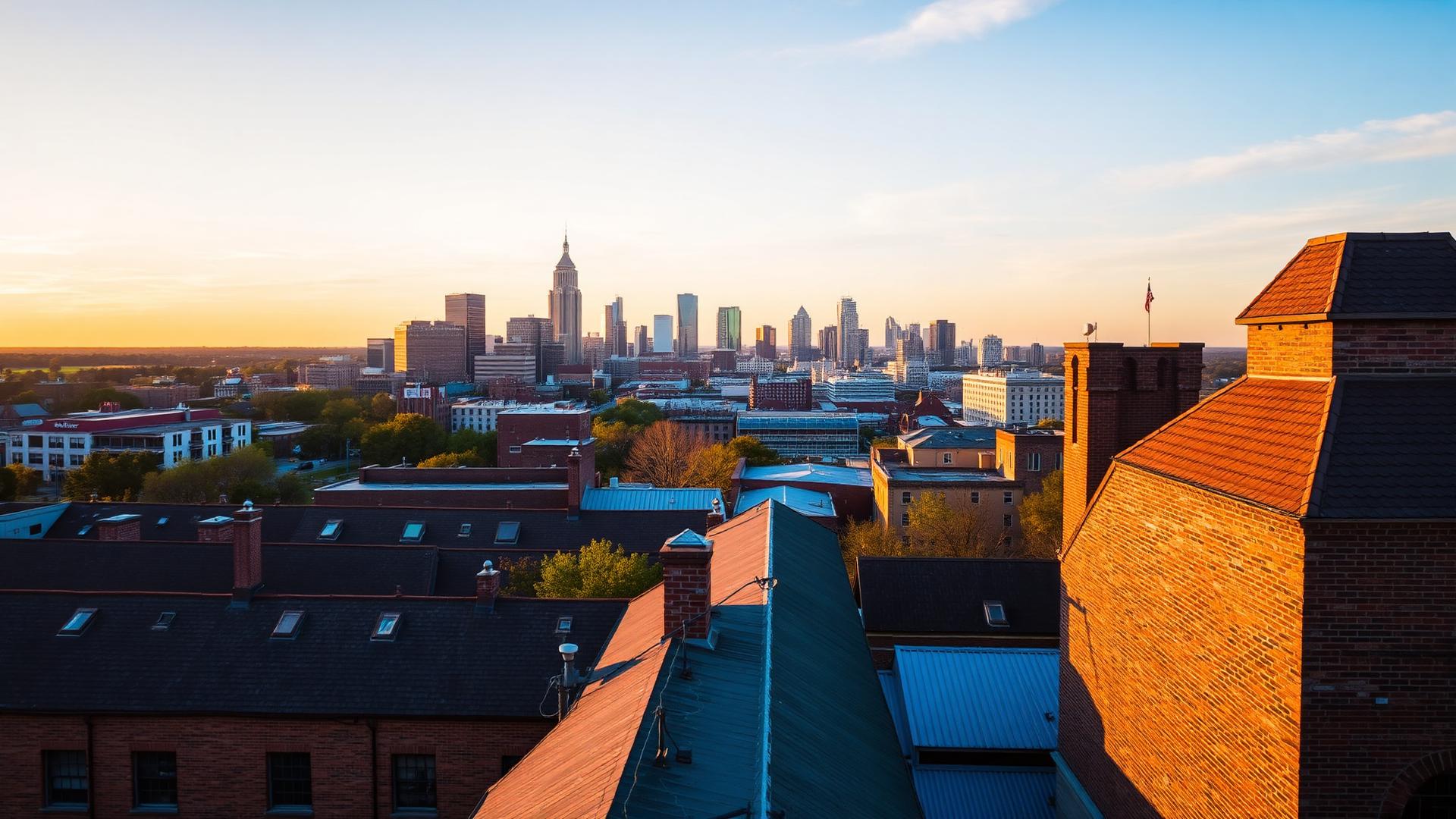
Fort Worth skyline at golden hour above historic brick warehouse rooftops
    Fort Worth, Texas

    Pest Control Software Built for Fort Worth Operators

    Expansive clay soils that crack every August, a service map that stretches from the Stockyards out past Weatherford, and a rodent season that starts the week the first norther blows through. We build the AI phone, messaging, and CRM systems around how Tarrant County work actually runs.

    Typical Fort Worth implementation goes live in about 30-90 days.

    Calls answered and booked
    24/7Calls answered and booked
    Simultaneous calls handled
    UnlimitedSimultaneous calls handled
    Full conversations, both languages
    EN + ESFull conversations, both languages
    API connections available
    1,000+API connections available

    Why Fort Worth work is not Dallas work

    The two halves of the Metroplex share a weather map and almost nothing else operationally. Fort Worth runs wider, older, and further west.

    Cracking clay opens the foundation every summer

    Tarrant County sits on expansive clay that shrinks hard in a dry August and swells again after the first real rain. The gaps that open along slab edges are highways for subterranean termites, odorous house ants, and scorpions, and they reopen on roughly the same calendar every year.

    The service map is genuinely wide

    A single Fort Worth operator may quote in Keller, Burleson, Weatherford, and Mansfield in the same morning. Those are not neighborhoods, they are 30-to-45-minute legs, and one badly placed booking can burn half a technician's afternoon.

    Rodent season arrives with the first cold front

    Older housing stock in Arlington Heights, Ryan Place, and the near Southside has pier-and-beam crawlspaces and unsealed attic penetrations. When temperatures drop in late October the rodent calls hit all at once, and they come in the evening after people hear scratching overhead.

    Spring storms rewrite two weeks of schedule

    North Texas hail and severe weather cancels exterior work in blocks, then produces a wave of mosquito and ant calls once the ground dries. Operators who can reschedule an entire day by text keep the revenue; the ones running a voicemail box lose it.

    Fast-growing suburbs bring new-construction pressure

    Alliance corridor, north Fort Worth, and Aledo keep adding slab-on-grade homes on freshly disturbed ground. New construction means pretreat inquiries, builder relationships, and warranty questions that need a real answer at first contact, not a callback in two days.

    A large share of intake happens in Spanish

    North Side, Diamond Hill, and much of east Fort Worth are heavily Spanish-speaking. Sending those callers into a phone tree or a callback queue is the quietest way to lose a neighborhood you already drive through every week.

    What we build for you

    What that means for your phones and your routes

    We build the systems around your Fort Worth operation, test them on real scenarios, and hand them over.

    Answer the evening rodent calls live

    Voice AI picks up on the first ring at 8pm when someone hears scratching in the attic, qualifies the situation, quotes from your pricing, and books the inspection before they try the next company on the list.

    See Voice AI

    Reschedule a rained-out day in minutes

    Messaging AI runs unlimited SMS, webchat, email, and social conversations at once, moving every affected stop and setting honest lead times instead of leaving customers guessing.

    See Messaging AI

    Protect drive time across a wide county

    Your service areas, ZIP rules, and drive-time limits become booking rules, so the AI builds density in Keller or Burleson instead of scattering stops from Weatherford to Grand Prairie.

    See the AI Sales System

    Work builder and new-construction leads properly

    The AI Sales System follows up on pretreat and warranty inquiries automatically, so the Alliance-corridor pipeline does not depend on someone remembering to call back.

    See Outbound Campaigns

    Want to see what this looks like against your own Fort Worth call volume? We will walk through it on a 30-minute call.

    Book a Discovery Call

    Operators across Tarrant County and west

    Tarrant County service areas, west-side drive times, and ZIP boundaries get configured during onboarding.

    • Fort Worth
    • Arlington
    • Keller
    • Southlake
    • Grapevine
    • North Richland Hills
    • Mansfield
    • Burleson
    • Weatherford
    • Benbrook
    • Saginaw
    • Haslet
    • Aledo
    • Crowley
    • Azle
    • Granbury

    Connected to the software you already run

    We have a deep, purpose-built FieldRoutes integration, and over 1,000 API connections available for everything else, so your Fort Worth operation keeps one source of truth instead of four.

    All third-party product names, logos, and brands are property of their respective owners. Use of these names does not imply endorsement or affiliation.

    What AI adoption looks like in Fort Worth

    Fort Worth operators tend to run leaner offices than their Dallas counterparts while covering a service area that stretches well past Weatherford. The pinch point is almost always the same: one or two people handling phones, scheduling, and collections at once, with calls going to voicemail every time a crew radios in.

    • Small office teams mean a single busy hour reliably produces missed calls
    • Service areas reaching into Parker and Johnson counties make routing errors costly
    • Rural-edge properties bring wildlife and rodent work that needs different qualifying questions than suburban jobs
    • Word-of-mouth referrals arrive by phone rather than by web form, so unanswered calls quietly kill the best leads

    Deciding whether AI is right for your business at all is a separate question from which market you are in. We answer it honestly, including when the answer is not yet, in our AI decision guides, starting with should I use AI in my pest control business.

    Fort Worth's pest calendar: clay, cold fronts, and cattle country

    Tarrant County's clay soil cycle, the timing of North Texas cold fronts, and the ranch land just past the suburbs all shape when different pests show up on the schedule.

    Late July - August

    Extended dry heat shrinks the expansive clay under Tarrant County slabs, opening hairline gaps along foundations that scorpions, crickets, and ants exploit almost immediately. Homes in Arlington Heights and Ryan Place with older pier-and-beam foundations see this first, since their crawlspace vents give pests an even easier route in.

    Late October - November

    The first hard cold front of the season sends house mice and roof rats looking for a way indoors within days, and evening calls about scratching in the attic or walls spike sharply across older Southside and near-west neighborhoods. Crews typically see this surge arrive within a week of the season's first sub-40-degree night.

    March - May

    Spring rebuilds the clay's moisture and swells it back shut, but not before a wave of subterranean termite swarms works through the gaps that opened over the previous summer. Severe weather season also arrives here, and hail events routinely cancel exterior appointments for days at a stretch before mosquito and ant calls rebound once yards dry out.

    June - early July

    New-construction subdivisions in the Alliance corridor and around Aledo see a steady run of termite pretreat inspections as builders finish slabs ahead of the hottest part of summer. First-time homeowners in these areas frequently have never bought pest control before, so these calls need real explanation, not just a scheduling confirmation.

    September - early October

    As Tarrant County dries out from the summer stretch, wasps and yellowjackets build up aggressive late-season nests around eaves and playground equipment, producing a short but sharp run of stinging-insect calls right before the first cold front resets the calendar toward rodents.

    Managing crews across a metro shaped like a fan

    Fort Worth's service area spreads west and south from downtown in a way that Dallas's more compact grid does not, so route planning has to account for real highway corridors rather than assuming any two suburbs are interchangeable.

    I-30 and US-377 are the backbone for west-county routing

    Jobs in Weatherford and Aledo run almost entirely off I-30 and US-377, while Benbrook and Granbury-direction stops split onto separate state highways. Grouping a day's route along one of these corridors instead of criss-crossing between them saves real drive time on a wide territory.

    Older Southside and near-west housing stock needs different techs than new Alliance builds

    Pier-and-beam homes in neighborhoods like Ryan Place and near the Near Southside need crawlspace-comfortable technicians and different equipment than the slab-on-grade new construction going up around the Alliance corridor. Matching technician skill sets to housing type on the schedule avoids a service call that runs long because the crew wasn't set up for the job.

    Stockyards and downtown density calls for tighter time windows

    Commercial kitchens, event venues, and hospitality properties near the Stockyards and downtown Fort Worth expect narrower arrival windows than a residential customer in Saginaw or Haslet would tolerate. Booking rules can flag these accounts for tighter scheduling automatically instead of relying on a dispatcher to remember which clients are pickier.

    Parker and Johnson county ranch properties change what a stop looks like

    Once a route crosses into the rural edges of Parker or Johnson County, a single property might mean multiple structures, livestock considerations, and a longer on-site time than a suburban lot. Scheduling needs to account for that extra time up front rather than treating every stop as a standard 30-minute residential visit.

    Stock Show season adds a short but predictable downtown surge

    The Fort Worth Stock Show and Rodeo each January and February brings extra short-term rental turnover and hospitality pest pressure to the downtown and Cultural District area. Crews who know to expect this annual bump can hold capacity for it instead of getting caught flat-footed by a run of bed bug and general-pest calls from event-week guests.

    Fort Worth pest control questions we get asked

    Fort Worth AI guides

    Location-specific guides written for the pest pressure, routes, and customer behavior of this market.

    Fort Worth overview
    Free 49 KB PDF

    Download the Fort Worth, TX Pest Control AI Playbook

    A short one-pager on the Fort Worth market, the systems we build for operators here, and how implementation runs, written to be printed and passed around.

    • A Fort Worth market snapshot, the pressure that drives your call volume
    • The AI systems we run for operators here, in plain language
    • What a 30-day implementation actually looks like
    • Printable, so you can hand it to your office team

    Last updated 2026-09-17

    Loading the Fort Worth playbook form

    Three ways to see it working in Fort Worth

    Book a demo

    A 30-minute walkthrough against your own Fort Worth call volume.

    Book a Discovery Call

    Start a chat

    Try the messaging AI that answers texts, webchat, and social for pest control teams.

    Start a Chat

    Start free with PestGPT

    Use our free pest control AI assistant today, no contract, no setup call.

    Try PestGPT Free
    Final step

    Let us look at your Fort Worth numbers

    Bring your call volume, your missed-call count, and last October's rodent surge. We will show you what the AI would have caught.

    • A real review of your intake, not a canned demo
    • 30 minutes, and a typical implementation runs about 30-90 days
    • No contract to talk. We never share your details.

    Request your Fort Worth walkthrough

    Prefer to pick a time yourself? Book a Discovery Call