
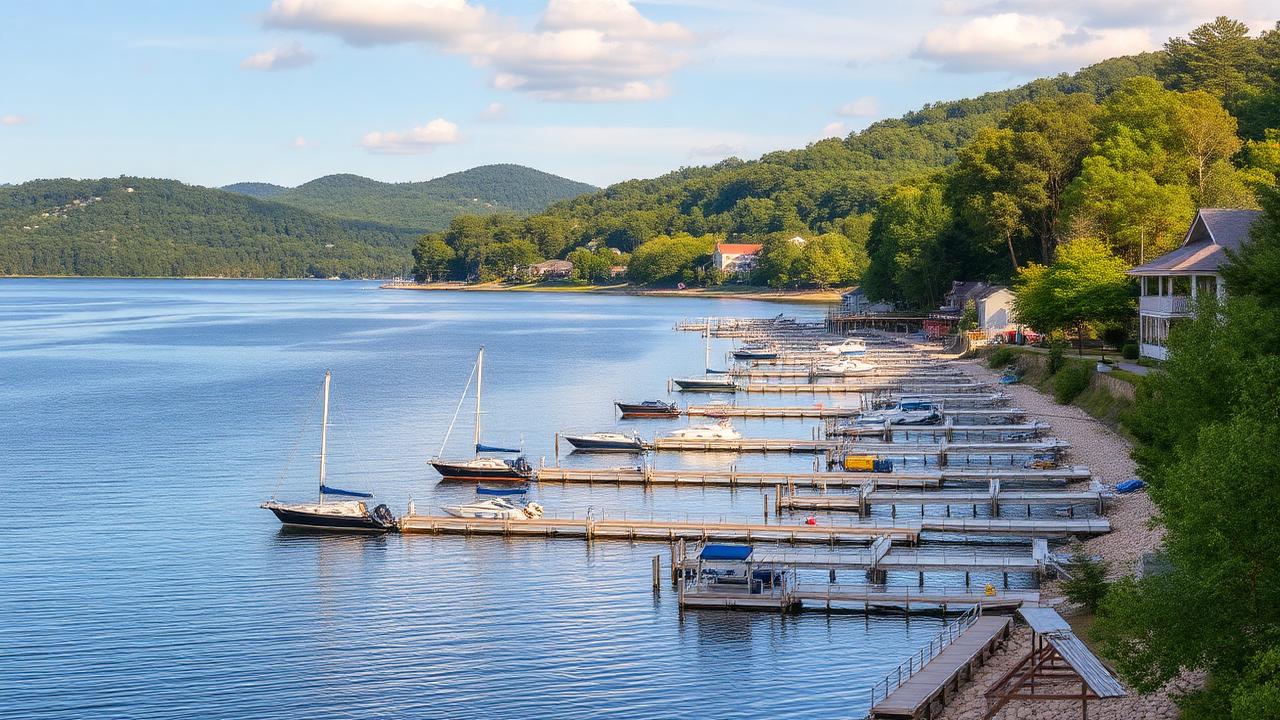
Lake Lanier shoreline with docks and wooded hills near Gainesville, Georgia
    Gainesville, Georgia

    Pest Control Software Built for Gainesville, Georgia Operators

    The self-proclaimed Poultry Capital of the World on one side of the county, and a lake full of weekend homes on the other, each with its own pest calendar.

    Typical Gainesville implementation goes live in about 30-90 days.

    Calls answered and booked
    24/7Calls answered and booked
    Simultaneous calls handled
    UnlimitedSimultaneous calls handled
    Full conversations, both languages
    EN + ESFull conversations, both languages
    API connections available
    1,000+API connections available

    Why Hall County splits into two very different markets

    Gainesville sits between the largest poultry processing base in the country and the shoreline of Lake Lanier, and those two economies pull a pest control operator in opposite directions.

    Poultry processing operations sustain heavy, steady rodent pressure

    Hall County is home to a concentration of poultry processing and feed operations, and the grain, waste, and standing water associated with that industry keep rodent populations elevated across surrounding neighborhoods and warehouses year-round.

    Lake Lanier lakefront homes bring a completely different service profile

    Properties along the shoreline deal with dock-adjacent mosquito breeding, moisture-driven wood-destroying insects in boathouses, and seasonal owners who are only in town on weekends and need service coordinated around that schedule.

    Poultry industry commercial accounts run on strict biosecurity protocols

    Processing plants and grower farms require pest technicians to follow biosecurity check-in procedures before entering a site, which slows down scheduling unless the office already knows which accounts need it.

    Seasonal lake traffic triples the local population in summer

    Weekend and vacation visitors to Lake Lanier push call volume well above the county baseline from Memorial Day through Labor Day, concentrated heavily around Friday afternoons and Sunday evenings.

    Agricultural runoff and poultry litter storage draw filth flies to nearby residences

    Homes near grower operations and litter storage sites deal with recurring filth fly complaints that spike with temperature and humidity, and residents expect same-week response once the smell starts.

    What we build for you

    What that means for your front office

    We build biosecurity account flagging, lake-season surge handling, and weekend-owner scheduling into your systems before launch.

    Flag biosecurity accounts before the technician arrives

    The AI Sales System tags poultry-adjacent commercial accounts so a technician shows up already prepared for check-in protocols instead of losing time on site.

    See the AI Sales System

    Answer the summer lake-season call surge in full

    Voice AI handles unlimited simultaneous calls during the Memorial Day to Labor Day peak, when Lake Lanier visitors push volume well past a normal weekend.

    See Voice AI

    Coordinate lakefront service around a weekend-only owner

    Messaging AI confirms access and timing directly with seasonal lake homeowners who are only in town part of the week, so a truck never rolls to an empty driveway.

    See Messaging AI

    Reach a neighborhood after a filth fly complaint

    Outbound Campaigns can notify nearby households once a fly issue near a poultry or litter storage site is reported, since the underlying cause rarely affects just one address.

    See Outbound Campaigns

    Want to see what this looks like against your own Gainesville call volume? We will walk through it on a 30-minute call.

    Book a Discovery Call

    Operators across Hall County and Lake Lanier

    Biosecurity flagging and lake-season scheduling get configured during onboarding.

    • Gainesville
    • Oakwood
    • Flowery Branch
    • Chestnut Mountain
    • Clermont
    • Lula

    Connected to the software you already run

    We have a deep, purpose-built FieldRoutes integration, and over 1,000 API connections available for everything else, so your Gainesville operation keeps one source of truth instead of four.

    All third-party product names, logos, and brands are property of their respective owners. Use of these names does not imply endorsement or affiliation.

    What AI adoption looks like in Gainesville

    Hall County runs two economies that rarely overlap. The poultry processing base keeps rodent and filth fly pressure high year-round and demands technicians who already understand biosecurity check-in, while Lake Lanier drives an entirely seasonal spike of weekend homeowners and vacationers who need fast, flexible scheduling. A front office built for only one of those markets misses revenue in the other. AI systems let a Gainesville operator run both without splitting into two separate teams.

    • Concentrated poultry processing operations sustain rodent and filth fly pressure across the county
    • Poultry and grower sites require biosecurity check-in protocols before a technician can begin work
    • Lake Lanier lakefront properties bring dock-adjacent mosquito and boathouse moisture issues
    • Summer weekend traffic to the lake triples call volume compared to the winter baseline

    Deciding whether AI is right for your business at all is a separate question from which market you are in. We answer it honestly, including when the answer is not yet, in our AI decision guides, starting with should I use AI in my pest control business.

    Hall County's pest calendar: poultry pressure meets lake seasonality

    Two separate rhythms drive Gainesville's pest calendar: the steady, largely weather-independent output of the poultry industry, and the sharply seasonal swing of Lake Lanier tourism.

    January - February

    Cold weather concentrates rodent activity around poultry houses, feed storage, and nearby residential structures as mice and rats push indoors for warmth, while lakefront properties sit largely quiet with owners away for the winter.

    March - April

    Warming temperatures bring the season's first mosquito activity around dock-adjacent standing water on Lake Lanier, and filth fly complaints near poultry litter storage sites begin climbing as humidity returns.

    May - June

    Lake Lanier traffic starts building ahead of Memorial Day, and weekend homeowners begin requesting service ahead of summer guests, while filth flies and rodent activity near poultry operations continue at a steady year-round pace.

    July - August

    Peak lake season pushes call volume well above the county baseline, concentrated heavily around Friday afternoons and Sunday evenings, while summer heat and humidity drive the year's worst filth fly complaints near litter storage and grower sites.

    September - October

    Lake traffic tapers after Labor Day, giving crews room to catch up on inspections postponed during peak season, while cooling nights start pushing rodents from surrounding farmland toward homes near poultry operations.

    November - December

    Lakefront properties empty out for the winter, requiring coordinated access scheduling with absentee owners, while poultry-adjacent neighborhoods see rodent calls climb again as temperatures drop and shelter-seeking increases.

    Running crews between poultry country and the lakefront

    Hall County's geography splits cleanly between industrial poultry operations on one side and Lake Lanier's shoreline on the other, and routing has to flex between the two without losing a day to travel.

    US-129 and Highway 60 connect the two halves of the county

    Crews often start a day near poultry processing and grower operations on one side of the county and finish near the lakefront, so these corridors carry the bulk of cross-county travel and get built into route timing.

    Biosecurity check-in adds real time to poultry-adjacent commercial stops

    Processing plants and grower farms require technicians to follow site check-in procedures before beginning work, so those appointments need more buffer time than a standard commercial stop.

    Lake Lanier shoreline access varies enormously by property

    Some lakefront homes have straightforward road access while others require navigating private community roads or boat-accessible sections, so technicians confirm access details before dispatch rather than discovering a locked gate on arrival.

    Summer weekend surges require temporary staffing shifts

    The gap between winter and Memorial Day-to-Labor Day call volume is large enough that several operators shift technicians toward lakefront service on Fridays and away from it on weekday mornings when lake owners are not around.

    Grower and litter storage sites cluster in specific unincorporated areas

    Poultry growing operations tend to concentrate outside Gainesville proper in unincorporated Hall County, so filth fly and rodent complaints tied to those sites often come from the same handful of surrounding neighborhoods.

    Seasonal owner scheduling depends on remote confirmation

    Weekend-only lake homeowners are frequently unreachable by phone during the work week, so confirming access and treatment windows ahead of a Friday or Saturday visit has to happen through text rather than a live call.

    Chestnut Mountain and Flowery Branch add meaningful drive time

    These growing residential areas sit a real distance from both downtown Gainesville and the immediate lakefront, so they typically get scheduled as their own route block rather than folded into either core territory.

    Summer humidity compresses outdoor treatment windows near the lake

    High humidity and afternoon storm activity common near the water during peak season push exterior mosquito and perimeter treatments toward early morning appointments whenever possible.

    Gainesville, Georgia pest control questions

    Gainesville AI guides

    Location-specific guides written for the pest pressure, routes, and customer behavior of this market.

    Gainesville overview
    Free 48 KB PDF

    Download the Gainesville, GA Pest Control AI Playbook

    A short one-pager on the Gainesville market, the systems we build for operators here, and how implementation runs, written to be printed and passed around.

    • A Gainesville market snapshot, the pressure that drives your call volume
    • The AI systems we run for operators here, in plain language
    • What a 30-day implementation actually looks like
    • Printable, so you can hand it to your office team

    Last updated 2026-09-17

    Loading the Gainesville playbook form

    Three ways to see it working in Gainesville

    Book a demo

    A 30-minute walkthrough against your own Gainesville call volume.

    Book a Discovery Call

    Start a chat

    Try the messaging AI that answers texts, webchat, and social for pest control teams.

    Start a Chat

    Start free with PestGPT

    Use our free pest control AI assistant today, no contract, no setup call.

    Try PestGPT Free
    Final step

    Bring us your last lake-weekend call log

    Look at how many Friday afternoon calls from Lake Lanier visitors went unanswered. Those callers are already dialing the next name on the list.

    • A real review of your intake, not a canned demo
    • 30 minutes, and a typical implementation runs about 30-90 days
    • No contract to talk. We never share your details.

    Request your Gainesville walkthrough

    Prefer to pick a time yourself? Book a Discovery Call