
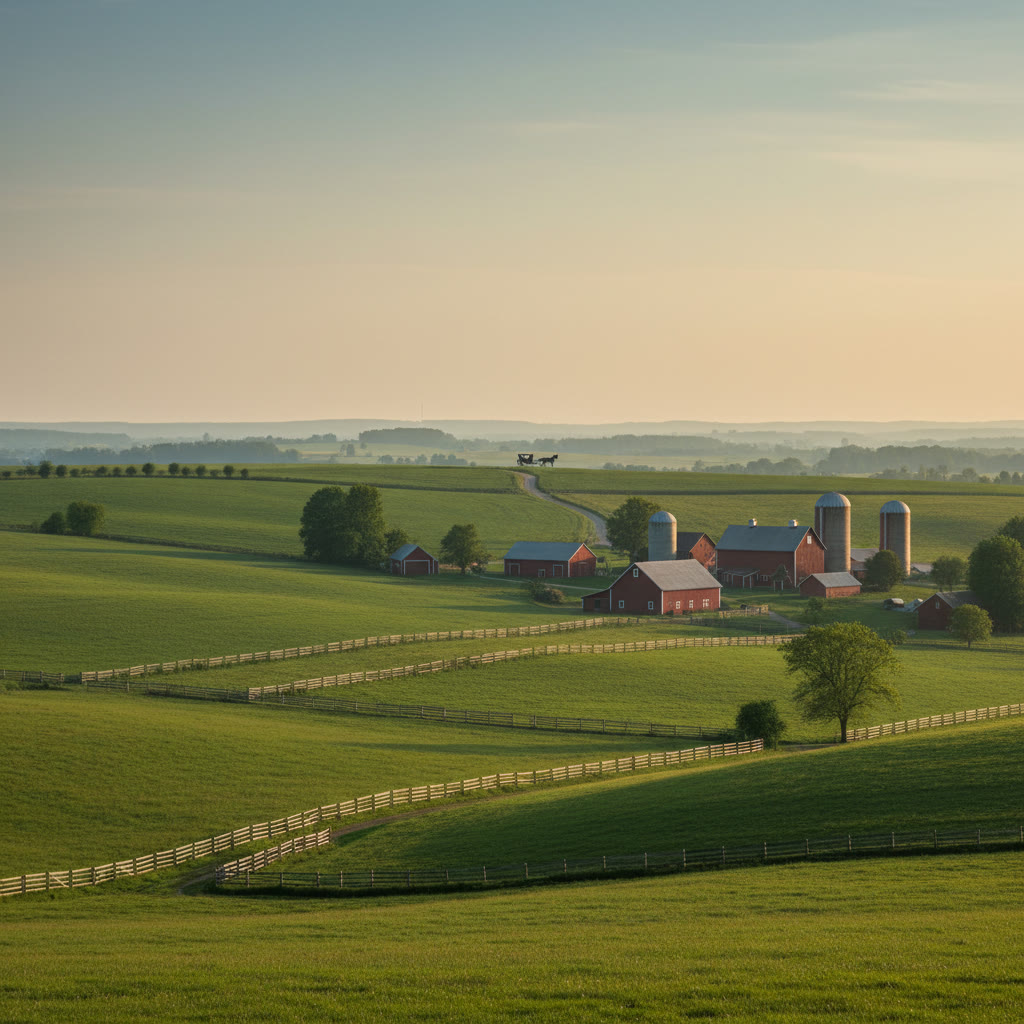
Lancaster County, Pennsylvania farmland with a red barn and rolling Amish Country fields
    Lancaster, Pennsylvania

    Pest Control Software Built for Lancaster Operators

    Working dairy and tobacco farms ring a historic downtown grid of brick rowhomes, and the mix of livestock operations, produce auctions, and dense city blocks gives Lancaster County operators one of the widest pest ranges in the state. No Lancaster caller waits: our AI responds the instant the call arrives.

    Typical Lancaster implementation goes live in about 30-90 days.

    Why Lancaster County means farm calls and city calls in the same week

    A metro anchored by both a historic downtown and thousands of working farms means a fly control job for a dairy barn and a bed bug report from a downtown rowhome can land on the same route sheet.

    Stink bug pressure spikes hard every fall across the county

    Lancaster County sits near the epicenter of the brown marmorated stink bug's original US spread, and farmhouses and suburban homes near crop fields both see overwintering swarms every September and October that overwhelm phone lines if calls aren't triaged fast.

    Dairy and poultry operations need fly and rodent control that respects working farm schedules

    Livestock operations across the townships need service timed around milking and feeding schedules, and a missed callback on a fly or rodent problem at a working farm can affect herd health, not just comfort.

    Lancaster City rowhome blocks concentrate bed bug and roach pressure

    The dense brick rowhome grid downtown, much of it converted to rentals near Franklin & Marshall College, sees the kind of turnover-driven bed bug and German roach pressure that farmland townships rarely deal with.

    Produce auctions and farmers markets create seasonal commercial pest surges

    Roadside stands and produce auction houses that ramp up through the growing season bring their own fly and rodent pressure tied to fruit and vegetable volume, a very different account type than either the farms or the city rowhomes.

    Horse-and-buggy properties and Plain Sect households need a different intake approach

    Many Amish and Mennonite households across townships like Leacock and Bird-in-Hand don't use phones at the property, so calls often come from a phone shanty, a neighbor, or an English driver on their behalf, and intake needs to handle that pattern without confusion.

    Old stone farmhouses and bank barns create year-round rodent and carpenter bee pressure

    The county's fieldstone farmhouses and timber-frame bank barns, some standing since the 1800s, have gaps and untreated wood that draw mice, rats, and carpenter bees consistently, so a single farm account can generate service calls in nearly every season.

    What we build for you

    What that means for your phones and your crews

    We configure around a market where a working dairy farm and a downtown rental rowhome can both be calling before 8 a.m.

    Triage fall stink bug surges without losing other calls

    Voice AI handles the seasonal spike in overwintering stink bug calls every fall, so farmhouse and suburban callers get an answer without burying calls from other accounts.

    See Voice AI

    Keep farm service windows aligned with milking and feeding schedules

    PestCRM tracks each farm account's preferred service windows so fly and rodent work gets scheduled around livestock operations instead of generic time slots.

    See PestCRM

    Catch rowhome bed bug reports before turnover season makes them worse

    Messaging AI responds instantly to rental property managers near downtown and Franklin & Marshall, which matters most during the August-September turnover crunch.

    See Messaging AI

    Want to see what this looks like against your own Lancaster call volume? We will walk through it on a 30-minute call.

    Book a Discovery Call

    Operators across the Lancaster County area

    Service areas across the county's townships and boroughs are configured during onboarding.

    • Lancaster City
    • Ephrata
    • Lititz
    • Manheim
    • Elizabethtown
    • Columbia
    • Willow Street
    • Strasburg

    Connected to the software you already run

    We have a deep, purpose-built FieldRoutes integration, and over 1,000 API connections available for everything else, so your Lancaster operation keeps one source of truth instead of four.

    All third-party product names, logos, and brands are property of their respective owners. Use of these names does not imply endorsement or affiliation.

    What AI adoption looks like in Lancaster

    Lancaster County operators run routes that span working dairy farms, produce auctions, and a dense downtown rowhome grid, three customer types that peak at different times of year for different reasons. An AI system that can triage a fall stink bug surge while still protecting scheduled farm windows and catching turnover-season rowhome calls covers ground a single dispatcher can't.

    • Brown marmorated stink bug overwintering swarms create sharp fall call spikes countywide
    • Dairy and poultry operations need fly and rodent service timed to livestock schedules
    • Lancaster City rowhome rentals see bed bug and roach pressure tied to college-area turnover
    • Seasonal produce auctions and farm stands add fly and rodent demand through the growing season

    Deciding whether AI is right for your business at all is a separate question from which market you are in. We answer it honestly, including when the answer is not yet, in our AI decision guides, starting with should I use AI in my pest control business.

    The Lancaster County pest calendar, season by season

    Southeastern Pennsylvania's humid summers, cold winters, and mix of farmland and dense city blocks drive a pest calendar that looks different depending on whether a route runs through Bird-in-Hand or downtown.

    March - May

    Carpenter ants and carpenter bees become active in the county's older bank barns and timber-frame outbuildings as temperatures climb, and termite swarmers emerge in stone farmhouses and rowhomes alike once soil warms in April. Rodents that wintered in barns and rowhome basements start actively foraging again, driving a steady rise in mouse and rat complaints. Spring also brings the first tick reports from families near Chickies Rock and Lancaster County Central Park as outdoor activity picks up.

    June - August

    Fly pressure peaks hard at livestock operations as summer heat accelerates manure and feed decomposition, making June through August the busiest fly-control stretch of the year for dairy and poultry accounts. German roach calls rise in Lancaster City rowhomes as window units and humid rowhome kitchens create ideal breeding conditions. Mosquito complaints climb near the Conestoga River and low-lying farmland with standing irrigation water.

    September - October

    Brown marmorated stink bugs begin their fall migration into structures countywide, overwhelming phone lines at farmhouses, suburban developments, and even downtown apartments as the insects seek overwintering spots. Lancaster City rental turnover tied to the Franklin & Marshall academic calendar drives a parallel spike in bed bug and German roach reports. Yellowjackets become more aggressive around farm stands and outdoor markets as colonies peak before winter die-off.

    November - February

    Rodents move indoors aggressively once temperatures drop, and the county's stone farmhouses, timber bank barns, and older rowhome basements all offer easy entry points, making winter the steadiest rodent season of the year. Stink bugs that overwintered indoors reappear on warm days inside walls and attics, confusing homeowners who thought the fall surge was over. Farm accounts also see winter rodent pressure in grain storage and feed rooms that needs quick response to avoid contamination.

    Early fall: stink bug overwintering surge

    Late September through October brings the county's single largest call spike as brown marmorated stink bugs move from crop fields into any nearby structure, farmhouse or suburban rooftop alike, looking for overwintering sites. Townships closest to orchard and field crop acreage, including areas around Quarryville and Christiana, see the heaviest volume, but suburban developments near New Holland aren't far behind. Crews that can't triage this surge quickly risk losing other seasonal work to the backlog.

    Late summer: rowhome turnover and bed bug pressure

    August into September brings a wave of rental turnover near downtown and the Franklin & Marshall campus, and every lease change carries bed bug and roach risk in the older rowhome housing stock. Property managers juggling multiple units need fast confirmation that a unit is treated before a new tenant moves in, and a slow response during this window can mean an infestation spreads to an adjoining rowhome wall before it's caught.

    What routing Lancaster County actually costs you

    Lancaster's mix of a compact historic city grid, dense suburban boroughs, and miles of farm township roads means a route built for one area rarely works for another.

    Route 30 and the Route 222 corridor carry most cross-county traffic

    Getting between Lancaster City, Paradise, and the eastern townships usually means using the Route 30 bypass or Route 222, and a route built without those corridors as anchors loses time on slower township roads shared with horse-and-buggy traffic.

    Horse-and-buggy traffic slows rural routes at predictable times

    Roads through Bird-in-Hand, Intercourse, and Leacock Township regularly share lanes with Amish buggies, and crews scheduling farm stops need extra drive-time buffer during peak travel hours rather than assuming rural roads mean fast travel.

    Farm accounts need service timed to milking and harvest, not a generic window

    A dairy operation's preferred service time is dictated by twice-daily milking, and a produce farm's schedule shifts hard during harvest weeks, so a route built on fixed morning-or-afternoon slots ignores real constraints that determine whether a technician gets access at all.

    Lancaster City rowhome blocks need tight, walkable routing

    The historic downtown grid around King and Queen Streets is dense enough that several rowhome stops can be clustered into a short walking loop, and treating each one as a separate drive-time stop wastes hours that could go to farm or suburban accounts.

    Intake needs a workaround for customers without a direct phone line

    Plain Sect households often don't have a phone at the property, so calls come through a phone shanty, a shared community line, or a neighbor, and intake scripts need to capture a reliable callback method without assuming a standard residential phone setup.

    Suburban boroughs like Lititz and Ephrata need faster response than farmland routes

    Growing boroughs such as Lititz and Ephrata have suburban call volume and expectations closer to a typical residential market, and lumping those stops into the same drive-time assumptions as rural farm township routes underserves both.

    Weather on the Susquehanna floodplain can cancel Columbia-area routes fast

    Areas near Columbia and the Susquehanna River floodplain are prone to sudden flooding after heavy rain, and exterior treatments scheduled there need a same-day rescheduling plan so a single storm doesn't cascade into a lost week of route time.

    Grain storage and feed room jobs at farm accounts run longer than standard visits

    Rodent exclusion work in barns, grain bins, and feed storage takes meaningfully longer than a residential visit because of the scale of the structure and the need to protect stored feed, so scheduling these like a standard 30-minute stop understaffs the job.

    Commercial produce auction accounts cluster around specific calendar weeks

    Auction houses near Leola and New Holland see pest pressure spike hard during specific harvest and auction weeks rather than evenly across the season, so building flexibility into late-summer scheduling keeps a surge in commercial demand from crowding out farm and residential accounts.

    Lancaster pest control questions we get asked

    Lancaster AI guides

    Location-specific guides written for the pest pressure, routes, and customer behavior of this market.

    Lancaster overview
    • Should you use AIShould I use AI in my Lancaster pest control business?Coming soon.
    • Will customers talk to AIWill pest control customers in Lancaster talk to AI?Coming soon.
    • Best AI for pest controlWhat is the best AI for pest control in Lancaster?Coming soon.
    • Speed to leadHow can Lancaster pest control companies win with speed-to-lead?Coming soon.
    • Best software stackWhat is the best pest control software for Lancaster operators?Coming soon.
    • Local marketingHow should pest control companies in Lancaster market themselves locally?Coming soon.
    • Reviews & reputationHow can Lancaster pest control companies get more reviews and protect their reputation?Coming soon.
    • Seasonal playbookWhat is the seasonal pest control playbook for Lancaster?Coming soon.
    • Commercial AIHow does AI help commercial pest control accounts in Lancaster?Coming soon.
    • Hiring vs AIShould Lancaster pest control operators hire office staff or use AI?Coming soon.
    Free 48 KB PDF

    Download the Lancaster, PA Pest Control AI Playbook

    A short one-pager on the Lancaster market, the systems we build for operators here, and how implementation runs, written to be printed and passed around.

    • A Lancaster market snapshot, the pressure that drives your call volume
    • The AI systems we run for operators here, in plain language
    • What a 30-day implementation actually looks like
    • Printable, so you can hand it to your office team

    Last updated 2026-09-17

    Loading the Lancaster playbook form

    Three ways to see it working in Lancaster

    Book a demo

    A 30-minute walkthrough against your own Lancaster call volume.

    Book a Discovery Call

    Start a chat

    Try the messaging AI that answers texts, webchat, and social for pest control teams.

    Start a Chat

    Start free with PestGPT

    Use our free pest control AI assistant today, no contract, no setup call.

    Try PestGPT Free
    Final step

    Let's look at your fall stink bug call volume

    Pull last October's call logs. We can show you how many stink bug complaints went unanswered while your crews were out on farm accounts.

    • A real review of your intake, not a canned demo
    • 30 minutes, and a typical implementation runs about 30-90 days
    • No contract to talk. We never share your details.

    Request your Lancaster walkthrough

    Prefer to pick a time yourself? Book a Discovery Call