
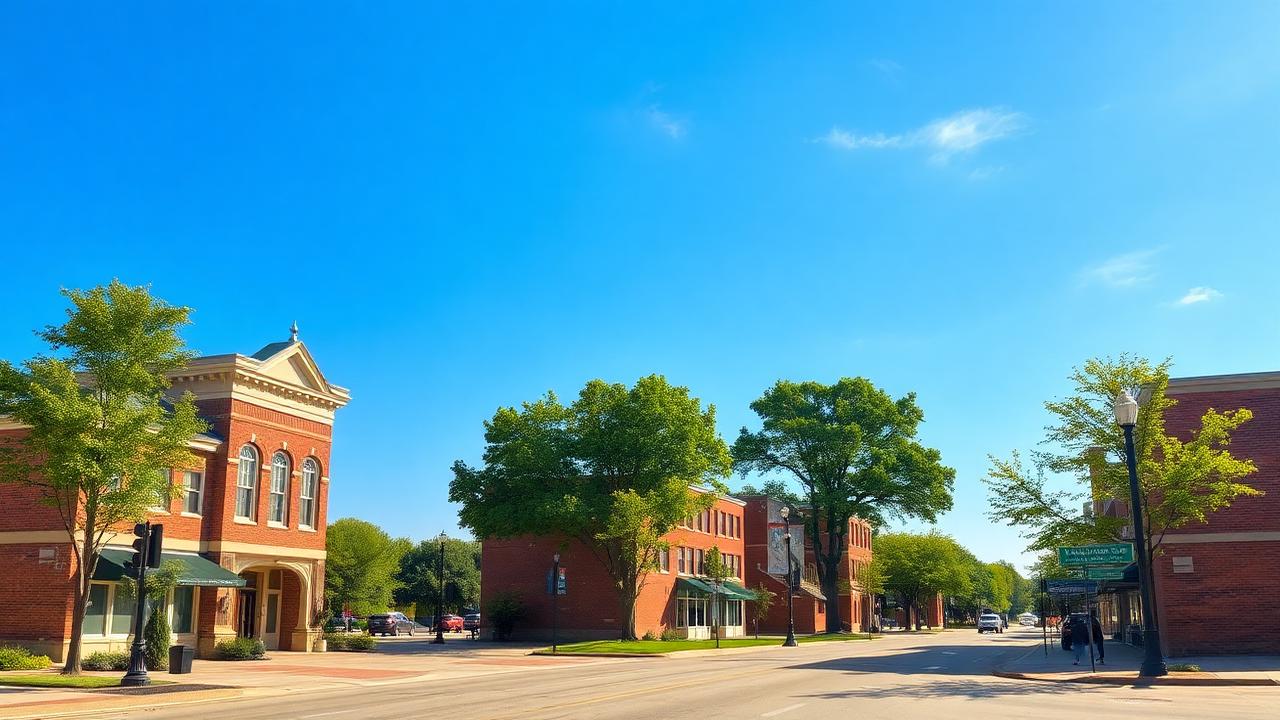
Daytime view of the Campanile bell tower on the Iowa State University campus in Ames, Iowa
    Ames, Iowa

    Pest Control Software Built for Ames Operators

    Jack Trice Stadium gamedays flood Campustown with short-term foot traffic six or seven Saturdays a season, the federally funded Ames Laboratory and USDA's National Animal Disease Center bring lab-grade documentation requirements most residential crews never touch, and the South Skunk River floodplain running along the east edge of town keeps a damp, mosquito-and-ant caseload going long after Story County's row crops go dormant. Our AI systems keep every one of those calls covered.

    Typical Ames implementation goes live in about 30-90 days.

    Why Ames pest work splits between a research campus and a river floodplain

    Ames carries a heavier concentration of federally regulated research facilities than almost any town its size in Iowa, and that sits right next to a floodplain corridor and a stadium district that each drive their own separate call patterns.

    Ames Laboratory and USDA facilities require documented, credentialed pest visits

    The Department of Energy's Ames Laboratory and the USDA's National Animal Disease Center both operate under federal facility protocols, so any pest contractor working those buildings needs visit logs, background-checked staff, and reporting formats a typical rental account never asks for.

    Jack Trice Stadium gamedays compress Campustown service windows

    Six or seven fall Saturdays bring tens of thousands of visitors through Campustown bars and short-term rentals, and the trash volume and foot traffic that follow produce a same-week bump in rodent and wasp sightings that a normal weekday schedule can't easily absorb.

    South Skunk River floodplain keeps mosquito and ant pressure high into fall

    Neighborhoods backing onto the South Skunk River and Squaw Creek corridors on Ames' east and north sides stay damp well past when the surrounding uplands dry out, extending mosquito treatments and pavement ant calls weeks beyond what drier subdivisions near South Duff Avenue see.

    South Duff Avenue's commercial strip runs on a different clock than campus housing

    The hotels, restaurants and big-box retail lining South Duff Avenue near US-30 need next-day commercial turnaround, since a rodent sighting reported to a health inspector can threaten a restaurant's rating long before residential tenants would even notice a problem.

    Grain elevators and seed-corn facilities ring the city on three sides

    Ames sits inside a dense ring of grain storage and seed-corn processing tied to the surrounding Story County farm economy, and those facilities need stored-product pest programs timed to intake and shipping schedules rather than a standard quarterly visit.

    What we build for you

    What that means for your phones and your crews

    We configure intake around federal-facility documentation, gameday spikes, and the floodplain's longer pest season.

    Give Ames Lab and USDA accounts the paper trail they require

    Voice AI logs every commercial visit with timestamps and technician detail, giving federally regulated research accounts the documentation their own compliance reviews demand.

    See Voice AI

    Absorb the gameday-week Campustown surge without adding staff

    Messaging AI handles the rush of wasp and rodent reports that follows a full stadium weekend, so Campustown property managers aren't left waiting until Monday.

    See Messaging AI

    Keep South Duff commercial accounts ahead of a health inspection

    The AI Sales System flags restaurant and hospitality accounts along South Duff Avenue for expedited scheduling, since a delayed rodent response there carries real regulatory risk.

    See the AI Sales System

    Want to see what this looks like against your own Ames call volume? We will walk through it on a 30-minute call.

    Book a Discovery Call

    Operators across Story County

    Service areas from Ames out through Nevada, Huxley, Gilbert and Slater are configured during onboarding.

    • Campustown
    • South Duff corridor
    • Northridge
    • Old Town / Main Street
    • Nevada
    • Gilbert

    Connected to the software you already run

    We have a deep, purpose-built FieldRoutes integration, and over 1,000 API connections available for everything else, so your Ames operation keeps one source of truth instead of four.

    All third-party product names, logos, and brands are property of their respective owners. Use of these names does not imply endorsement or affiliation.

    What AI adoption looks like in Ames

    Ames operators serve a market where a Department of Energy research lab, a USDA disease center, a Big 12 football stadium, and a floodplain corridor all sit within a few miles of each other, and each one produces a completely different kind of pest call at a completely different pace. AI intake that can tell a federal-facility account apart from a gameday-week Campustown complaint is what keeps this market from feeling chaotic.

    • Ames Laboratory and USDA facilities require documented, credentialed commercial visits
    • Jack Trice Stadium gamedays compress Campustown service demand into single weekends
    • South Skunk River and Squaw Creek corridors extend mosquito and ant season past the surrounding uplands
    • Grain elevators and seed-corn facilities ringing the city need stored-product pest programs

    Deciding whether AI is right for your business at all is a separate question from which market you are in. We answer it honestly, including when the answer is not yet, in our AI decision guides, starting with should I use AI in my pest control business.

    Ames' pest calendar: gamedays, grain, and the river corridor

    Iowa State's football and academic calendars, the Story County grain cycle, and the South Skunk River's floodplain moisture each set a different pest rhythm, and they rarely line up with each other.

    Late August - early September

    Fall move-in around Campustown and the Northridge rental blocks compresses a semester of turnover into about ten days, producing a run of German roach and bed bug inspections in older student housing right as the first home football games bring an entirely separate wave of gameday-district complaints.

    September - November (home game Saturdays)

    Each Jack Trice Stadium home game leaves behind a spike in overflowing trash and tailgate debris across Campustown, which draws yellowjackets in September and rats by late October. Property managers along Welch Avenue and Lincoln Way typically call in the two or three days following a game rather than during the game week itself.

    October - November

    As combines finish Story County's corn and soybean acres, deer mice and voles move off the stubble ringing Ames and into garages and outbuildings on the city's edges, particularly near Northridge and the industrial park off South Duff. Cluster flies begin working south-facing siding on older homes near Main Street during these same weeks.

    December - February

    Once the South Skunk River freezes over, most calls move indoors: mice already inside wall voids in older Ames homes, cluster flies reappearing on sunny window sills, and stored-product pests turning up in grain facility inspections timed around winter shipping lulls.

    March - May

    Snowmelt along the South Skunk River and Squaw Creek raises groundwater under homes in the low-lying neighborhoods east of campus, waking up ants and drawing the season's first mosquito complaints well before Memorial Day. Iowa State's spring semester ending in May brings a smaller version of the August turnover rush.

    June - July

    Humidity off the river corridor keeps mosquito programs running through midsummer, while the seed-corn and grain-processing plants ringing the city ramp up intake ahead of the next harvest, prompting a round of stored-product pest inspections before the storage season begins in earnest.

    Running crews between campus density and Story County's open ground

    Ames territory ranges from block-packed Campustown rentals to grain facilities and farmsteads well outside city limits, so routing has to shift constantly between tight in-town stops and long drives out US-30 or Highway 69 depending on the day.

    US-30 and Highway 69 anchor the rural routing pattern

    Nevada sits about ten miles east on US-30 and Gilbert roughly seven miles north on Highway 69, with Huxley and Slater further out to the southwest and northwest. Grouping outlying stops along the same corridor keeps a single day's drive time from swallowing the actual service work.

    Welch Avenue and Lincoln Way carry the campus-district density

    The rental blocks along Welch Avenue and Lincoln Way near campus pack tightly together, which speeds routing most weeks but turns one missed appointment into a cascade of complaints across a single property manager's portfolio after a home game weekend.

    Federal-facility accounts need their own scheduling lane

    Ames Laboratory and the USDA's National Animal Disease Center require credentialed technicians and advance clearance for site access, so those visits typically get built into a separate block rather than squeezed between residential stops.

    South Duff Avenue commercial accounts run on next-day expectations

    Hotels, chain restaurants and retail along South Duff near the US-30 interchange expect fast turnaround since a delayed rodent response can trigger a health-department follow-up, so dispatch usually treats that corridor as its own priority lane rather than folding it into general residential routing.

    Floodplain neighborhoods need moisture-aware routing each spring

    Homes near the South Skunk River and Squaw Creek see recurring spring groundwater issues that crews familiar with the area's usual damp basements and crawlspace entry points can move through faster than a first-time inspection allows.

    Grain elevator and seed-corn accounts follow harvest and shipping windows

    Stored-product pest work at the elevators and processing plants ringing Ames needs to be timed around intake and shipping schedules rather than a fixed quarterly date, so those accounts usually call ahead with a narrow window rather than booking a standard slot.

    Ames pest control questions we get asked

    Ames AI guides

    Location-specific guides written for the pest pressure, routes, and customer behavior of this market.

    Ames overview
    Free 49 KB PDF

    Download the Ames, IA Pest Control AI Playbook

    A short one-pager on the Ames market, the systems we build for operators here, and how implementation runs, written to be printed and passed around.

    • A Ames market snapshot, the pressure that drives your call volume
    • The AI systems we run for operators here, in plain language
    • What a 30-day implementation actually looks like
    • Printable, so you can hand it to your office team

    Last updated 2026-09-17

    Loading the Ames playbook form

    Three ways to see it working in Ames

    Book a demo

    A 30-minute walkthrough against your own Ames call volume.

    Book a Discovery Call

    Start a chat

    Try the messaging AI that answers texts, webchat, and social for pest control teams.

    Start a Chat

    Start free with PestGPT

    Use our free pest control AI assistant today, no contract, no setup call.

    Try PestGPT Free
    Final step

    Let's look at your gameday-week calls

    Pull your call logs from the Monday after a Jack Trice home game. We'll show you how many Campustown wasp and rodent reports sat unanswered until Tuesday.

    • A real review of your intake, not a canned demo
    • 30 minutes, and a typical implementation runs about 30-90 days
    • No contract to talk. We never share your details.

    Request your Ames walkthrough

    Prefer to pick a time yourself? Book a Discovery Call