
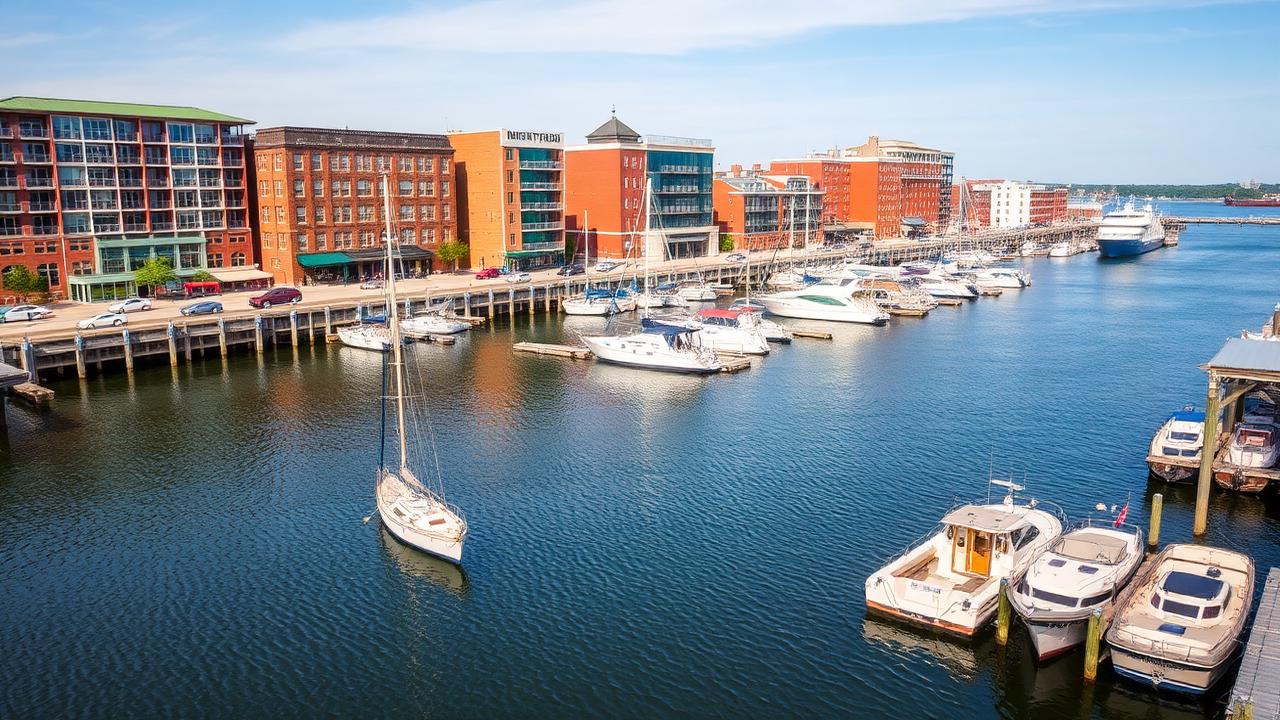
Hampton waterfront near the Back River tidewater marshland
    Hampton, Virginia

    Pest Control Software Built for Hampton Operators

    One of the oldest continuously occupied cities in the country, Langley Air Force Base personnel rotating through, and Back River marshland that floods the low streets. We build AI systems that answer around the clock and keep the schedule full.

    Typical Hampton implementation goes live in about 30-90 days.

    Live answering, nights and weekends
    24/7Live answering, nights and weekends
    Simultaneous calls handled
    UnlimitedSimultaneous calls handled
    Conversations end to end
    EN + ESConversations end to end
    API connections available
    1,000+API connections available

    Why Hampton is a distinct market

    Hampton's age and its base economy both push pest demand in specific, predictable directions.

    Langley Air Force Base sets its own PCS calendar

    Airmen and their families rotate through Langley on the Air Force timetable, which means Hampton sees move-in inspection demand at points in the year that do not always line up with the Navy-driven surges in Norfolk and Virginia Beach.

    Centuries-old housing stock invites structural pests

    Hampton is one of the oldest cities in the country, and neighborhoods like Phoebus and Wythe have original wood-frame homes with decades of settling, cracked foundations, and gaps that give eastern subterranean termites and carpenter ants easy access.

    Back River and Hampton River marshland drives mosquito and flooding pressure

    Tidal marsh along the Back River and the Hampton River pushes brackish standing water into low-lying yards, feeding mosquito populations through the warm months and periodically flooding streets in Wythe and Buckroe, which pushes rodents toward higher ground.

    Fort Monroe's historic district adds unique structural cases

    The former Fort Monroe grounds and surrounding historic properties have masonry and wood-frame construction methods rarely seen in newer Hampton Roads subdivisions, and pest issues there often require more explanation to homeowners unfamiliar with older buildings.

    Licensing runs through VDACS

    A Virginia Department of Agriculture and Consumer Services pesticide business license is required to operate here, and buyers of historic properties near Fort Monroe often ask pointed questions about treatment methods near protected or older structures.

    What we build for you

    What that means for your phones and your proposals

    We build the AI around your Hampton operation, then hand you the keys.

    Capture Langley PCS demand on its own schedule

    Voice AI answers instantly and books move-in inspections whenever Langley families arrive, regardless of whether it lines up with the broader Hampton Roads Navy rotation.

    See Live Chat AI

    Respond fast after Back River flooding

    Messaging AI handles the rodent and moisture call surge that follows tidal flooding in Wythe and Buckroe, getting exclusion work booked before homeowners look elsewhere.

    See PestMail

    Keep historic-home termite proposals from stalling

    The AI Sales System tracks proposals for older Phoebus and Fort Monroe-area properties with automated follow-up until the homeowner decides.

    See the AI Sales System

    Get live before the next Langley rotation

    Implementation is timed to your Hampton service area so your AI is answering calls before the next wave of base arrivals hits.

    See Implementation

    Want to see what this looks like against your own Hampton call volume? We will walk through it on a 30-minute call.

    Book a Discovery Call

    Operators across the Hampton area

    Service areas, base proximity, and flood zones are configured during onboarding.

    • Hampton
    • Phoebus
    • Wythe
    • Buckroe
    • Fox Hill
    • Fort Monroe

    Connected to the software you already run

    We have a deep, purpose-built FieldRoutes integration, and over 1,000 API connections available for everything else, so your Hampton operation keeps one source of truth instead of four.

    All third-party product names, logos, and brands are property of their respective owners. Use of these names does not imply endorsement or affiliation.

    What AI adoption looks like in Hampton

    Hampton's pest demand is set by two forces that do not run on the same clock: Langley's Air Force rotation and centuries of accumulated wear on some of the oldest buildings in the country. The AI needs to handle a young Langley family and a Phoebus homeowner with a 1920s foundation equally well.

    • Langley Air Force Base rotation timing differs from the broader Hampton Roads Navy PCS cycle
    • Some of the oldest housing stock in the region generates structural pest questions unique to century-old construction
    • Back River and Hampton River tidal flooding produces event-driven rodent and moisture call spikes
    • Historic Fort Monroe-area properties bring homeowners who want extra explanation before booking

    Deciding whether AI is right for your business at all is a separate question from which market you are in. We answer it honestly, including when the answer is not yet, in our AI decision guides, starting with should I use AI in my pest control business.

    Hampton's pest calendar: tidal marsh, old foundations, and base turnover

    Hampton's brackish marshland, some of the oldest housing stock in the country, and a base rotation on its own calendar each shape a distinct call pattern through the year.

    March - April

    Eastern subterranean termite swarmers emerge from cracked foundations in Phoebus and Wythe as the ground warms, and spring PCS arrivals at Langley add a wave of move-in inspection requests.

    May - June

    Warming Back River and Hampton River marsh water starts feeding mosquito populations, and Fort Monroe-area homeowners with historic masonry construction begin calling about seasonal pest activity unique to older building methods.

    July - August

    Peak mosquito season along the tidal marsh coincides with the height of summer PCS season at Langley, so move-in inspections and marsh-driven mosquito calls both run heavy at the same time.

    September - October

    Tropical-system remnants occasionally push tidal flooding into low-lying Wythe and Buckroe streets, sending rodents toward higher ground and generating a short but sharp rodent-exclusion call spike.

    November - December

    Cooling temperatures drive rodents into century-old wood-frame homes through gaps that newer Hampton Roads construction does not have, and fall PCS arrivals add another round of move-in inspections.

    January - February

    Cold snaps push mice and the occasional carpenter ant colony deeper into wall voids in older Phoebus and Fort Monroe-area homes, while base housing turnover slows to its quietest stretch of the year.

    Running crews across old streets and base timing

    Hampton routes cover some of the tightest, oldest streets in Hampton Roads alongside newer development, with Langley's schedule and tidal flooding both adding their own routing wrinkles.

    Interstate 64 connects Hampton to the rest of Hampton Roads

    Most cross-region trips toward Newport News or Norfolk run through I-64, so routing accounts for base-related and commuter traffic near the interchanges during shift-change hours.

    Phoebus and Wythe have some of the narrowest streets in the region

    Original early-1900s platting means tighter lots and less parking than newer subdivisions, so technicians often budget extra time for these historic stops.

    Langley Air Force Base gate traffic affects nearby routing

    Streets near the base entrances see heavier traffic tied to shift changes and gate security procedures, so routes crossing that area are often timed around it.

    Back River and Hampton River tidal flooding closes low streets periodically

    Low-lying sections of Wythe and Buckroe can flood during high tides paired with heavy rain, so crews confirm road conditions before dispatch during wet stretches.

    Fort Monroe's historic district has access restrictions

    Some properties on the former fort grounds fall under historic preservation guidelines that can affect where equipment is staged, so those stops sometimes need extra coordination ahead of the appointment.

    Fox Hill's waterfront lots add longer drive spurs

    This peninsula-like area east of the city center sits at the end of longer residential roads, so it is often grouped into its own route segment rather than mixed with in-town Hampton stops.

    PCS move-in inspection requests cluster tightly around report dates

    Families arriving at Langley often need inspections completed within a narrow window tied to lease requirements, so those appointments frequently get priority placement over routine recurring service.

    Older sewer and drainage systems affect crawlspace access downtown

    Some of the oldest parts of Hampton have drainage infrastructure that predates modern standards, which can mean standing water under older homes even without a recent storm.

    Hampton pest control questions we get asked

    More reading for operators working Hampton, VA and the markets around it.

    Hampton AI guides

    Location-specific guides written for the pest pressure, routes, and customer behavior of this market.

    Hampton overview
    • Should you use AIShould I use AI in my Hampton pest control business?Coming soon.
    • Will customers talk to AIWill pest control customers in Hampton talk to AI?Coming soon.
    • Best AI for pest controlWhat is the best AI for pest control in Hampton?Coming soon.
    • Speed to leadHow can Hampton pest control companies win with speed-to-lead?Coming soon.
    • Best software stackWhat is the best pest control software for Hampton operators?Coming soon.
    • Local marketingHow should pest control companies in Hampton market themselves locally?Coming soon.
    • Reviews & reputationHow can Hampton pest control companies get more reviews and protect their reputation?Coming soon.
    • Seasonal playbookWhat is the seasonal pest control playbook for Hampton?Coming soon.
    • Commercial AIHow does AI help commercial pest control accounts in Hampton?Coming soon.
    • Hiring vs AIShould Hampton pest control operators hire office staff or use AI?Coming soon.
    Free 48 KB PDF

    Download the Hampton, VA Pest Control AI Playbook

    A short one-pager on the Hampton market, the systems we build for operators here, and how implementation runs, written to be printed and passed around.

    • A Hampton market snapshot, the pressure that drives your call volume
    • The AI systems we run for operators here, in plain language
    • What a 30-day implementation actually looks like
    • Printable, so you can hand it to your office team

    Last updated 2026-09-17

    Loading the Hampton playbook form

    Three ways to see it working in Hampton

    Book a demo

    A 30-minute walkthrough against your own Hampton call volume.

    Book a Discovery Call

    Start a chat

    Try the messaging AI that answers texts, webchat, and social for pest control teams.

    Start a Chat

    Start free with PestGPT

    Use our free pest control AI assistant today, no contract, no setup call.

    Try PestGPT Free
    Final step

    Let's look at your Hampton numbers

    Bring your call volume, your missed-call count, and your flood-season response times. We will show you where the leaks are.

    • A real review of your intake, not a canned demo
    • 30 minutes, and a typical implementation runs about 30-90 days
    • No contract to talk. We never share your details.

    Request your Hampton walkthrough

    Prefer to pick a time yourself? Book a Discovery Call