
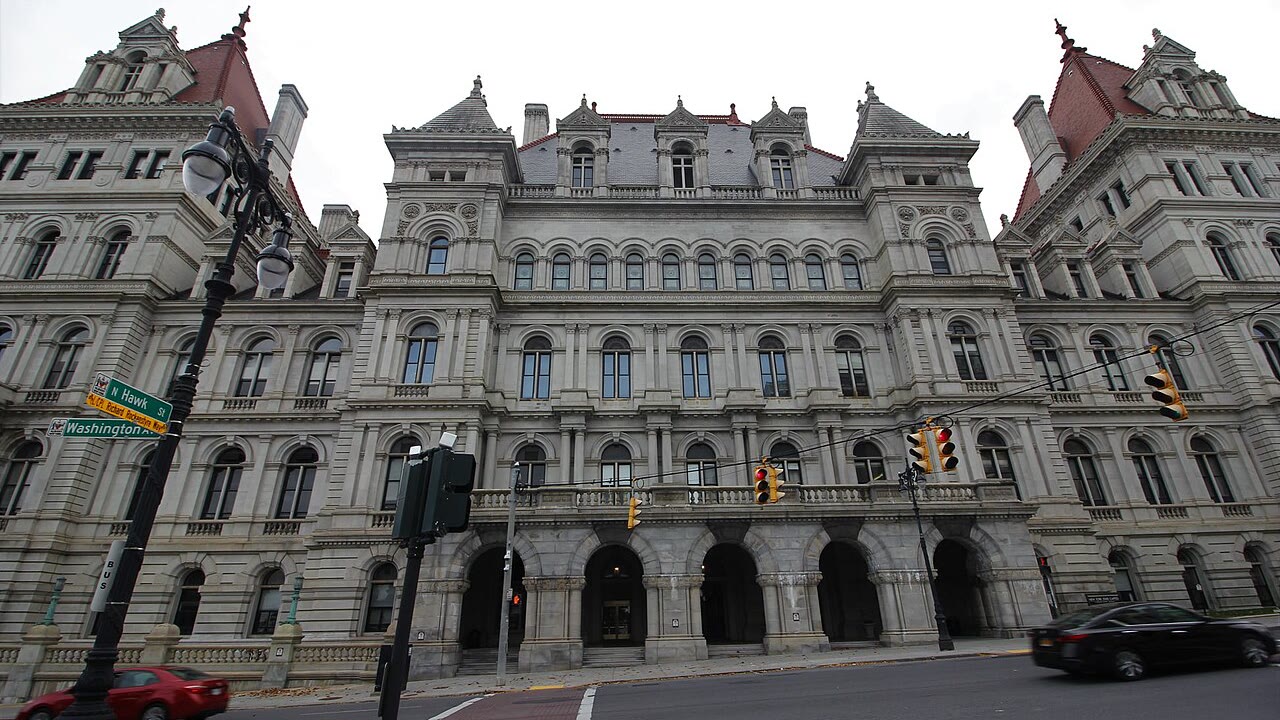
Albany, New York skyline with the Empire State Plaza towers along the Hudson River
    Albany, New York

    Pest Control Software Built for Albany Operators

    State office towers around the Empire State Plaza run on procurement calendars, the Pine Bush preserve pushes ticks and wildlife into surrounding subdivisions, and older rowhouse blocks in Center Square deal with pests that move between shared walls. Our AI systems answer every Albany call as soon as it comes in.

    Typical Albany implementation goes live in about 30-90 days.

    Why Albany work runs on a state government calendar as much as a weather one

    A capital city with a huge state workforce, a globally rare inland pine barrens, and 19th-century rowhouse blocks creates pest demand that does not look like a typical upstate market.

    State office campus contracts run on procurement cycles, not seasons

    Buildings around the Empire State Plaza and the Harriman State Office Building Campus are serviced under state contract terms with strict documentation requirements, so a missed inspection log can jeopardize a renewal in a way a residential no-show never would.

    The Pine Bush Preserve pushes ticks and wildlife into bordering subdivisions

    Homes backing onto the Albany Pine Bush along the western edge of the city and in Guilderland see deer tick and yellowjacket complaints tied directly to the preserve's pitch pine scrub oak habitat, a pest mix distinct from the Hudson floodplain a few miles east.

    Center Square and Ten Broeck Triangle rowhouses share wall cavities block to block

    Dense 19th-century rowhouse construction downtown means mice and roaches travel between adjoining units through common brick party walls, so a single tenant complaint often signals a building-wide issue rather than an isolated unit problem.

    Hudson River floodplain neighborhoods flood on a schedule crews have to track

    The Corning Preserve and low-lying blocks near the river deal with basement moisture and camel cricket surges after spring snowmelt and heavy rain events, timing that has nothing to do with the freeze-thaw carpenter ant pattern crews see further inland.

    Washington Park and the Mansion Neighborhood's Victorian housing hides old chimney and cornice gaps

    The ornate Victorian and Queen Anne homes bordering Washington Park and the Mansion Neighborhood have decorative cornices, old chimney flashing, and slate roof gaps that give squirrels and bats entry points a modern roofline would not, so exclusion estimates there run longer than a standard attic inspection.

    Long, damp Capital Region winters keep cluster flies and stink bugs coming back

    Albany's upstate winter runs long enough that homes in Pine Hills and Delaware Avenue see cluster flies and brown marmorated stink bugs reappear on any sunny January afternoon, a pattern that keeps exclusion sales relevant well outside the typical fall rush.

    What we build for you

    What that means for your phones and your crews

    We configure around a city where a state facilities manager and a Pine Bush-adjacent homeowner need entirely different handling.

    Give state contract accounts the documentation renewals require

    Messaging AI timestamps every inspection confirmation and service log entry, giving facilities managers on state office campuses the paper trail their contract oversight expects.

    See Messaging AI

    Route Pine Bush tick and wildlife calls to the right crew fast

    Voice AI captures address and complaint type on the first call, so preserve-adjacent tick and yellowjacket reports get flagged separately from routine downtown pest tickets.

    See Voice AI

    Flag rowhouse complaints for building-wide follow-up

    The AI Sales System tracks building address across Center Square and Ten Broeck Triangle intake, so a repeat mouse report in one unit prompts outreach to the rest of the building instead of a single isolated visit.

    See Outbound Campaigns

    Want to see what this looks like against your own Albany call volume? We will walk through it on a 30-minute call.

    Book a Discovery Call

    Operators across the Albany area

    Service areas from downtown state office corridors out to the Pine Bush and Hudson floodplain neighborhoods are configured during onboarding.

    • Center Square
    • Ten Broeck Triangle
    • Pine Hills
    • Delaware Avenue
    • Guilderland
    • Colonie
    • Loudonville
    • New Scotland

    Connected to the software you already run

    We have a deep, purpose-built FieldRoutes integration, and over 1,000 API connections available for everything else, so your Albany operation keeps one source of truth instead of four.

    All third-party product names, logos, and brands are property of their respective owners. Use of these names does not imply endorsement or affiliation.

    What AI adoption looks like in Albany

    Albany operators split time between a state government client base that runs on procurement and audit schedules and residential neighborhoods shaped by a rare pine barrens ecosystem on one side of the city and a flood-prone river corridor on the other. Documented, timestamped service records matter more here than in a market without a large institutional client base grading vendor performance.

    • State office campus contracts require documented inspection and service logs
    • Pine Bush Preserve drives tick and yellowjacket pressure in bordering neighborhoods
    • Center Square and Ten Broeck rowhouses share party walls between units
    • Hudson River floodplain blocks see moisture pest surges after snowmelt and heavy rain

    Deciding whether AI is right for your business at all is a separate question from which market you are in. We answer it honestly, including when the answer is not yet, in our AI decision guides, starting with should I use AI in my pest control business.

    Albany's pest calendar: state calendar, pine barrens, and a long upstate winter

    Albany's pest patterns follow three separate clocks at once: the state legislative and fiscal calendar driving institutional contract work, the Pine Bush Preserve's ecology, and a Capital Region winter that runs longer than most of the Northeast.

    March - April

    Snowmelt along the Hudson floodplain near the Corning Preserve brings the year's first basement moisture and camel cricket calls, while state office campuses schedule spring inspections ahead of the legislative session's busiest months.

    May - June

    Deer tick activity rises sharply in Pine Bush-adjacent neighborhoods on the western edge of the city and in Guilderland, and carpenter ants become active in older Center Square and Pine Hills housing.

    July - August

    Yellowjackets build nests around the Pine Bush's pitch pine scrub oak habitat and spill into bordering yards, while downtown state buildings see their steadiest pest-contract service window of the year.

    September - October

    Cooling nights send mice looking for entry points across Center Square and Ten Broeck Triangle rowhouses, and cluster flies begin working south-facing walls in Pine Hills and Delaware Avenue.

    November - February

    A long upstate winter keeps most pest activity indoors: mice in rowhouse party walls, cluster flies reappearing on any sunny window, and state facilities managers closing out fiscal-year contract renewals that hinge on documented service logs.

    Running crews across a capital city's campuses, rowhouses, and preserve-adjacent suburbs

    Albany's territory ranges from tightly packed state office buildings downtown to lower-density Pine Bush-adjacent subdivisions and Hudson floodplain blocks, so crew planning has to account for very different building types on the same day.

    Interstate 787 and the Route 85 corridor shape downtown-to-suburb routing

    I-787 runs along the river connecting downtown to the North Albany and floodplain neighborhoods, while Route 85 heads toward Guilderland and New Scotland, giving dispatch two clear corridors to group stops around.

    State office campus visits require security clearance lead time

    Buildings around the Empire State Plaza and the Harriman Campus often require advance notice and escort for contractor access, so those appointments need more lead time built into scheduling than a residential call.

    Center Square and Ten Broeck Triangle rowhouse density rewards block-based routing

    The dense grid of 19th-century rowhouses downtown means several stops can be handled within a few blocks, but coordinating adjoining units for a shared-wall rodent issue takes extra scheduling communication.

    Pine Bush Preserve-adjacent stops run longer than a standard residential visit

    Homes bordering the preserve in western Albany and Guilderland often need a broader perimeter inspection for tick habitat and wildlife entry points, adding time beyond a typical suburban stop.

    Hudson River flood advisories can close river-corridor routes with little notice

    When the Hudson rises after heavy rain or snowmelt, low-lying roads near the Corning Preserve and North Albany can flood, and dispatch needs a fallback plan for that day's river-adjacent stops.

    University at Albany and SUNY facilities contracts run on the academic calendar

    Campus buildings need service scheduled around move-in, finals, and summer break windows, distinct from the state office campus's fiscal-year contract cycle.

    Albany pest control questions we get asked

    Albany AI guides

    Location-specific guides written for the pest pressure, routes, and customer behavior of this market.

    Albany overview
    Free 48 KB PDF

    Download the Albany, NY Pest Control AI Playbook

    A short one-pager on the Albany market, the systems we build for operators here, and how implementation runs, written to be printed and passed around.

    • A Albany market snapshot, the pressure that drives your call volume
    • The AI systems we run for operators here, in plain language
    • What a 30-day implementation actually looks like
    • Printable, so you can hand it to your office team

    Last updated 2026-09-17

    Loading the Albany playbook form

    Three ways to see it working in Albany

    Book a demo

    A 30-minute walkthrough against your own Albany call volume.

    Book a Discovery Call

    Start a chat

    Try the messaging AI that answers texts, webchat, and social for pest control teams.

    Start a Chat

    Start free with PestGPT

    Use our free pest control AI assistant today, no contract, no setup call.

    Try PestGPT Free
    Final step

    Let's look at your state contract documentation trail

    Pull the last quarter of inspection logs for your state office accounts. We can show you how many confirmations were timestamped versus handled on memory.

    • A real review of your intake, not a canned demo
    • 30 minutes, and a typical implementation runs about 30-90 days
    • No contract to talk. We never share your details.

    Request your Albany walkthrough

    Prefer to pick a time yourself? Book a Discovery Call