
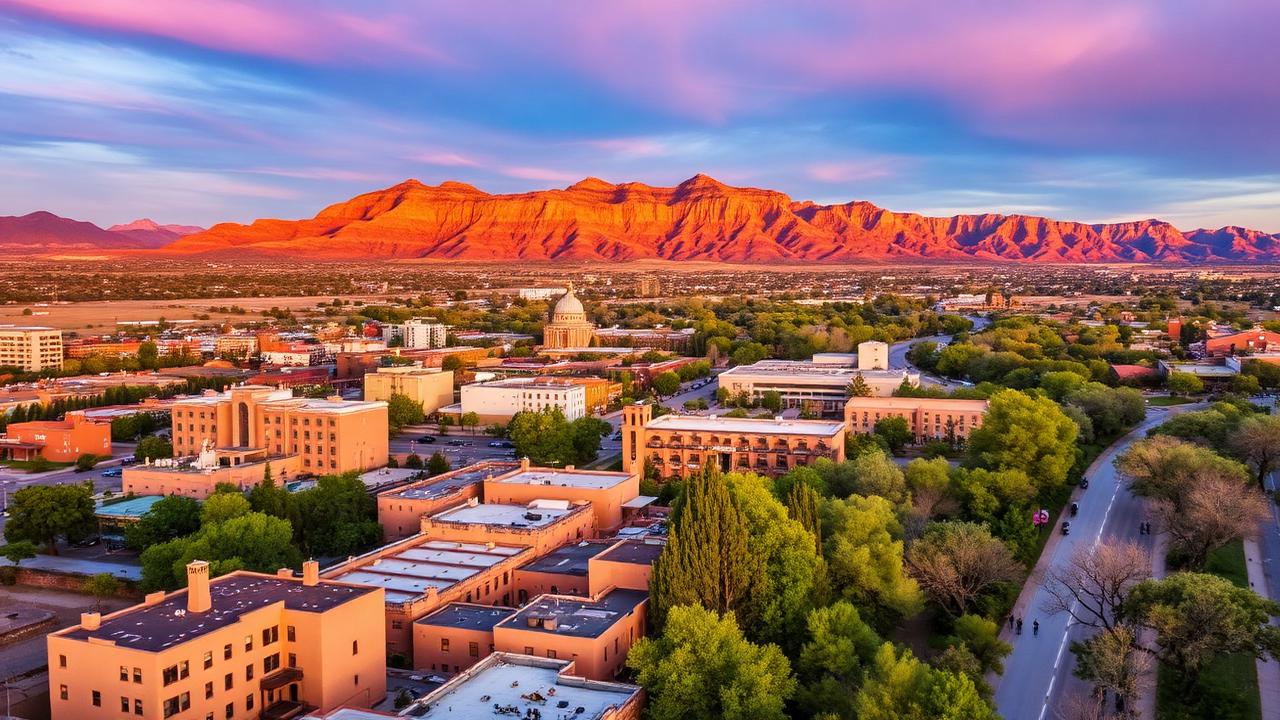
Albuquerque skyline with the Sandia Mountains and Rio Grande cottonwoods
    Albuquerque, New Mexico

    Pest Control Software Built for Albuquerque Operators

    The Sandia foothills push rodents downhill into older Nob Hill and North Valley homes, the Rio Grande bosque feeds roof rats and mosquitoes all summer, and a short but intense monsoon season floods calls into three-week bursts. We build the AI systems that pick up every one of them.

    Typical Albuquerque implementation goes live in about 30-90 days.

    Live answering, including monsoon nights
    24/7Live answering, including monsoon nights
    Simultaneous calls at peak
    UnlimitedSimultaneous calls at peak
    Full conversations, both languages
    EN + ESFull conversations, both languages
    API connections available
    1,000+API connections available

    Why Albuquerque runs differently than other Southwest markets

    Albuquerque sits at the meeting point of mountain foothills, high desert mesa, and a river corridor, and each of those geographies sends a different pest problem to your phones.

    The Sandia foothills push rodents into older neighborhoods

    Foothill communities near Tramway and the base of the Sandias see mice and pack rats move downhill as temperatures shift, and older Nob Hill, Ridgecrest, and North Valley homes with adobe or block construction give them easy points of entry.

    The Rio Grande bosque keeps roof rats and mosquitoes active all summer

    The cottonwood bosque running through the middle of the city is a year-round harborage corridor for roof rats, and irrigation ditches feeding North Valley properties create standing water that keeps mosquito calls coming through late summer.

    Monsoon season compresses demand into short, intense bursts

    Albuquerque's monsoon window, typically mid-July through early September, drives sudden spikes in ant, cricket, and rodent calls after storm cells move through, then drops off just as fast. Staffing for the burst is expensive, and missing it costs real revenue.

    A wide east-west sprawl from the West Mesa to the East Mountains

    Service areas stretch from Rio Rancho's edge and the West Mesa across the river to the East Mountains near Tijeras, and a dispatcher who books without regard to geography loses techs to unnecessary drive time.

    Adobe and stucco construction in the South Valley hides different entry points than newer builds

    Older adobe and stucco homes in the South Valley and Barelas often have settling cracks and dirt-floor outbuildings that give scorpions and roof rats access points a stick-built Northeast Heights home simply does not have.

    Scorpion calls climb every summer in the Northeast Heights and foothill communities

    Rock landscaping and xeriscaped yards common in Sandia Heights and the Northeast Heights hold heat and give bark scorpions cover close to foundations, driving a summer call pattern distinct from the rodent-heavy foothill fall.

    What we build for you

    What that means for your phones and your routes

    We are an implementation partner. The AI gets built around your Albuquerque operation, then handed to you.

    Answer the after-storm call spike

    Voice AI takes unlimited simultaneous calls, so when a monsoon cell rolls through and ant and rodent calls jump overnight, every caller gets answered and booked into a realistic slot instead of a voicemail queue.

    See Voice AI

    Book foothill and bosque-adjacent addresses correctly

    Service areas from the Sandia foothills to North Valley ditch-front properties get configured during onboarding, so the AI books a route that actually makes sense across the metro's sprawl.

    See the AI Sales System

    Keep messaging volume moving during the monsoon window

    Messaging AI handles unlimited SMS, webchat, and email conversations at once, setting honest expectations on lead time when storm-driven demand outpaces available slots.

    See Messaging AI

    Want to see what this looks like against your own Albuquerque call volume? We will walk through it on a 30-minute call.

    Book a Discovery Call

    Operators across greater Albuquerque

    Service areas, ZIP rules, and drive times across the metro are configured during onboarding.

    • Albuquerque
    • Nob Hill
    • North Valley
    • South Valley
    • West Mesa
    • Sandia Heights
    • Corrales
    • Los Ranchos
    • Tijeras
    • Bernalillo

    Connected to the software you already run

    We have a deep, purpose-built FieldRoutes integration, and over 1,000 API connections available for everything else, so your Albuquerque operation keeps one source of truth instead of four.

    All third-party product names, logos, and brands are property of their respective owners. Use of these names does not imply endorsement or affiliation.

    What AI adoption looks like in Albuquerque

    Albuquerque operators deal with a mix of foothill rodent pressure, bosque-driven roof rat and mosquito work, and a monsoon season that compresses months of demand into a handful of storm-driven weeks. That volatility is what makes AI answering pay off here, a crew sized for a normal week cannot also staff for the Tuesday after a big storm cell, but a voice system can answer both.

    • Monsoon storm cells create sudden, short-lived call spikes rather than a steady summer ramp
    • Foothill and bosque-adjacent properties need different pest approaches than mesa-top new construction
    • A large Spanish-speaking customer base expects full-service conversations, not a phone tree
    • The metro's east-west sprawl makes geography-aware booking more valuable than first-come scheduling

    Deciding whether AI is right for your business at all is a separate question from which market you are in. We answer it honestly, including when the answer is not yet, in our AI decision guides, starting with should I use AI in my pest control business.

    Albuquerque's pest calendar: high desert extremes and a compressed monsoon

    Albuquerque's high desert climate produces a pest calendar built around temperature swings and a short, intense monsoon rather than the gradual seasonal shifts operators see in wetter parts of the country.

    March - April

    Warming days wake pack rats and mice in the Sandia foothills, and termite swarms begin in older Nob Hill and Ridgecrest homes as soil temperatures climb faster on south-facing lots.

    May - June

    Scorpion activity climbs sharply in Sandia Heights and Northeast Heights xeriscaped yards, and ants become active across the mesa as irrigation turns on for the season.

    Mid-July - early September

    Monsoon storm cells trigger sudden spikes in ant, cricket, and rodent calls within a day or two of each significant rain event, then demand drops off almost as fast once the ground dries.

    September - October

    Roof rat activity along the Rio Grande bosque peaks as cottonwood cover thickens, and cooling nights start pushing Sandia foothill rodents toward Nob Hill and North Valley structures.

    November - February

    A dry, cold winter slows outdoor pest activity, but pack rats and mice move indoors across foothill and West Mesa homes seeking warmth, and rare hard freezes can drive a short burst of emergency rodent-entry calls.

    Running routes across a metro split by the Rio Grande and the Sandia foothills

    Albuquerque's sprawl from the West Mesa to the East Mountains, split down the middle by the Rio Grande, means route planning has to account for bridge crossings and elevation changes that a straight-line map does not show.

    I-25 and I-40 form the metro's routing cross

    Most crews build their day around which side of the I-25/I-40 interchange a job falls on, since crossing the Rio Grande or climbing toward the foothills both add real time beyond the mileage shown on a map.

    Foothill elevation changes slow travel more than distance suggests

    Jobs near Tramway and the base of the Sandias involve climbing grade that takes longer than the same distance on the flat West Mesa, so dispatch needs realistic drive-time estimates rather than straight mileage.

    Bosque-adjacent and North Valley properties often have narrow, unmarked access roads

    Irrigation ditch-front properties in the North Valley can have limited vehicle access, and crews familiar with the ditch road network move faster than those relying on standard navigation.

    Monsoon storm cells can flood arroyos and close routes with little warning

    Sudden monsoon downpours turn normally dry arroyos into fast-moving water, temporarily cutting off some foothill and West Mesa routes, so dispatch needs a same-day rerouting plan during storm season.

    Rio Rancho and Corrales sit far enough out to need dedicated route blocks

    Jobs west and north of the city limits in Rio Rancho and Corrales are usually grouped into their own block rather than mixed with in-city Albuquerque stops, since the drive out and back eats a meaningful chunk of the day.

    Bilingual scheduling capacity matters for the East Mountains and South Valley routes

    A significant share of South Valley and East Mountain customers prefer to communicate in Spanish, and crews or dispatchers who can confirm details in either language cut down on rescheduling from miscommunication.

    Albuquerque pest control questions we get asked

    Albuquerque AI guides

    Location-specific guides written for the pest pressure, routes, and customer behavior of this market.

    Albuquerque overview
    Free 48 KB PDF

    Download the Albuquerque, NM Pest Control AI Playbook

    A short one-pager on the Albuquerque market, the systems we build for operators here, and how implementation runs, written to be printed and passed around.

    • A Albuquerque market snapshot, the pressure that drives your call volume
    • The AI systems we run for operators here, in plain language
    • What a 30-day implementation actually looks like
    • Printable, so you can hand it to your office team

    Last updated 2026-09-17

    Loading the Albuquerque playbook form

    Three ways to see it working in Albuquerque

    Book a demo

    A 30-minute walkthrough against your own Albuquerque call volume.

    Book a Discovery Call

    Start a chat

    Try the messaging AI that answers texts, webchat, and social for pest control teams.

    Start a Chat

    Start free with PestGPT

    Use our free pest control AI assistant today, no contract, no setup call.

    Try PestGPT Free
    Final step

    Let's look at your Albuquerque call log

    Bring your call log from last monsoon season. We will show you how many of those storm-driven calls were never answered, and what they were worth.

    • A real review of your intake, not a canned demo
    • 30 minutes, and a typical implementation runs about 30-90 days
    • No contract to talk. We never share your details.

    Request your Albuquerque walkthrough

    Prefer to pick a time yourself? Book a Discovery Call