
Desert scorpions and spiders drive year-round residential calls
Bark scorpions, black widows, and wolf spiders are a constant presence in Farmington homes, with call volume rising as temperatures climb in spring and summer.
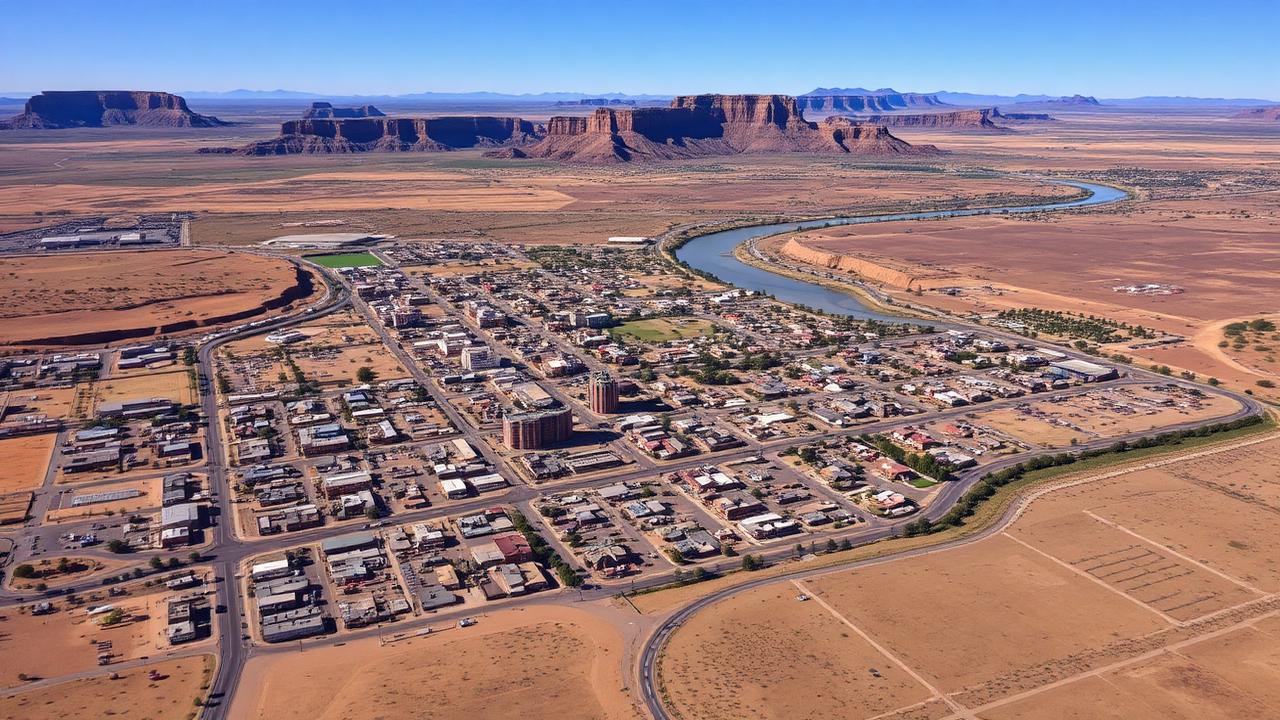
Four Corners desert pests, oilfield and gas-industry commercial demand, and river-corridor mosquito pressure keep calls coming year-round. Our AI systems capture every call while your crews cover San Juan County.
Typical Farmington implementation goes live in about 30-90 days.
Sitting at the confluence of the San Juan, Animas, and La Plata rivers in the Four Corners region, Farmington's economy runs on oil and gas, and its pest pressure runs on desert wildlife and river-corridor moisture.
Bark scorpions, black widows, and wolf spiders are a constant presence in Farmington homes, with call volume rising as temperatures climb in spring and summer.
The convergence of the San Juan, Animas, and La Plata rivers keeps mosquito breeding habitat active through warmer months, driving complaints near riverside neighborhoods and parks.
Man camps, equipment yards, and office facilities tied to the San Juan Basin oil and gas industry require rodent and general pest control contracts beyond standard residential work.
Limited natural moisture in the surrounding high desert sends rodents toward homes, garages, and vehicles seeking shelter and water, especially in fall and winter.
Properties built along the mesas and canyon rims surrounding Farmington, including areas near Crouch Mesa and the Bloomfield highway corridor, sit closer to open desert habitat, which brings pack rats and the occasional snake call closer to structures than in denser in-town neighborhoods.
Because oilfield and gas-plant crews often work rotating or extended shifts, facility managers frequently need to schedule commercial pest service outside standard daytime hours, which a typical office schedule struggles to accommodate.
We configure around desert arachnid volume, oilfield commercial demand, and river-corridor mosquito activity.
Voice AI answers around the clock and books urgent arachnid calls, which spike through spring and summer.
See Voice AIMessaging AI sends recurring service reminders to equipment yards and man camp accounts tied to the San Juan Basin.
See Messaging AIThe AI Sales System flags mosquito service requests near the river corridors for faster seasonal response.
See the AI Sales SystemVoice AI is available whenever an energy-site facility manager calls, regardless of the rotating shift schedule common across San Juan Basin operations.
See Voice AIWant to see what this looks like against your own Farmington call volume? We will walk through it on a 30-minute call.
Book a Discovery CallService areas from Farmington out through Aztec, Bloomfield and Kirtland are configured during onboarding.
We have a deep, purpose-built FieldRoutes integration, and over 1,000 API connections available for everything else, so your Farmington operation keeps one source of truth instead of four.
All third-party product names, logos, and brands are property of their respective owners. Use of these names does not imply endorsement or affiliation.
Farmington operators work a Four Corners market where desert arachnids, river-corridor mosquitoes, and oilfield commercial demand keep call volume steady. AI intake keeps residential and industry accounts on schedule.
Deciding whether AI is right for your business at all is a separate question from which market you are in. We answer it honestly, including when the answer is not yet, in our AI decision guides, starting with should I use AI in my pest control business.
Farmington's dry climate, river confluence, and energy-industry commercial base combine to create a call pattern that shifts sharply between the warm and cold halves of the year.
As temperatures rise out of winter, bark scorpions and black widows become active again, and calls from homes near canyon edges and mesa-top developments start climbing well ahead of the summer peak.
Peak scorpion, spider, and wasp activity coincides with the warmest stretch of the year, and mosquito complaints from neighborhoods near the San Juan and Animas river confluence rise alongside them, especially after any summer monsoon moisture.
Brief but intense monsoon storms common to the Four Corners region can leave standing water in low-lying areas near the rivers, giving mosquitoes a short but sharp breeding boost that generates a run of calls within days.
As temperatures cool, pack rats and mice displaced from surrounding high-desert terrain start moving toward garages, sheds, and vehicles, particularly in neighborhoods bordering open mesa or canyon land.
Cold, dry winter conditions drive rodent activity indoors across both older in-town Farmington homes and newer developments on the city's edges, while commercial pest demand at energy sites stays steady regardless of season.
Because oil and gas commercial accounts run on production and staffing cycles rather than the calendar, man camp and equipment-yard service requests can spike independently of the residential pest season whenever site activity ramps up.
Farmington's territory spans in-town neighborhoods, river-corridor properties, mesa-top developments, and outlying energy sites, each with a different routing and access pattern.
Routes connecting Farmington to Aztec and Bloomfield typically run along US-64, while NM-516 handles much of the east-west traffic through town, so scheduling accounts for those corridors during peak commute windows.
Properties near where the San Juan, Animas, and La Plata rivers meet get grouped for concentrated mosquito treatment during warmer months rather than mixed into standard residential routes.
Man camps and equipment yards tied to oil and gas operations frequently require sign-in procedures or safety briefings before technicians can begin work, so those appointments get longer scheduled windows than standard residential stops.
Bloomfield sits about 15 miles east and Aztec roughly 10 miles northeast of Farmington, so those service areas typically get grouped into dedicated route blocks rather than mixed with in-town stops.
Some developments built along mesas near Crouch Mesa or canyon rims have fewer paved access roads, so routing needs to account for longer approach times relative to the straight-line distance.
Because many facility managers and residents tied to the energy industry work rotating shifts, appointment windows that extend into evenings or early mornings are often necessary to reach the right point of contact.
Extended stretches of high desert heat push crews toward early morning outdoor treatment slots, particularly for exterior scorpion and spider work where technicians want to avoid the hottest part of the day.
Rural San Juan County roads serving outlying properties can ice over and stay hazardous longer than in-town streets, so winter routing sometimes prioritizes in-town Farmington stops earlier in the day.
More reading for operators working Farmington, NM and the markets around it.
Location-specific guides written for the pest pressure, routes, and customer behavior of this market.
A short one-pager on the Farmington market, the systems we build for operators here, and how implementation runs, written to be printed and passed around.
Last updated 2026-09-17
Try the messaging AI that answers texts, webchat, and social for pest control teams.
Start a ChatUse our free pest control AI assistant today, no contract, no setup call.
Try PestGPT FreePull your April and May call logs. We'll show you how many scorpion and spider calls came in after hours and never got a callback.
The New Mexico guide covers statewide pest pressure, licensing and call patterns, and links every New Mexico city guide we publish, including this one.