
High-value homes come with detailed requirements
Customers in Somerset, Bridle Trails and West Bellevue expect low-impact treatment options, clear explanations and documented visits.
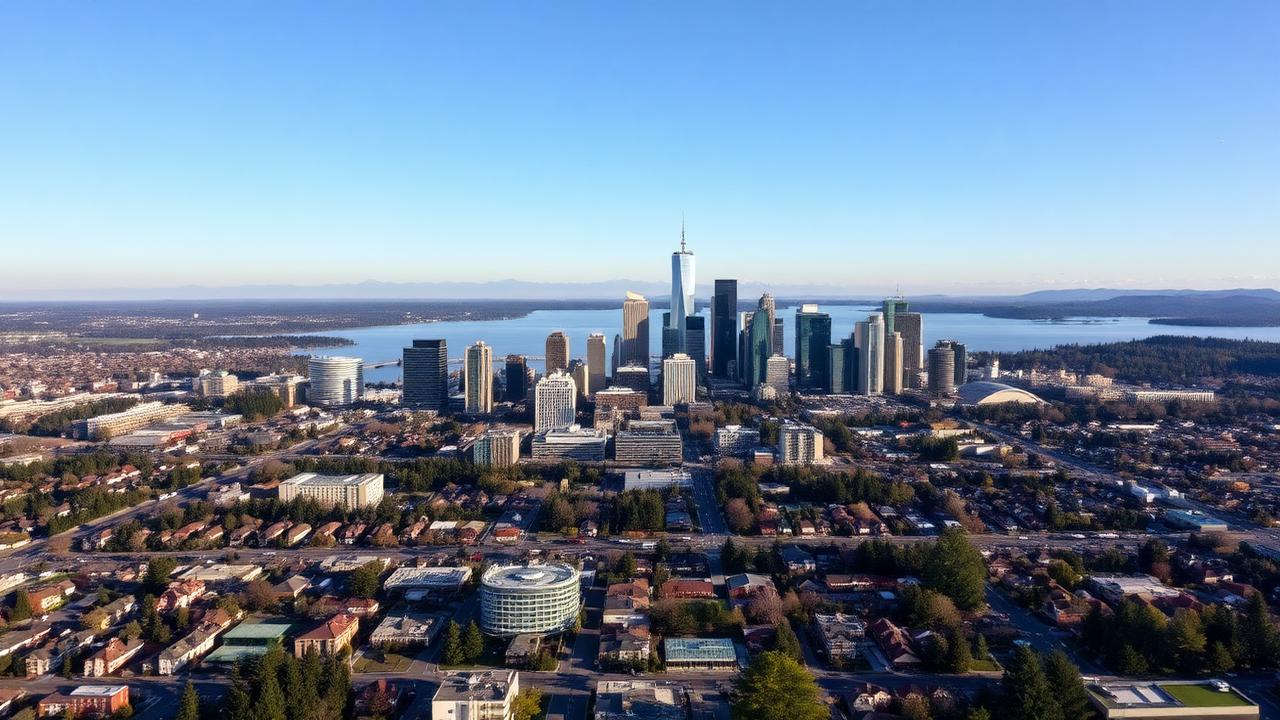
Eastside customers expect immediate, professional response, high-value homes come with high expectations, and corporate and property accounts want documentation. Our AI systems deliver that standard on every call.
Typical Bellevue implementation goes live in about 30-90 days.
The Eastside has the highest service expectations in the region, and callers judge a company within the first thirty seconds.
Customers in Somerset, Bridle Trails and West Bellevue expect low-impact treatment options, clear explanations and documented visits.
Office campuses and managed residential buildings want scheduled service, prompt reporting and one accountable contact.
Wet Puget Sound winters push rats into attics and crawl spaces, and moisture ants stay active through the shoulder seasons.
In a market with plenty of options, a hold queue or voicemail usually means the customer already dialed the next company.
We configure around premium expectations, documentation requirements and zero tolerance for hold time.
Voice AI eliminates hold time and voicemail, which is the baseline expectation for an Eastside caller.
See Voice AIMessaging AI confirms appointments, access and follow-up in writing so managed accounts always have documentation.
See Messaging AIThe AI Sales System runs renewal and check-in sequences so premium accounts never quietly lapse.
See the AI Sales SystemWant to see what this looks like against your own Bellevue call volume? We will walk through it on a 30-minute call.
Book a Discovery CallService areas from Bellevue out to Kirkland, Redmond and Issaquah are configured during onboarding.
We have a deep, purpose-built FieldRoutes integration, and over 1,000 API connections available for everything else, so your Bellevue operation keeps one source of truth instead of four.
All third-party product names, logos, and brands are property of their respective owners. Use of these names does not imply endorsement or affiliation.
Eastside customers treat response time as a proxy for service quality. AI intake gives a local company an instant, consistent, well-spoken first impression on every call.
Deciding whether AI is right for your business at all is a separate question from which market you are in. We answer it honestly, including when the answer is not yet, in our AI decision guides, starting with should I use AI in my pest control business.
Eastside pest pressure tracks the Puget Sound rain cycle more than temperature, and each quarter produces a different call mix for crews working Somerset, Bridle Trails and Points communities.
Moisture ants swarm inside walls as Lake Washington-adjacent homes stay damp from winter rain, and calls concentrate in older Bridle Trails and West Bellevue houses with crawl spaces below grade. Homeowners often mistake the swarmers for termites, which means intake needs to ask the right identification questions before dispatch. Overflowing gutters on steep Somerset lots also start pushing water against foundations, feeding the same ant colonies. Crews see a steady rise through March as daytime temperatures climb into the fifties and colonies become active again after the wet, cold months.
Carpenter ant activity peaks as cedar siding and covered decks common in Eastside construction dry out enough for foraging, and calls shift from swarmers to visible trailing ants on kitchen counters. Yellowjackets begin building nests in irrigation boxes and eaves around Downtown Bellevue's high-density townhome developments, generating urgent same-day requests once residents get stung near patios. This is also when new Microsoft and Amazon-area renters first call about pests after moving in, since spring leases turn over across Eastside apartment corridors.
Wasp complaints dominate as nests reach full size and Eastside residents entertain outdoors around Meydenbauer Bay and Mercer Slough greenways, with stings near children's play areas driving the most urgent tickets. Rodent scouting also begins in earnest as adult rats start probing attic vents and roofline gaps ahead of the fall rains, particularly in the older housing stock near Enatai and Wilburton. Property managers overseeing corporate campuses request preventive inspections before fall board meetings.
Rain returns in earnest and roof rats and Norway rats move into attics, garages and crawl spaces across Bellevue's wooded lots, with the heaviest volume in Cougar Mountain-adjacent and Somerset properties bordered by greenbelt. High-value homeowners expect same-week exclusion work with documented entry-point repairs rather than bait alone. Corporate and HOA accounts also request December inspections ahead of holiday gatherings, and mild cold snaps push occasional mice into garages near Crossroads and Lake Hills.
Occasional atmospheric-river storms drop heavy rain over a 24 to 48 hour window each January and February, and Bellevue crews see a short spike in emergency calls as saturated hillside soil near Cougar Mountain and Newport Hills forces rats and even the occasional mole into garages seeking dry ground. Commercial property managers overseeing office parks along Bellevue Way also call about ant trails in break rooms as building perimeters flood, since standing water pushes colonies toward the nearest dry entry point, often a loading dock door.
As ornamental cherry and rhododendron plantings bloom across Bellevue's landscaped corporate campuses and Points-community gardens in April and May, carpenter bees begin drilling into untreated cedar fascia boards and pergolas, a frequent complaint from homeowners in Enatai and West Bellevue with exposed outdoor structures. Bald-faced hornets also start early nest construction under eaves during this stretch, and HOA groundskeepers along Meydenbauer Bay request inspections before spring social events draw residents outdoors.
Bellevue's geography compresses a small city into some of the worst per-mile drive times in the region, and a scheduling mistake here is expensive.
A route that looks efficient on a map can lose forty minutes if it crosses I-405 during the evening commute or tries to reach a West Bellevue property near SR-520 before 6pm. Crews serving both Downtown Bellevue high-rises and Points-community waterfront homes in the same day need buffer built into the schedule rather than back-to-back bookings, since a single freeway backup cascades through the rest of the afternoon.
Bridle Trails and Points-area properties frequently sit behind private gates, long gravel driveways or HOA-controlled entries, and a tech arriving without a verified code or a pre-confirmed appointment window loses ten to fifteen minutes per stop. Capturing gate codes and preferred access notes at intake, rather than leaving it for the tech to sort out on-site, is the difference between four and five stops in a Bellevue afternoon.
Downtown Bellevue's high-rise corridor rewards a technician who can walk between buildings, while Somerset, Newport and Cougar Mountain routes require long drives along winding, view-lot streets with limited through-connections. Dispatch that tries to blend both in one loop wastes drive time; splitting crews by density type keeps billable hours higher across a normal week.
Corporate and high-value residential accounts on the Eastside expect the same technician on repeat visits and detailed on-site explanation, which means these stops cannot be filled by whichever tech is geographically closest. Staffing has to reserve specific senior technicians for Somerset, Bridle Trails and managed-property accounts, which tightens the rest of the day's routing and makes accurate intake even more important for filling the remaining slots efficiently.
Microsoft, Amazon, and other Eastside corporate campuses often restrict pest technicians to early-morning or after-hours service windows to avoid disrupting business operations, which means these accounts cannot be dropped into standard daytime routes. Property and facilities managers expect confirmed arrival windows and a single point of contact rather than a rotating tech, so dispatch reserves specific slots for these accounts and the AI Sales System tracks renewal timing separately from residential subscriptions.
Bellevue's high-value homeowners and corporate facilities managers expect a technician who can explain treatment chemistry, answer questions about pets and children, and document findings clearly, not just complete the job quickly. Operators here recruit and train specifically for client-facing communication skills in addition to technical competence, since a single poor interaction in Somerset or West Bellevue can cost a renewal that took years to build, and word travels fast in tight-knit HOA communities.
More reading for operators working Bellevue, WA and the markets around it.
Location-specific guides written for the pest pressure, routes, and customer behavior of this market.
A short one-pager on the Bellevue market, the systems we build for operators here, and how implementation runs, written to be printed and passed around.
Last updated 2026-09-17
Try the messaging AI that answers texts, webchat, and social for pest control teams.
Start a ChatUse our free pest control AI assistant today, no contract, no setup call.
Try PestGPT FreePull last month's calls. We'll show you the average time to a live answer and what that costs at Eastside ticket values.
The Washington guide covers statewide pest pressure, licensing and call patterns, and links every Washington city guide we publish, including this one.