
Shift schedules push calls outside business hours
Aerospace and industrial shift workers call at 6am or after 7pm, which is when most local offices are closed.
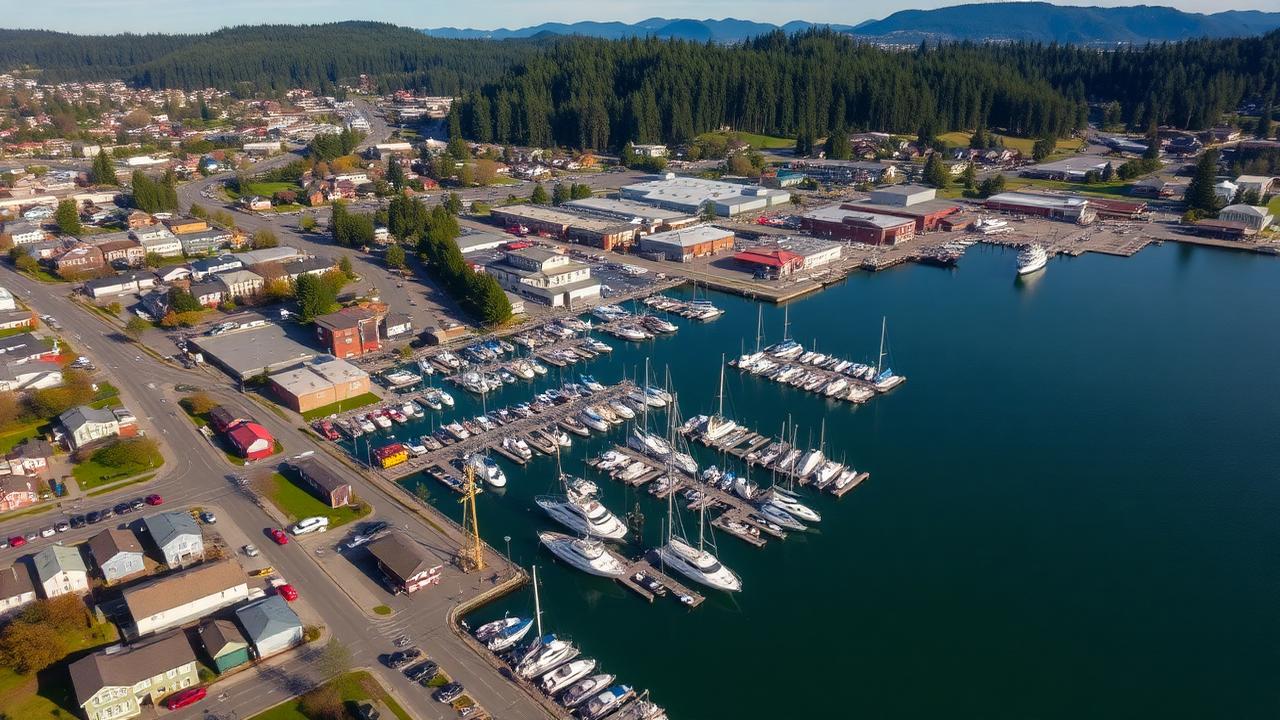
Working-family neighborhoods that call after shift, marina and industrial accounts with rodent pressure, and a wet season that never really ends. Our AI systems keep the phones covered around your crews' hours.
Typical Everett implementation goes live in about 30-90 days.
Snohomish County's working-shift population and industrial base shift both when calls come in and what kind of work they generate.
Aerospace and industrial shift workers call at 6am or after 7pm, which is when most local offices are closed.
Docks, boat storage and waterfront businesses need ongoing rodent programs rather than one-time treatments.
From October onward, roof rats and mice move into older Everett and Marysville housing, keeping the calendar full through the dark months.
A day that mixes Mukilteo, Marysville and Snohomish stops can lose an hour to backtracking without clean intake data.
We configure around shift-hour call timing, recurring commercial programs and county-scale routing.
Voice AI covers the shift-worker hours when your office is closed and your competitors are not answering either.
See Voice AIMessaging AI confirms recurring marina and industrial visits and captures any new sightings between services.
See Messaging AIThe AI Sales System follows up after exclusion work to move customers onto ongoing service.
See the AI Sales SystemWant to see what this looks like against your own Everett call volume? We will walk through it on a 30-minute call.
Book a Discovery CallService areas from Everett out to Marysville, Mukilteo and Snohomish are configured during onboarding.
We have a deep, purpose-built FieldRoutes integration, and over 1,000 API connections available for everything else, so your Everett operation keeps one source of truth instead of four.
All third-party product names, logos, and brands are property of their respective owners. Use of these names does not imply endorsement or affiliation.
Everett operators serve a shift-work population and a commercial waterfront that both call outside standard hours. AI intake turns those calls into booked jobs instead of morning voicemails.
Deciding whether AI is right for your business at all is a separate question from which market you are in. We answer it honestly, including when the answer is not yet, in our AI decision guides, starting with should I use AI in my pest control business.
Snohomish County's pest pressure runs on the same rain-and-shift rhythm as its workforce, and each quarter shifts what crews find between Boeing's Paine Field campus and the waterfront.
Carpenter ants become active in older Everett neighborhoods like Bayside and Riverside as cedar-sided homes and detached garages near the Snohomish River dry out enough for foraging trails to appear on kitchen counters. Spring also brings the first wave of moisture-ant swarmers in Marysville homes built on lower, flood-prone ground near the river delta. Boeing shift workers calling before their 6am start time make up a disproportionate share of these early-season bookings.
Yellowjackets and paper wasps build nests around marina docks, boat slips and waterfront businesses along the Everett waterfront, and stings near boat storage facilities generate urgent same-day tickets from marina operators. Industrial and aerospace-adjacent accounts near Paine Field request preventive inspections ahead of summer plant tours and open houses. Late-summer heat also drives spiders into garages across Lake Stevens and Snohomish, where wooded lots back directly onto homes.
Rodent scouting increases sharply as cooling nights push rats and mice toward buildings, and Everett's older waterfront warehouses and boat storage facilities see the earliest activity of the fall season. Marysville and Snohomish households near farmland report field mice moving toward structures as harvest activity disturbs their usual habitat. This is also when industrial accounts near the port request rodent-proofing ahead of winter shipping schedules.
Persistent Puget Sound rain drives roof rats and Norway rats into attics and crawl spaces across Everett, Mukilteo and Marysville, with the heaviest call volume in homes built before 1980 near Bayside and Delta neighborhoods. Boeing and Naval Station Everett shift patterns mean a large share of these calls arrive before 7am or after 7pm, when residents finally have time to deal with the scratching they have heard for days. Waterfront businesses also request mid-winter inspections to keep rodents out of stored inventory.
Sustained saturation from months of Puget Sound rain keeps carpenter ant colonies active inside wall voids of older Everett homes through late February, particularly in neighborhoods like Riverside where cedar siding retains moisture longer than newer vinyl-clad construction in Lake Stevens. Property managers overseeing waterfront rental units report the same moisture-driven activity in older duplexes, often mistaking it for termite damage until an inspection confirms carpenter ants working saturated framing near gutters and downspouts.
As harvest activity picks up near Snohomish and rural Marysville, hobo spiders and giant house spiders move from disturbed farmland toward nearby homes and outbuildings, generating a distinct wave of arachnid complaints separate from the rodent-scouting calls of the same period. Residents on larger lots bordering agricultural land request perimeter treatments specifically for spiders, a request pattern that in-town Everett neighborhoods rarely produce given their smaller, more developed lots.
Everett's mix of shift-hour calls and county-scale sprawl means routing decisions matter as much as technician skill.
Any route that needs to reach Snohomish or Lake Stevens from the Everett waterfront has to cross the US-2 trestle, and a single accident there can add thirty minutes each way with no alternate route. Dispatch has to treat trestle crossings as a scheduling risk, not a routine stop, especially during the Boeing shift-change windows when commuter traffic peaks.
Shift changes at the Paine Field Boeing plant flood SR-526 and Airport Road with traffic twice a day, and a route scheduled through that corridor during a shift change can lose fifteen to twenty minutes compared to the same drive an hour earlier. Crews serving industrial accounts near the plant plan around these windows deliberately rather than treating every hour as equal.
A day that jumps between Mukilteo, Marysville and Snohomish without regard to geography can burn an extra hour of drive time compared to a route clustered by corridor. Accurate address capture at intake, including cross-streets and whether a property sits off I-5 or the more rural Highway 9 corridor, lets dispatch build tighter loops instead of chasing calls in the order they arrived.
Waterfront businesses and boat storage facilities often need service outside standard daytime hours to avoid disrupting operations, which means crews need a schedule that can accommodate early-morning or evening industrial visits without disrupting the residential rodent-season workload building at the same time. Balancing both call types across the same crew pool is the biggest scheduling pressure point from October through February.
Everett pest control operators hiring field technicians compete against Boeing's Paine Field assembly jobs and the broader aerospace supply chain for the same pool of workers, which keeps entry-level pay expectations higher than in less industrial Snohomish County towns. Operators who can offer predictable routes and fewer unpaid hours spent chasing missed after-hours calls have an easier time retaining staff who would otherwise consider a shift-based manufacturing job instead.
Heavy Puget Sound rain events occasionally force same-day cancellations for exterior treatments and inspections, particularly for exclusion work that requires dry conditions around foundations. Because rain is frequent rather than rare in Everett, operators who build a text-based rebooking workflow move an entire canceled day's appointments to the next open slot without individually calling each customer, which matters most during the wettest stretch from November through February when cancellations are most common.
More reading for operators working Everett, WA and the markets around it.
Location-specific guides written for the pest pressure, routes, and customer behavior of this market.
A short one-pager on the Everett market, the systems we build for operators here, and how implementation runs, written to be printed and passed around.
Last updated 2026-09-17
Try the messaging AI that answers texts, webchat, and social for pest control teams.
Start a ChatUse our free pest control AI assistant today, no contract, no setup call.
Try PestGPT FreePull last quarter. We'll show you how many calls came in before 8am or after 6pm and how many converted.
The Washington guide covers statewide pest pressure, licensing and call patterns, and links every Washington city guide we publish, including this one.