
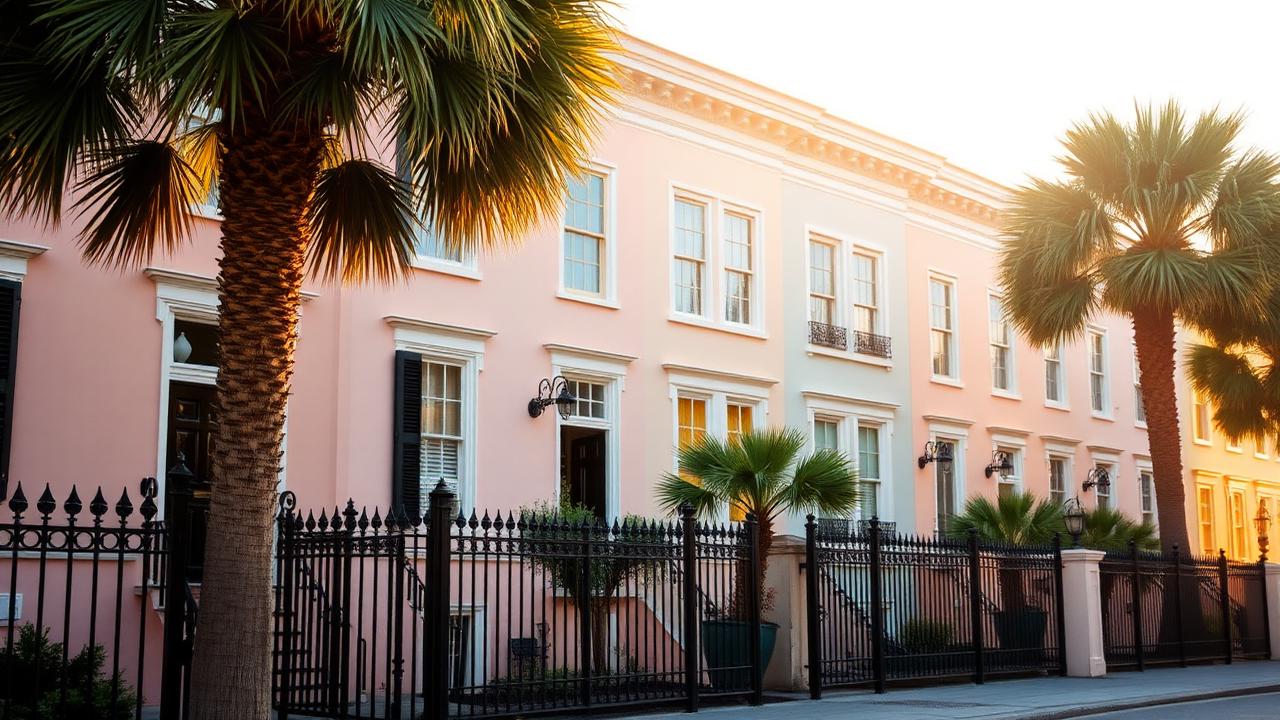
Historic Charleston peninsula rooflines and church steeples above marsh at sunrise
    Charleston, South Carolina

    Pest Control Software Built for Charleston, South Carolina Operators

    A peninsula built on pluff mud, a rental market that resets every few days, and king tides that push standing water into streets that were dry a decade ago.

    Typical Charleston implementation goes live in about 30-90 days.

    Calls answered and booked
    24/7Calls answered and booked
    Simultaneous calls handled
    UnlimitedSimultaneous calls handled
    Full conversations, both languages
    EN + ESFull conversations, both languages
    API connections available
    1,000+API connections available

    Why Charleston is a Lowcountry problem, not a coastal-city problem

    The Charleston peninsula and surrounding Lowcountry combine extreme humidity, tidal flooding, and one of the oldest housing stocks on the East Coast into a pest environment unlike most Southern markets.

    Formosan termites are established across the peninsula and barrier islands

    Charleston has one of the most severe Formosan subterranean termite infestations in the country, and colonies here can be larger and more aggressive than native subterranean termites, which pushes swarm-season call volume far past a typical spring surge.

    Pluff mud and marsh humidity keep moisture pests active nearly year-round

    The organic-rich pluff mud surrounding the peninsula and Lowcountry marshes holds moisture in the air at levels that sustain fungus, wood-destroying insects, and mosquito breeding well beyond what inland Carolina markets experience.

    King tide flooding is pushing rodents out of storm drains and into homes

    Recurring king tide and nuisance flood events on the peninsula displace rats and other rodents from the storm drain system, and residents in flood-prone areas like the Crosstown and lower peninsula report rodent activity spikes that track directly with the tide calendar.

    Short-term rental turnover on the peninsula and Folly Beach compresses treatment windows

    Downtown Charleston and Folly Beach carry a dense inventory of nightly and weekly rentals, and property managers need pest work completed inside the gap between a guest checkout and the next arrival, frequently on the same day.

    Historic single house and pier-and-beam construction limits standard treatment methods

    Charleston single houses and raised pier-and-beam homes south of Broad Street require different termiticide application and crawlspace access approaches than the slab construction common in newer Lowcountry subdivisions.

    Tourism-driven commercial accounts cannot tolerate a visible pest problem

    King Street retailers and restaurants depend on discretion, since a customer-visible pest issue in a market this saturated with alternatives sends business elsewhere immediately, not eventually.

    What we build for you

    What that means for your front office

    We build swarm-season surge handling, tide-driven rodent alerts, and rental turnover scheduling into your systems before launch.

    Absorb a Formosan swarm-night call spike without dropping one

    Voice AI answers every caller simultaneously during a swarm event, so one humid Lowcountry evening never turns into a stack of missed calls and voicemails.

    See Voice AI

    Slot peninsula and Folly Beach rental turnovers into the actual gap

    Messaging AI coordinates directly with property managers to confirm access and timing, so treatments land inside the changeover window instead of waiting a week.

    See Messaging AI

    Flag single house and pier-and-beam jobs before the truck rolls

    The AI Sales System tags historic-construction addresses so technicians arrive prepared for crawlspace access and treatment methods specific to that housing type.

    See the AI Sales System

    Reach flood-prone blocks after a king tide event

    Outbound Campaigns can target neighborhoods that flooded during a recent king tide, when displaced rodent activity typically spikes across the whole block.

    See Outbound Campaigns

    Want to see what this looks like against your own Charleston call volume? We will walk through it on a 30-minute call.

    Book a Discovery Call

    Operators across the Charleston Lowcountry

    Swarm surge handling, tide-driven rodent alerts, and rental scheduling get configured during onboarding.

    • Charleston Peninsula
    • Mount Pleasant
    • James Island
    • Folly Beach
    • North Charleston
    • Summerville

    Connected to the software you already run

    We have a deep, purpose-built FieldRoutes integration, and over 1,000 API connections available for everything else, so your Charleston operation keeps one source of truth instead of four.

    All third-party product names, logos, and brands are property of their respective owners. Use of these names does not imply endorsement or affiliation.

    What AI adoption looks like in Charleston

    Charleston operators are managing three calendars that overlap without lining up: the Formosan swarm calendar, which produces brutal short spikes each spring, the tide calendar, which pushes rodents out of storm drains on a schedule tied to the moon rather than the season, and the vacation rental calendar, which resets weekly across the peninsula and Folly Beach. None of the three tolerate a missed call. AI systems give a Lowcountry crew coverage across all three without adding headcount.

    • Formosan termite colonies on the peninsula are larger and swarm harder than native subterranean termites
    • Pluff mud and marsh humidity sustain moisture pest and mosquito activity nearly year-round
    • King tide flooding displaces storm drain rodents into homes on a predictable tidal schedule
    • Peninsula and Folly Beach short-term rentals require treatments scheduled around guest turnover

    Deciding whether AI is right for your business at all is a separate question from which market you are in. We answer it honestly, including when the answer is not yet, in our AI decision guides, starting with should I use AI in my pest control business.

    Charleston's pest calendar: swarm season, hurricane season, and the tide calendar

    Three overlapping calendars, Formosan swarm timing, Atlantic hurricane season, and the lunar tide cycle, drive Charleston pest demand in a pattern most Southern markets never see.

    April - May

    Warming evening temperatures trigger the first Formosan termite swarms of the year on the peninsula and barrier islands, and swarm-night call volume can spike within a single humid evening.

    May - June

    Formosan swarm activity continues to peak, and pier-and-beam and single house properties south of Broad Street generate a steady run of inspection requests tied to visible swarmer sightings.

    June - November

    Atlantic hurricane season keeps property managers on the peninsula and Mount Pleasant watching storm tracks, and pest treatment scheduling around rental turnovers has to flex around evacuation orders and storm cleanup.

    July - September

    Peak pluff mud humidity sustains mosquito breeding across marsh-adjacent neighborhoods like James Island, and moisture pests stay active in crawlspaces well past when inland Carolina markets slow down.

    King tide weeks (fall and spring)

    Seasonal king tides push standing water into low-lying peninsula streets like those near the Crosstown, displacing storm drain rodents into nearby homes on a schedule tied to the lunar cycle rather than the weather.

    December - February

    Mild Lowcountry winters slow but rarely stop moisture pest activity, and older single house properties still report occasional rodent intrusion as cooler nights push wildlife toward crawlspace warmth.

    Running crews across the peninsula and barrier islands

    Historic street grids, bridge-dependent island access, and a rental market that resets constantly make Charleston routing unlike a typical Southern metro.

    The Ravenel Bridge and connector routes gate access to Mount Pleasant

    Crews serving both the peninsula and Mount Pleasant plan around Ravenel Bridge traffic, since backups during commute hours can add significant time to an otherwise short trip.

    Folly Beach and James Island require bridge-timed scheduling

    Reaching Folly Beach means crossing a limited number of bridge crossings from the peninsula, so those stops are typically grouped into a single trip rather than worked into a mixed in-town route.

    Historic district parking restrictions slow single house stops

    Narrow streets south of Broad Street and limited technician parking near historic single houses add time to otherwise quick appointments compared to suburban routes in Summerville.

    King tide flooding periodically closes peninsula streets

    Low-lying streets near the Crosstown and parts of the peninsula flood during king tide events, so dispatch checks the tide calendar before finalizing same-day routes in those areas.

    Short-term rental turnover clusters around Friday and Saturday changeovers

    Nightly and weekly rentals on the peninsula and Folly Beach mostly turn over at the end of the week, creating a predictable weekend service crunch that differs from standard weekday residential routes.

    Crawlspace access varies sharply by construction type

    Raised pier-and-beam homes require different crawlspace entry and treatment equipment than the slab construction common in newer Summerville subdivisions, so technicians confirm construction type before dispatch.

    Hurricane season requires flexible cancellation and rebooking windows

    Storm evacuation orders during peak hurricane season can cancel an entire day of peninsula and island appointments at once, so scheduling systems need a fast way to rebook an evacuated route once residents return.

    North Charleston growth is adding new suburban stops

    Residential and commercial growth in North Charleston is expanding faster than the historic peninsula core, so route density there needs regular review as new subdivisions come online.

    Charleston, South Carolina pest control questions

    Charleston AI guides

    Location-specific guides written for the pest pressure, routes, and customer behavior of this market.

    Charleston overview
    Free 48 KB PDF

    Download the Charleston, SC Pest Control AI Playbook

    A short one-pager on the Charleston market, the systems we build for operators here, and how implementation runs, written to be printed and passed around.

    • A Charleston market snapshot, the pressure that drives your call volume
    • The AI systems we run for operators here, in plain language
    • What a 30-day implementation actually looks like
    • Printable, so you can hand it to your office team

    Last updated 2026-09-17

    Loading the Charleston playbook form

    Three ways to see it working in Charleston

    Book a demo

    A 30-minute walkthrough against your own Charleston call volume.

    Book a Discovery Call

    Start a chat

    Try the messaging AI that answers texts, webchat, and social for pest control teams.

    Start a Chat

    Start free with PestGPT

    Use our free pest control AI assistant today, no contract, no setup call.

    Try PestGPT Free
    Final step

    Bring us your last swarm-night call log

    Count how many of those calls went to voicemail. In Charleston, that voicemail is a Formosan termite job someone else is booking by morning.

    • A real review of your intake, not a canned demo
    • 30 minutes, and a typical implementation runs about 30-90 days
    • No contract to talk. We never share your details.

    Request your Charleston walkthrough

    Prefer to pick a time yourself? Book a Discovery Call