
One city, county-scale geography
Consolidated Jacksonville covers an area larger than several entire metros, so two customers with the same city on their address can be an hour apart. Booking without territory logic quietly destroys route density.
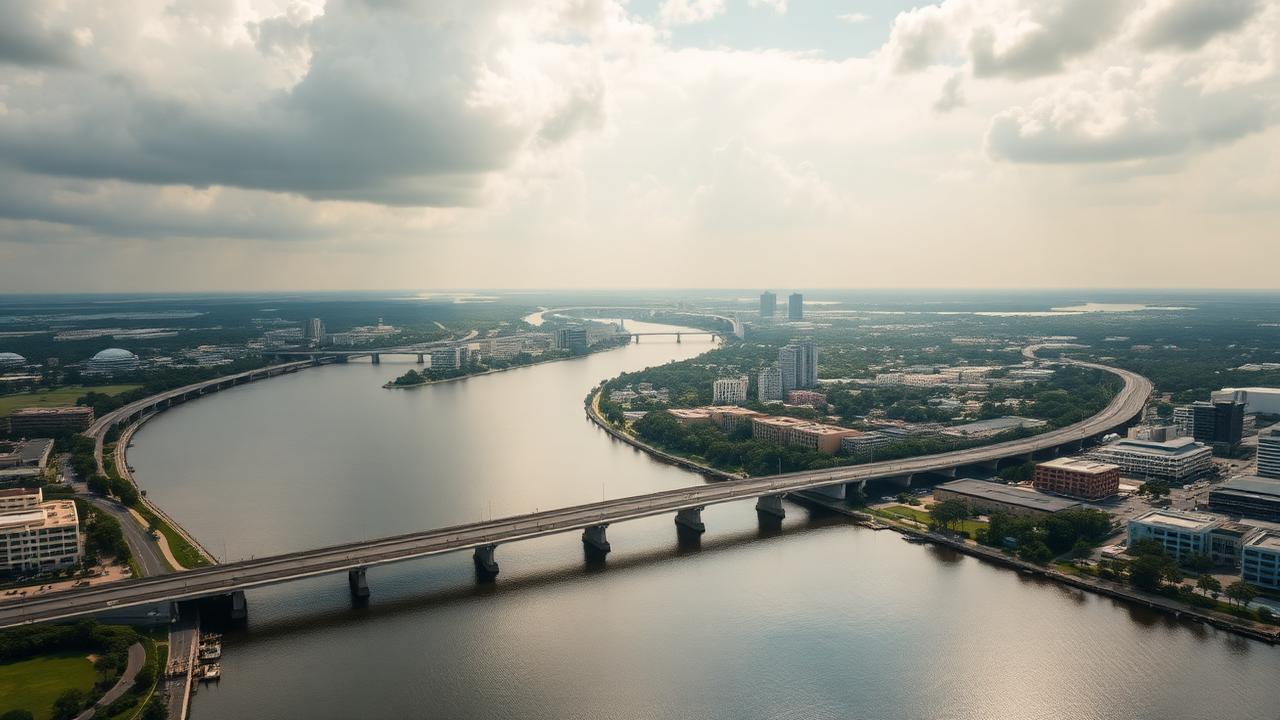
Duval County is close to nine hundred square miles of city limits split by a river, and a single day can put your techs at the beaches, in Mandarin, and on the Westside. Intake and scheduling have to respect that geography or your margin disappears into windshield time.
Typical Jacksonville implementation goes live in about 30-90 days.
North Florida gets a short cool season, but the thing that actually shapes this market is distance.
Consolidated Jacksonville covers an area larger than several entire metros, so two customers with the same city on their address can be an hour apart. Booking without territory logic quietly destroys route density.
Crossings funnel through a handful of bridges, and an afternoon call accepted on the wrong side of the water can cost two productive stops.
Jacksonville sits in one of the heaviest termite-pressure zones in the country, which makes inspection scheduling and wood-destroying-organism report turnaround a core part of the business, not a side service.
An active market means WDO inspection requests arrive tied to closing dates. Those callers need a firm slot in the next few days and will move on immediately if they cannot get one.
Unlike South Florida, the region gets genuine cool weeks, so spring produces a compressed surge of ant, roach, and swarm calls that hits an office all at once.
We build the systems around your Jacksonville operation, test them on live scenarios, and hand them to your team.
The AI Sales System applies your drive-time and ZIP rules at booking, so beaches work lands on beaches days and Westside work stays west of the river.
See the AI Sales SystemVoice AI answers every WDO request immediately, captures the closing date, and books a slot that actually clears it rather than taking a message.
See Voice AIMessaging AI keeps agents, coordinators, and homeowners updated in parallel threads without a CSR retyping the same status six times a day.
See Messaging AIOutbound campaigns pre-book renewals and inspections before the first warm week, flattening a spike your office would otherwise absorb by hand.
See Outbound CampaignsWant to see what this looks like against your own Jacksonville call volume? We will walk through it on a 30-minute call.
Book a Discovery CallWe configure your service boundaries, river-crossing drive times, and beaches routing during onboarding.
We have a deep, purpose-built FieldRoutes integration, and over 1,000 API connections available for everything else, so your Jacksonville operation keeps one source of truth instead of four.
All third-party product names, logos, and brands are property of their respective owners. Use of these names does not imply endorsement or affiliation.
Because the city is so large, Jacksonville operators feel scheduling mistakes more sharply than most. The AI conversations that matter here are the ones that get territory, timing, and deadline right in the first ninety seconds, so the calendar stays profitable without a dispatcher rebuilding it every afternoon.
Deciding whether AI is right for your business at all is a separate question from which market you are in. We answer it honestly, including when the answer is not yet, in our AI decision guides, starting with should I use AI in my pest control business.
Northeast Florida's subtropical humidity, a genuine (if short) cool season, and heavy termite pressure across Duval, Clay, and St. Johns counties produce a call pattern unlike South Florida's.
Subterranean and Formosan termite swarms surge as soil warms, especially in older Riverside, Avondale, and San Marco homes near the St. Johns River where moisture stays high year-round. Ant and roach activity climbs sharply as the first genuinely warm weeks arrive, and WDO inspection requests spike alongside the spring real-estate rush. Palmetto bug sightings increase as outdoor humidity rises ahead of summer.
Peak hurricane season brings heavy rain events that flush ants, roaches, and rodents out of yards and storm drains across low-lying Westside and Northside neighborhoods. Mosquito pressure becomes intense near the river, the Intracoastal, and beaches-area drainage ditches, and flea infestations climb with the humidity. Termite activity continues at a high baseline all summer given the region's heavy year-round pressure.
A short cool-down triggers rodents to seek shelter in older homes across Mandarin, Arlington, and the Westside, and the first cold fronts push spiders and roaches indoors. Wasp and yellow jacket calls remain elevated around outdoor fall events until the first real cold snap arrives. Beaches-area vacation rentals see a shift toward turnover-driven pest requests as the tourist season quiets.
Jacksonville's brief but real cool season slows outdoor pest activity, but it is also the window when rodents already indoors in older housing stock near Riverside and San Marco become the dominant call type. Termite swarms taper off but never fully stop given the subtropical baseline, and this quieter stretch is when many operators push renewal and prevention outreach ahead of the spring surge.
Named storms and tropical systems moving through Northeast Florida from June through November regularly flood low-lying Westside and Northside drainage systems, driving rodents, roaches, and fire ants out of yards and into nearby structures within days of a major rain event. Operators who can quickly reach flood-adjacent neighborhoods after a storm capture a real spike in demand that a slow-to-respond competitor misses entirely.
Jacksonville's active spring home-buying season concentrates wood-destroying-organism inspection requests into a tight window tied to closing dates, particularly in older Avondale, Riverside, and Ortega housing stock where termite history is common. These calls carry firm deadlines rather than flexible scheduling, and a company that cannot commit to a date within days of the request loses the job to a competitor who can.
Consolidated Jacksonville's sheer size means the difference between a profitable day and a wasted one usually comes down to which side of the river a job lands on.
Bridges like the Main Street, Fuller Warren, and Buckman concentrate river crossings into a handful of choke points, and a Westside tech pulled to a same-day Southside call can lose an hour to bridge traffic alone.
Jacksonville Beach, Atlantic Beach, Neptune Beach, and Ponte Vedra Beach sit far enough from the urban core that a beaches stop squeezed into an otherwise inland route erases the day's margin in drive time.
Southside growth corridors like Mandarin and Clay County's Orange Park and Fleming Island are close enough to book together but far enough from Arlington or the Northside that mixing them into the same route defeats the purpose of territory planning.
Operators serving the outer edges of the metro toward St. Augustine to the south or Fernandina Beach to the north are effectively running a second, smaller route each day, and treating those stops as a normal add-on to a Jacksonville-proper day undersells the actual drive time.
A closing-deadline inspection cannot be bumped the way a routine treatment can, so a route that books inspections into general capacity risks either missing a closing date or displacing paying treatment work.
Older homes in Riverside, Avondale, and San Marco often need more thorough termite and rodent exclusion work than newer Southside or Clay County construction, and scheduling them with a standard time window understaffs the visit.
Tropical storms and heavy rain events routinely force same-day cancellations across low-lying Westside and Northside routes, and an office without a fast way to notify and rebook affected customers loses a full day of productivity to a single storm.
Warehouses, distribution centers, and hospitality accounts near Jacksonville International Airport and the port need pest documentation on a set schedule, and grouping them into a dedicated commercial block keeps that paperwork from slowing down residential routes.
More reading for operators working Jacksonville, FL and the markets around it.
Location-specific guides written for the pest pressure, routes, and customer behavior of this market.
A short one-pager on the Jacksonville market, the systems we build for operators here, and how implementation runs, written to be printed and passed around.
Last updated 2026-09-17
Try the messaging AI that answers texts, webchat, and social for pest control teams.
Start a ChatUse our free pest control AI assistant today, no contract, no setup call.
Try PestGPT FreeBring your average stops per truck per day and a month of call logs. Route density and missed calls are usually the two numbers worth fixing first.
The Florida guide covers statewide pest pressure, licensing and call patterns, and links every Florida city guide we publish, including this one.