
HOA rules govern what you can spray and when
Community associations across Coral Springs and Parkland set landscaping and treatment expectations, and a violation notice reaches the homeowner before it reaches you.
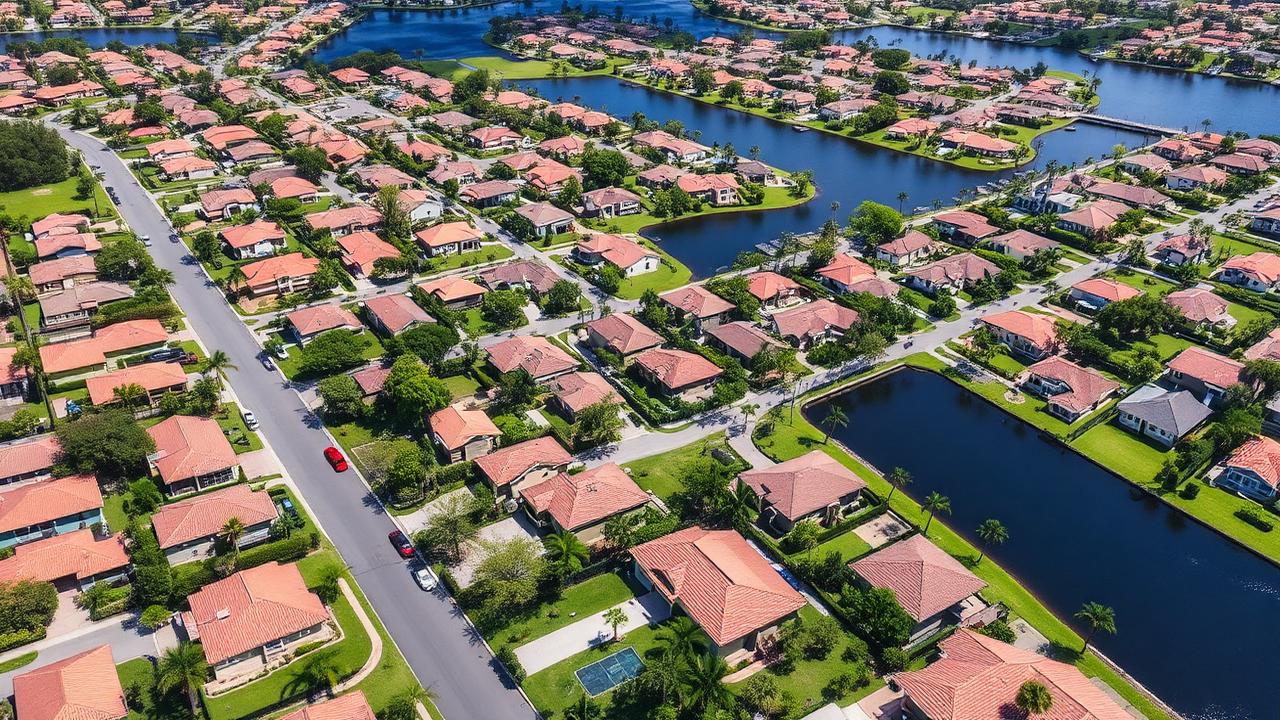
Dense HOA neighborhoods, canals behind half the houses, and a route where the stops are three minutes apart but the phone never stops long enough to book them.
Typical Coral Springs implementation goes live in about 30-90 days.
Coral Springs was built as planned communities, which means short drives, tight rules, and a very high number of comparable homes on one street.
Community associations across Coral Springs and Parkland set landscaping and treatment expectations, and a violation notice reaches the homeowner before it reaches you.
Water-management canals threading the city give rodents continuous cover, so exclusion work rarely stays contained to a single property.
With homes minutes apart, a technician can complete far more stops per day than in a spread-out market, but only if the day is sequenced correctly from the moment each call is booked.
Ficus hedges and heavy ornamental planting across these neighborhoods generate a separate stream of lawn and ornamental calls with different pricing and licensing.
In a community this uniform, one quote gets shared across a street group chat, so consistent pricing out of the office matters more than usual.
Neighborhoods built in the 1970s and 1980s sit on canal-fed water tables that keep soil moist year-round, giving subterranean termite colonies an easy path into slab foundations that never fully dry out.
Coral Springs and neighboring Coconut Creek have a large Spanish-speaking and Haitian Creole-speaking population, so a phone system that can only quote and book in English misses a meaningful share of calls.
We build consistent quoting, HOA-aware notes, and density-aware booking into the systems before you go live.
Voice AI quotes strictly from your pricing, so two neighbors comparing numbers get the same answer.
See Voice AIMessaging AI collects association notes and posts them to the account so the tech knows the restrictions before arriving.
See Messaging AIThe AI Sales System fills tight geographic clusters, which is where a Coral Springs route actually makes its margin.
See the AI Sales SystemOutbound Campaigns can target neighborhoods where you already run a stop so the extra jobs cost almost no drive time.
See Outbound CampaignsWant to see what this looks like against your own Coral Springs call volume? We will walk through it on a 30-minute call.
Book a Discovery CallAssociation rules and neighborhood clustering get configured with you during onboarding.
We have a deep, purpose-built FieldRoutes integration, and over 1,000 API connections available for everything else, so your Coral Springs operation keeps one source of truth instead of four.
All third-party product names, logos, and brands are property of their respective owners. Use of these names does not imply endorsement or affiliation.
The opportunity here is density. Homes are close, the neighborhoods are uniform, and a well-sequenced day produces far more stops than a spread-out market ever will. What breaks that is the phone: a single office line cannot qualify, quote, and cluster every inbound call during a summer ant week. Operators adopt AI to protect the routing advantage the city geography already gives them.
Deciding whether AI is right for your business at all is a separate question from which market you are in. We answer it honestly, including when the answer is not yet, in our AI decision guides, starting with should I use AI in my pest control business.
South Florida's two-season climate, layered on top of a dense HOA suburb, produces a pest calendar that swings hard between a soaked wet season and a dry, mosquito-light winter.
The onset of South Florida's wet season sends ghost ants and Argentine ants streaming out of saturated lawns and into kitchens across Coral Springs and Coconut Creek, and call volume across the whole cluster of streets tends to rise together.
Daily afternoon storms keep canal levels high, pushing roof rats to relocate along fence lines and attic access points, while whitefly infestations on ficus hedges peak alongside the general pest surge.
Hurricane season brings both scheduling disruption from storm watches and a post-storm bump in rodent and ant activity as displaced wildlife looks for dry shelter in garages and attics.
The dry season drops humidity and mosquito activity noticeably, but German cockroaches remain steady indoors in dense HOA townhome clusters where units share plumbing chases.
Cooler, drier weeks bring the year's lightest call volume, making it a common window for HOA-driven bulk exterior treatments and community-wide inspections before the wet season returns.
As temperatures climb ahead of the wet season, subterranean termite swarms appear in older sections of Coral Springs built in the 1970s and 1980s, generating a short, sharp bump in inspection requests.
Coral Springs was master-planned, which means routing looks less like navigating a city and more like optimizing a grid of interchangeable cul-de-sacs.
Nearly every route touches one of these two corridors at some point, so scheduling avoids stacking appointments that require crossing both during school pickup and evening commute hours.
Many communities require advance registration or a gate call for service vehicles, so first visits to a new HOA account take longer than the well-worn accounts a technician already has clearance for.
Homes backing directly onto the water-management canals need exclusion work that accounts for continuous rodent movement along the waterline, distinct from interior-lot service.
Once a route crosses into Parkland, larger equestrian-zoned lots and longer driveways slow the pace back down to something closer to a standard suburban route than the tight Coral Springs grid.
Because homes are close together and priced similarly, a technician running fifteen minutes behind on one street quickly cascades across several near-identical bookings rather than a single outlier stop.
Afternoon thunderstorms common from June through September regularly interrupt exterior treatments, so routes built with a tight afternoon buffer struggle to recover once a storm cell rolls through.
Retail plazas and office parks along these corridors need commercial pest documentation on a different cadence than the surrounding residential HOA accounts.
Beyond state licensing requirements, individual HOA landscaping rules can restrict spray timing near shared common areas, so scheduling has to track both sets of restrictions simultaneously.
1970s and 1980s-era sections near the original canal grid generate enough subterranean termite work that some operators run a separate weekly route just for termite inspections and treatments, distinct from general pest service.
With a significant share of residents in Coral Springs and Coconut Creek speaking Spanish or Haitian Creole at home, offices that can only staff English-speaking schedulers during business hours lose bookings that a bilingual phone system would otherwise capture.
More reading for operators working Coral Springs, FL and the markets around it.
Location-specific guides written for the pest pressure, routes, and customer behavior of this market.
A short one-pager on the Coral Springs market, the systems we build for operators here, and how implementation runs, written to be printed and passed around.
Last updated 2026-09-17
Try the messaging AI that answers texts, webchat, and social for pest control teams.
Start a ChatUse our free pest control AI assistant today, no contract, no setup call.
Try PestGPT FreeBring a normal week of stops and we will show you how many more your existing techs could have run if every call had been booked into the right cluster.
The Florida guide covers statewide pest pressure, licensing and call patterns, and links every Florida city guide we publish, including this one.