
Canals block the direct line everywhere
Two addresses a quarter mile apart can require a two-mile detour to the nearest bridge, so mileage estimates based on distance are wrong almost every time.
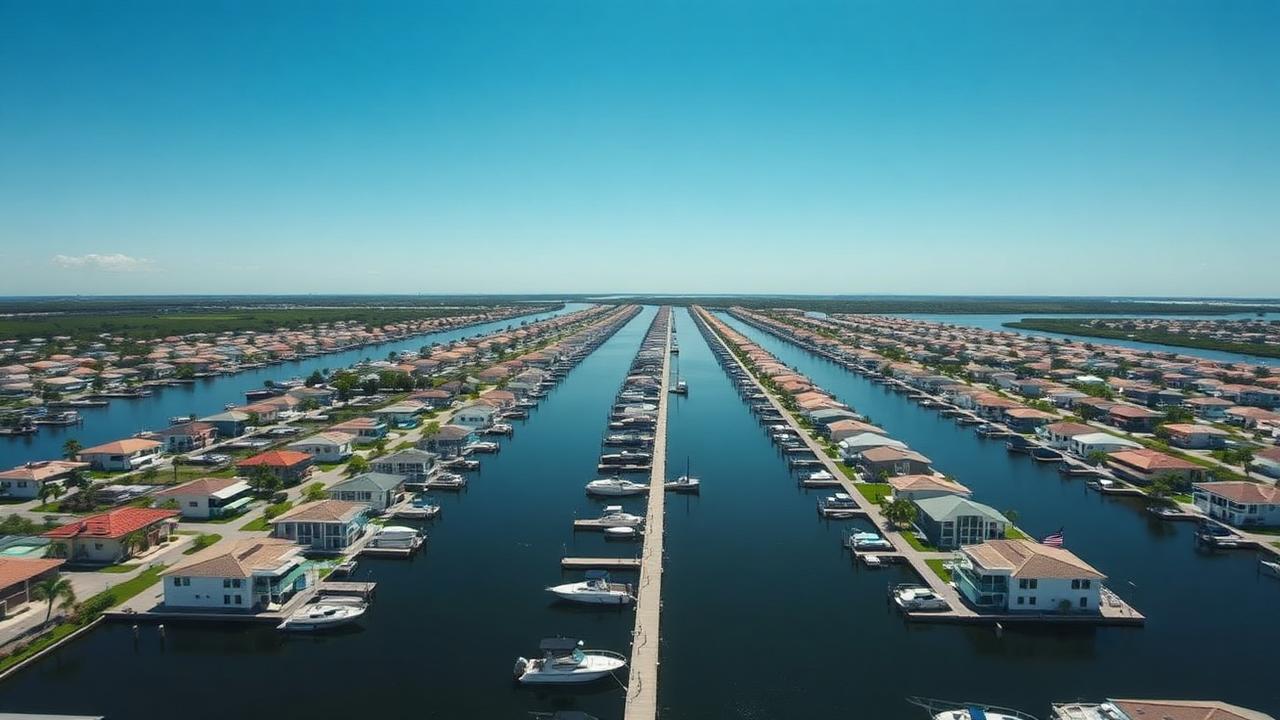
A city laid out as a canal grid, with more waterfront lots than almost anywhere in the world and a rental economy layered on top of it. The pest pressure is predictable. The access, scheduling, and turnover coordination are what eat your day.
Typical Cape Coral implementation goes live in about 30-90 days.
The grid looks simple on a map and behaves badly in practice.
Two addresses a quarter mile apart can require a two-mile detour to the nearest bridge, so mileage estimates based on distance are wrong almost every time.
Seawalls, dock structures, and irrigated lawns on saltwater canals sustain roach, ant, and rodent harborage that never fully clears, which is why one-off treatments here generate repeat complaints.
A large share of the housing stock turns over weekly. Service has to land in a narrow window between checkout and check-in, and that window is set by a booking platform, not by your route.
The person approving the work often lives in another state or another country, while a property manager holds the keys. Intake has to capture both or the job stalls.
There is no dense core to anchor a day. Jobs are distributed across a very large low-rise footprint, which makes booking discipline the difference between eight stops and five.
We build the systems around your Cape Coral operation, test them on live scenarios, and hand them to your team.
Messaging AI collects checkout and check-in times up front and confirms with the property manager, so service happens while the unit is actually empty.
See Messaging AIVoice AI takes calls at any hour, which matters when the person paying the invoice is three time zones or an ocean away from the property.
See Voice AIYour real drive-time rules drive the booking logic, so the calendar stops assuming a canal is something a truck can drive across.
See the AI Sales SystemOutbound campaigns hold rental and seasonal owners on schedule with automatic renewal and reactivation touches your office never has time to make.
See Outbound CampaignsWant to see what this looks like against your own Cape Coral call volume? We will walk through it on a 30-minute call.
Book a Discovery CallWe load your quadrant boundaries, bridge-aware drive times, and rental-access notes during onboarding.
We have a deep, purpose-built FieldRoutes integration, and over 1,000 API connections available for everything else, so your Cape Coral operation keeps one source of truth instead of four.
All third-party product names, logos, and brands are property of their respective owners. Use of these names does not imply endorsement or affiliation.
This market rewards coordination more than salesmanship. Most of the work is recurring, most of the friction is logistical, and the operator who can confirm access reliably keeps the property-manager relationships that carry dozens of doors at once. AI here is mostly a coordination engine with a sales function attached.
Deciding whether AI is right for your business at all is a separate question from which market you are in. We answer it honestly, including when the answer is not yet, in our AI decision guides, starting with should I use AI in my pest control business.
Southwest Florida's two-season climate, combined with a rental and seasonal-resident population that fluctuates by the month, produces a call pattern that shifts more with occupancy than with temperature.
Snowbird season fills seasonal homes across Pelican and Burnt Store with returning owners who left properties vacant for months, generating a wave of reactivation calls for ant and rodent issues that built up unnoticed during the empty stretch.
As humidity climbs ahead of the wet season, subterranean termite swarmers emerge from canal-front lots in Southwest Cape and North Cape, and calls about mud tubes near seawalls and dock pilings start increasing.
Daily afternoon thunderstorms during Florida's wet season push moisture-driven pests including American cockroaches and Cuban tree frogs toward garages and lanais, while standing water after heavy rain drives a steady mosquito call volume near the canals.
Ahead of and after tropical storms, rodents displaced from canal banks and mangrove edges move into nearby homes seeking dry shelter, and post-storm debris around Matlacha and Pine Island properties creates new harborage that needs addressing quickly.
As snowbirds and vacation-rental guests return for the winter season, property managers across the Cape request pre-arrival inspections to clear out pests that moved in during the slower fall months.
Independent of season, the weekly changeover cycle in short-term rental units near Saint James City and along the canal-front tourist corridor generates a constant background of between-guest service requests that never fully lets up.
Cape Coral's layout, spread across one of the largest canal networks of any US city, means route planning has to account for water everywhere a straight line would otherwise work.
Del Prado Boulevard, Chiquita Boulevard, and a limited number of other bridges carry most cross-canal traffic, so routes are planned around those chokepoints rather than assuming a direct path between two addresses.
Burnt Store in the far north and Southwest Cape near the river mouth can be 25-30 minutes apart even without traffic, so those service areas are typically scheduled as separate route blocks rather than combined into a single day.
Reaching Pine Island and Matlacha means crossing the Matlacha Pass Bridge, a single access point that can back up during peak season traffic, so appointments there are grouped to minimize repeat crossings.
Vacation rentals near the canal-front tourist areas mostly turn over at the end of the week, creating a predictable weekend service spike that differs from the steady weekday pace of owner-occupied homes.
Waterfront properties on saltwater canals often require walking a seawall or dock to reach treatment points, so technicians confirm access details with property managers rather than assuming a standard yard layout.
Storm warnings can force same-day rescheduling across dozens of appointments at once, so operators need a fast way to notify affected customers and rebook without overwhelming the office phones.
A homeowner living out of state approves the invoice while a local property manager holds the keys, so intake has to capture both contacts clearly or a scheduled visit can stall at the door.
With no downtown high-rise cluster concentrating stops, Cape Coral routes cover more linear distance per job than a comparably sized city with a walkable core, making booking discipline the main lever for fitting more stops into a day.
More reading for operators working Cape Coral, FL and the markets around it.
Location-specific guides written for the pest pressure, routes, and customer behavior of this market.
A short one-pager on the Cape Coral market, the systems we build for operators here, and how implementation runs, written to be printed and passed around.
Last updated 2026-09-17
Try the messaging AI that answers texts, webchat, and social for pest control teams.
Start a ChatUse our free pest control AI assistant today, no contract, no setup call.
Try PestGPT FreeBring your stops-per-day average and your rental account list. Turnover timing and bridge detours usually explain the missing hours.
The Florida guide covers statewide pest pressure, licensing and call patterns, and links every Florida city guide we publish, including this one.