
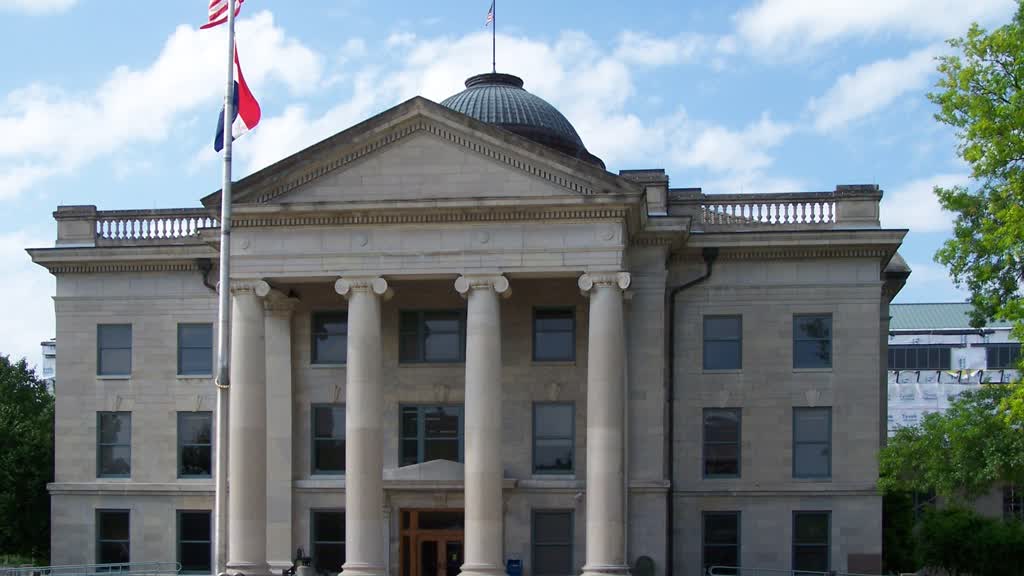
Columbia, Missouri downtown near the University of Missouri campus with red brick buildings
    Columbia, Missouri

    Pest Control Software Built for Columbia, MO Operators

    Between Mizzou's turnover-heavy rental blocks near downtown, the karst limestone terrain that funnels moisture into crawl spaces, and the row-crop farmland ringing Boone County, Columbia calls come in with very different urgency levels. Our AI systems triage every one of them the second the phone rings.

    Typical Columbia implementation goes live in about 30-90 days.

    Why Columbia is a college town, a health-sciences hub, and a farm county at once

    Boone County stacks a major university, two hospital systems, and surrounding cropland into one service area, so a route can swing from a fraternity house to a grain elevator in twenty minutes.

    August lease turnover floods phones with the same week every year

    Thousands of student rentals near campus and downtown turn over on the same late-summer move-in weekend, and cockroach and German roach complaints from left-behind furniture spike hard enough to bury a front desk that isn't answering every call live.

    Karst limestone geology means damp crawl spaces and sinkhole-adjacent lots

    Columbia sits on limestone bedrock riddled with sinkholes and underground drainage, so older homes in neighborhoods like Grasslands and Bearfield Farms fight persistent moisture that draws termites and camel crickets even in dry years.

    Boone County farmland pushes stink bugs and box elder bugs into subdivisions each fall

    As row crops around Rocheport and Ashland get harvested, overwintering insects move into newer subdivisions on the city's edges looking for wall voids, and homeowners who've never seen the problem call in a panic.

    Two hospital campuses require documented, fast-turnaround commercial service

    Boone Hospital Center and MU Health Care facilities carry strict pest-sighting reporting requirements, and a missed callback on a commercial account like that risks the contract, not just a follow-up visit.

    What we build for you

    What that means for your phones and your crews

    We configure around a market where move-in week roach calls and a hospital escalation can hit the same afternoon.

    Absorb the August rental turnover spike without dropped calls

    Voice AI answers every call during the move-in surge so a wave of same-week roach complaints from campus-area rentals never overflows a front desk.

    See Voice AI

    Keep hospital and clinic accounts inside their reporting windows

    Messaging AI logs and timestamps every inbound request from commercial healthcare accounts, giving you the documentation those contracts require.

    See Messaging AI

    Turn fall overwintering-pest panic calls into signed exclusion plans

    The AI Sales System follows up on every box elder bug or stink bug caller from the fringe subdivisions with a scheduled exclusion quote before they call a competitor.

    See PestCRM

    Want to see what this looks like against your own Columbia call volume? We will walk through it on a 30-minute call.

    Book a Discovery Call

    Operators across the Columbia area

    Service areas across the city and surrounding Boone County are configured during onboarding.

    • Downtown Columbia
    • Grasslands
    • Bearfield Farms
    • Ashland
    • Rocheport
    • Hallsville
    • Sturgeon
    • Centralia

    Connected to the software you already run

    We have a deep, purpose-built FieldRoutes integration, and over 1,000 API connections available for everything else, so your Columbia operation keeps one source of truth instead of four.

    All third-party product names, logos, and brands are property of their respective owners. Use of these names does not imply endorsement or affiliation.

    What AI adoption looks like in Columbia

    Columbia operators run a business calendar shaped by the university, not just the weather, with a predictable late-summer surge layered on top of normal seasonal pest cycles. Karst geology and a mix of century-old craftsman homes and new farmland-edge subdivisions mean crews see very different problems block to block, which makes accurate phone triage worth more than in a uniform suburban market.

    • Late-summer student rental turnover creates a predictable, sharp call spike
    • Karst limestone terrain drives chronic crawl-space moisture and termite risk
    • Hospital and clinic accounts require documented, fast-turnaround response
    • Farmland-edge subdivisions see seasonal overwintering pest invasions each fall

    Deciding whether AI is right for your business at all is a separate question from which market you are in. We answer it honestly, including when the answer is not yet, in our AI decision guides, starting with should I use AI in my pest control business.

    Columbia's pest calendar: a college-town clock layered on mid-Missouri seasons

    Boone County's row-crop farmland, karst terrain, and Mizzou's academic calendar each drive their own call pattern, and the busiest weeks rarely line up with a typical Midwest pest season.

    March - April

    Spring thaw brings moisture up through karst limestone fissures under older homes in Grasslands and Bearfield Farms, drawing termite swarmers and camel crickets into crawl spaces earlier than in areas with denser bedrock.

    May - July

    Warm, humid weather keeps ants and wasps active across both in-town neighborhoods and outlying farm-edge subdivisions, with wasp nests building steadily in eaves and outbuildings around Hallsville and Sturgeon.

    Late August move-in week

    Thousands of student leases turn over in the same seven-to-ten day window near downtown and the Mizzou campus, generating the year's sharpest spike in German cockroach and rodent complaints tied to left-behind furniture and unclean move-ins.

    September - October

    Row-crop harvest around Rocheport and Ashland pushes overwintering stink bugs and box elder bugs toward nearby subdivisions, while cooling nights send field mice toward foundation gaps on the city's expanding edges.

    November - December

    Rodents move solidly indoors as temperatures drop, and older homes with karst-related foundation gaps in central Columbia see a heavier mouse season than newer, better-sealed construction on the fringe.

    January - February

    Cold snaps drive stink bugs and lady beetles out of wall voids in search of warmth, and hospital-adjacent commercial accounts near Broadway see a steady baseline of pest-sighting reports tied to winter rodent pressure.

    Running crews across a college town and its farm county

    Columbia's compact urban core, expanding subdivisions, and the farmland towns ringing Boone County mean a single day's route can span very different driving conditions and customer expectations.

    US-63 and I-70 define the major routing corridors

    Crews moving between the campus area, southern subdivisions, and outlying towns typically route along US-63 or I-70, so dispatchers avoid scheduling stops that require doubling back across the interchange during afternoon rush.

    Rocheport and Ashland add meaningful drive-time buffers

    Rocheport sits about 15 miles west via I-70 and Ashland roughly 12 miles south via US-63, so appointments in those towns typically get grouped into a single afternoon block rather than mixed with in-town Columbia stops.

    Move-in week requires temporary route restructuring

    The late-August lease turnover concentrates dozens of same-week requests into a few campus-adjacent ZIP codes, so many operators run a dedicated short-route crew during that window instead of the normal citywide schedule.

    Karst terrain affects where crews can safely access crawl spaces

    Homes near known sinkhole areas in parts of southern Columbia sometimes have unstable crawl-space access, so technicians confirm entry conditions ahead of the visit rather than discovering a hazard on site.

    Hospital and clinic accounts run on tighter response windows

    Boone Hospital Center and MU Health Care facilities expect same-day or next-day response on reported sightings, so those commercial stops typically get priority placement on the day's route regardless of geographic convenience.

    Farm-town appointments cluster around harvest season

    Fall exclusion and overwintering-pest calls from Hallsville, Sturgeon, and Centralia cluster tightly around harvest timing, so route planning adds capacity in those weeks rather than spreading it evenly across autumn.

    Columbia pest control questions we get asked

    Columbia AI guides

    Location-specific guides written for the pest pressure, routes, and customer behavior of this market.

    Columbia overview
    • Should you use AIShould I use AI in my Columbia pest control business?Coming soon.
    • Will customers talk to AIWill pest control customers in Columbia talk to AI?Coming soon.
    • Best AI for pest controlWhat is the best AI for pest control in Columbia?Coming soon.
    • Speed to leadHow can Columbia pest control companies win with speed-to-lead?Coming soon.
    • Best software stackWhat is the best pest control software for Columbia operators?Coming soon.
    • Local marketingHow should pest control companies in Columbia market themselves locally?Coming soon.
    • Reviews & reputationHow can Columbia pest control companies get more reviews and protect their reputation?Coming soon.
    • Seasonal playbookWhat is the seasonal pest control playbook for Columbia?Coming soon.
    • Commercial AIHow does AI help commercial pest control accounts in Columbia?Coming soon.
    • Hiring vs AIShould Columbia pest control operators hire office staff or use AI?Coming soon.
    Free 48 KB PDF

    Download the Columbia, MO Pest Control AI Playbook

    A short one-pager on the Columbia market, the systems we build for operators here, and how implementation runs, written to be printed and passed around.

    • A Columbia market snapshot, the pressure that drives your call volume
    • The AI systems we run for operators here, in plain language
    • What a 30-day implementation actually looks like
    • Printable, so you can hand it to your office team

    Last updated 2026-09-17

    Loading the Columbia playbook form

    Three ways to see it working in Columbia

    Book a demo

    A 30-minute walkthrough against your own Columbia call volume.

    Book a Discovery Call

    Start a chat

    Try the messaging AI that answers texts, webchat, and social for pest control teams.

    Start a Chat

    Start free with PestGPT

    Use our free pest control AI assistant today, no contract, no setup call.

    Try PestGPT Free
    Final step

    Let's look at your move-in week call volume

    Pull your call logs from the last August turnover. We can show you how many rental calls went unanswered and what that cost in lost bookings.

    • A real review of your intake, not a canned demo
    • 30 minutes, and a typical implementation runs about 30-90 days
    • No contract to talk. We never share your details.

    Request your Columbia walkthrough

    Prefer to pick a time yourself? Book a Discovery Call