
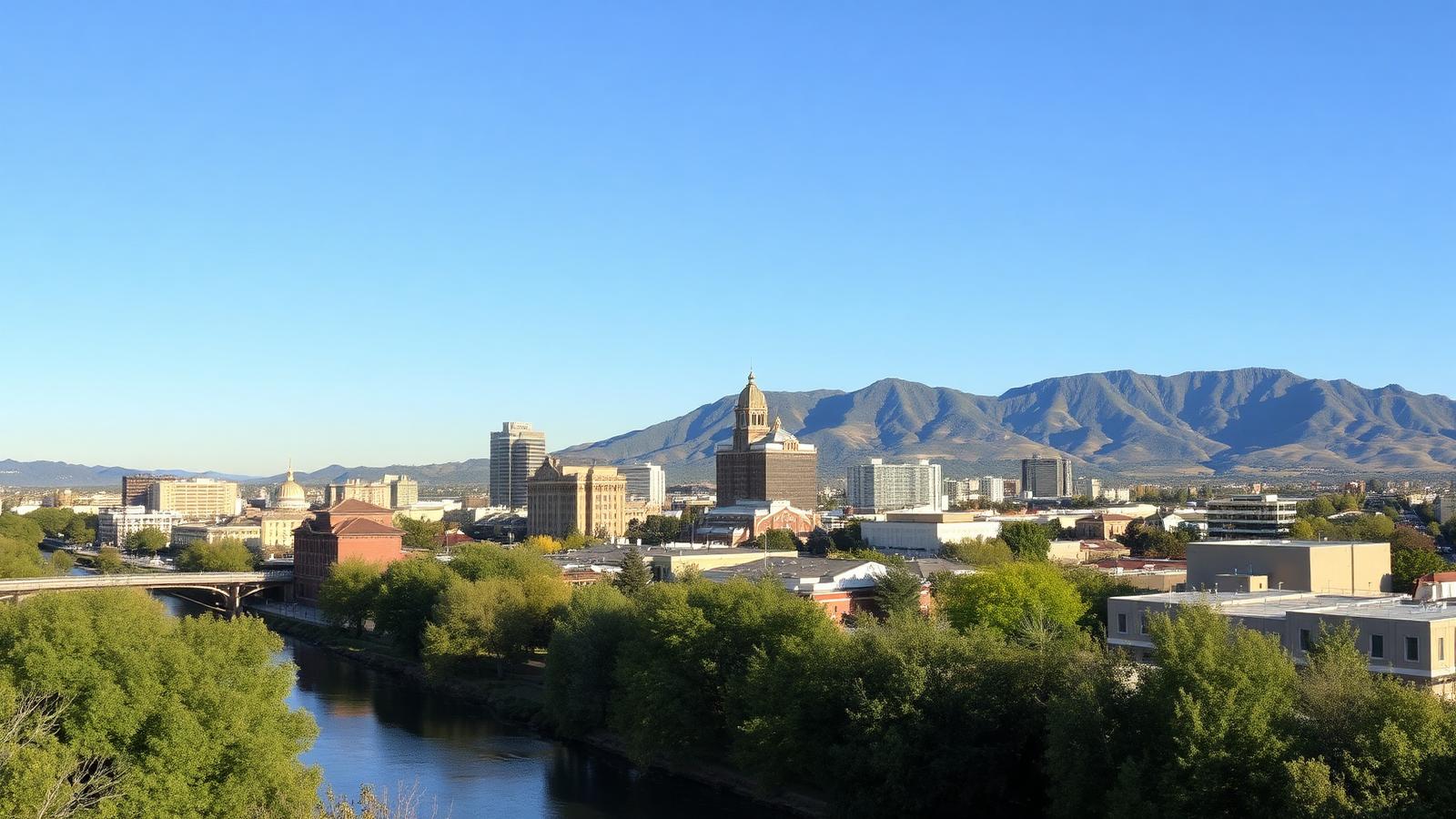
Boise, Idaho foothills and the Boise River greenbelt with the city skyline
    Boise, Idaho

    Pest Control Software Built for Boise Operators

    The Boise Foothills push deer mice and ground squirrels into homes along Hulls Gulch and Bogus Basin Road, the city's irrigation canal system breeds mosquitoes every summer from Garden City to Eagle, and Treasure Valley's subdivision growth keeps stretching service areas west toward Meridian and Nampa. We build the AI systems that keep every call covered.

    Typical Boise implementation goes live in about 30-90 days.

    Why Boise pest work is shaped by the foothills and the canals

    A city built against dry foothills and threaded with century-old irrigation canals gives Boise a pest pattern that a generic call center will misread every time.

    Foothill-adjacent homes see year-round rodent and wildlife pressure

    Neighborhoods backing directly onto the Boise Foothills, like the North End and areas near Hulls Gulch, deal with deer mice, ground squirrels, and the occasional pack rat moving into crawl spaces at a much higher rate than homes farther into the valley.

    The historic irrigation canal network drives a summer mosquito surge

    Boise's extensive open irrigation canal system, running through Garden City, Eagle, and older parts of the city, creates standing water that fuels heavy mosquito activity from June through September, well beyond what a typical residential yard would generate.

    Treasure Valley growth west into Meridian and Nampa keeps expanding service radius

    The valley has added new subdivisions west along I-84 and Chinden Boulevard for over a decade, and pest companies signing new HOA and builder contracts out there need intake systems that can onboard a whole new territory without missing calls.

    Dry, hot summers followed by sharp cold snaps stress overwintering pest control

    Boise's high-desert climate pushes spiders and boxelder bugs indoors hard once the first fall cold snap hits, and that transition happens faster and more abruptly here than in milder Pacific Northwest markets nearby.

    The Boise River greenbelt corridor holds moisture-loving pests close to downtown

    The Boise River Greenbelt threading past Ann Morrison Park and the East End keeps a ribbon of irrigated lawns and mature cottonwoods green through the dry season, which gives earwigs, sowbugs, and the occasional vole a moisture refuge that spreads complaints into the surrounding Warm Springs and Harrison Boulevard neighborhoods.

    Older North End and East End homes need targeted exclusion work

    Craftsman and foursquare homes built before 1950 in the North End and East End have settled foundations and original wood siding, giving spiders, ants, and rodents more gaps to exploit than the newer stucco construction going up in Meridian.

    What we build for you

    What that means for your phones and your crews

    We build around a market where foothill wildlife pressure, canal-driven mosquito season, and rapid westward growth all demand different response patterns.

    Handle foothill wildlife calls without dropping other requests

    Voice AI answers every rodent and wildlife call from North End and foothill-adjacent homeowners instantly, qualifying the issue and scheduling an inspection without your office falling behind.

    See Voice AI

    Absorb the canal-driven mosquito surge each summer

    Messaging AI fields the wave of mosquito complaints from Garden City and Eagle residents living near the canal system, keeping response times fast through the June-to-September peak.

    See Messaging AI

    Turn new Meridian and Nampa leads into signed contracts

    The AI Sales System follows up automatically with homeowners in newly built Treasure Valley subdivisions, converting inbound interest into scheduled service before a competitor gets there first.

    See the AI Sales System

    Want to see what this looks like against your own Boise call volume? We will walk through it on a 30-minute call.

    Book a Discovery Call

    Operators across the Treasure Valley

    Service areas across Boise and the surrounding valley are configured during onboarding.

    • Boise
    • Meridian
    • Nampa
    • Eagle
    • Garden City
    • Caldwell
    • Kuna

    Connected to the software you already run

    We have a deep, purpose-built FieldRoutes integration, and over 1,000 API connections available for everything else, so your Boise operation keeps one source of truth instead of four.

    All third-party product names, logos, and brands are property of their respective owners. Use of these names does not imply endorsement or affiliation.

    What AI adoption looks like in Boise

    Boise operators manage a foothill wildlife pattern found in few other mid-sized cities, a canal-driven mosquito season shaped by century-old irrigation infrastructure, and one of the fastest-growing suburban corridors in the Mountain West stretching west toward Meridian and Nampa. Companies that can cover all three without adding headcount for each are the ones winning Treasure Valley-wide contracts.

    • Foothill-adjacent neighborhoods see elevated deer mice and ground squirrel activity year-round
    • The historic irrigation canal network drives a sharp June-through-September mosquito surge
    • Treasure Valley growth west along I-84 keeps expanding service territory
    • Boise's high-desert climate pushes spiders and boxelder bugs indoors fast after the first fall cold snap

    Deciding whether AI is right for your business at all is a separate question from which market you are in. We answer it honestly, including when the answer is not yet, in our AI decision guides, starting with should I use AI in my pest control business.

    Boise's pest calendar: high desert, canals, and a fast winter turn

    Boise's high-desert climate means pest activity swings hard between seasons, and the canal system and foothills each add their own schedule on top of the weather.

    March - April

    As irrigation districts start running water through the canal system again ahead of the growing season, mosquito larvae appear in slow-moving stretches near Garden City and along the Ridenbaugh Canal, while ground squirrels emerge from winter burrows in foothill-adjacent yards near Hulls Gulch and Camel's Back Park.

    May - June

    Ants become the dominant residential complaint as soil warms across Boise's bench neighborhoods, and homeowners near newly landscaped Meridian and Star subdivisions report carpenter ants and pavement ants moving in around irrigation lines and fresh sod.

    July - August

    Peak canal-driven mosquito season hits Garden City, Eagle, and the older irrigated lots near the Boise River, with evening complaints spiking after any stretch of hot, still weather. Wasps also build nests aggressively in eaves and playground equipment during this stretch.

    September - October

    The first fall cold snap sends spiders, boxelder bugs, and cluster flies searching for gaps in siding across the whole valley, and that shift happens abruptly here, often within a single cold week rather than gradually over a month like milder Northwest cities see.

    November - December

    Deer mice and the occasional pack rat move from the dry foothills into North End attics and crawl spaces as overnight temperatures drop below freezing, and older homes with original foundation vents see the heaviest pressure.

    January - February

    Cold, dry high-desert winter pushes most activity indoors entirely; calls shift toward confirmed rodent sightings inside walls and attics rather than new entry attempts, and pest pressure stays lower until the canals start running again in March.

    Running crews across the Treasure Valley's spread-out geography

    Boise's service area stretches from dense, older in-town neighborhoods to fast-growing subdivisions twenty miles west, so routing has to account for very different housing stock and drive times depending on the day.

    I-84 and Chinden Boulevard set the east-west routing backbone

    Crews moving between North End jobs and new-build stops in Meridian, Nampa, or Caldwell rely on I-84 and Chinden Boulevard, and rush-hour congestion near the Eagle Road interchange can add real time to a route planned without it.

    Foothill-adjacent stops require different equipment and scheduling

    Homes near Hulls Gulch, Bogus Basin Road, and the Boise Foothills often need wildlife exclusion tools and crawl-space access gear that a standard bench-neighborhood stop does not, so dispatch groups these together rather than mixing them into a general residential route.

    Canal-adjacent properties cluster into a predictable summer route

    Garden City and older parts of Boise along the historic canal laterals generate enough mosquito and moisture-pest volume each summer that many operators build a standing weekly route just for those addresses rather than scheduling them ad hoc.

    New subdivision contracts in Meridian and Star require fast onboarding

    Builder and HOA contracts in fast-growing west-valley communities can add dozens of addresses to a route overnight, and a system that onboards a new territory without adding office staff first is the difference between winning and declining that volume.

    Winter storms off the Owyhee foothills close some rural approaches

    Occasional heavy snow and ice on the roads leading toward Star and the outer edges of the valley can delay morning routes, so many operators front-load the farthest stops early and keep in-town Boise work flexible for the afternoon.

    Boise pest control questions we get asked

    Boise AI guides

    Location-specific guides written for the pest pressure, routes, and customer behavior of this market.

    Boise overview
    Free 49 KB PDF

    Download the Boise, ID Pest Control AI Playbook

    A short one-pager on the Boise market, the systems we build for operators here, and how implementation runs, written to be printed and passed around.

    • A Boise market snapshot, the pressure that drives your call volume
    • The AI systems we run for operators here, in plain language
    • What a 30-day implementation actually looks like
    • Printable, so you can hand it to your office team

    Last updated 2026-09-17

    Loading the Boise playbook form

    Three ways to see it working in Boise

    Book a demo

    A 30-minute walkthrough against your own Boise call volume.

    Book a Discovery Call

    Start a chat

    Try the messaging AI that answers texts, webchat, and social for pest control teams.

    Start a Chat

    Start free with PestGPT

    Use our free pest control AI assistant today, no contract, no setup call.

    Try PestGPT Free
    Final step

    Let's look at your summer call log

    Pull your numbers from last summer's mosquito season. We'll show you how many canal-adjacent calls came in after hours and never converted to a booked visit.

    • A real review of your intake, not a canned demo
    • 30 minutes, and a typical implementation runs about 30-90 days
    • No contract to talk. We never share your details.

    Request your Boise walkthrough

    Prefer to pick a time yourself? Book a Discovery Call