
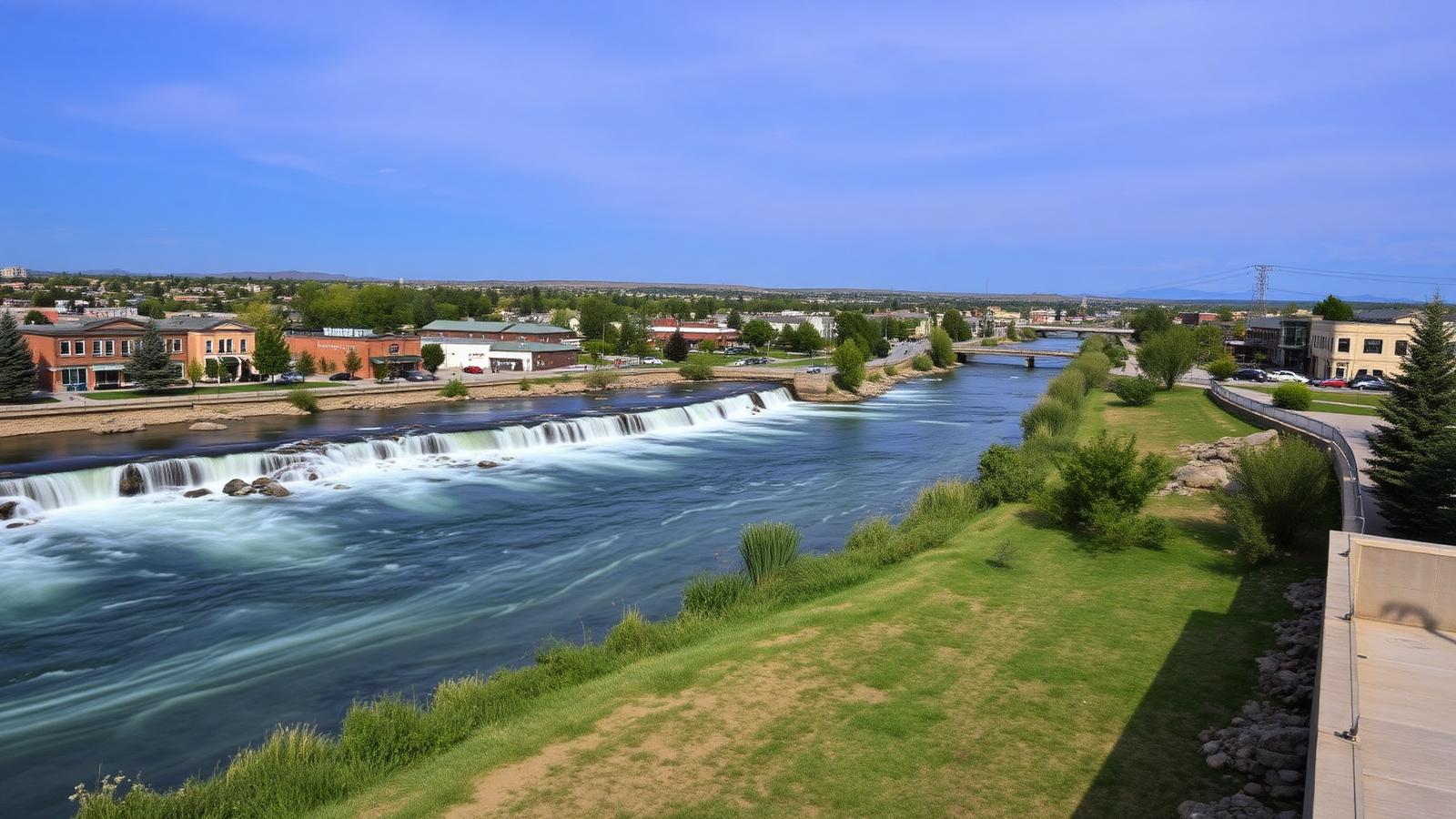
The Snake River falls and greenbelt path through downtown Idaho Falls, Idaho
    Idaho Falls, Idaho

    Pest Control Software Built for Idaho Falls Operators

    The Snake River greenbelt through downtown breeds mosquitoes every summer, surrounding potato and grain harvest season pushes field rodents into homes on the edges of town, and steady growth tied to the Idaho National Laboratory workforce keeps adding rooftops west of town. We build the AI systems that keep pace with all of it.

    Typical Idaho Falls implementation goes live in about 30-90 days.

    Why Idaho Falls pest work runs on a river and harvest calendar

    A river running straight through downtown and a farm economy on every side give Idaho Falls a call pattern shaped by agriculture as much as weather.

    The Snake River greenbelt drives a summer mosquito surge downtown

    The river falls and greenbelt paths that define downtown Idaho Falls also create ideal mosquito breeding conditions each summer, and homes and businesses within a few blocks of the water see noticeably higher mosquito call volume than the rest of the city.

    Fall potato and grain harvest pushes field rodents into edge-of-town homes

    As combines clear the surrounding fields every September and October, deer mice and voles displaced from harvested acreage move into homes and outbuildings on the edges of town near Ammon and Iona, generating a sharp autumn rodent-exclusion spike.

    Idaho National Laboratory workforce growth adds rooftops west of town

    Steady hiring at the Idaho National Laboratory west of the city has fueled new residential growth along US-20 and in Ammon, and pest companies picking up new subdivision contracts there need intake that scales with each new phase of development.

    Harsh winters and short, intense summers compress the treatment season

    Idaho Falls winters routinely drop well below freezing for weeks, which compresses effective exterior pest treatment into a shorter window than milder markets get, making scheduling efficiency during spring and summer critical.

    Irrigation canals feeding farmland create standing-water mosquito and moisture pest zones

    The network of irrigation canals that run through and around Idaho Falls to serve surrounding farmland hold water well into fall, and homes backing onto a canal easement see elevated mosquito and ant activity that homes even a few blocks away do not.

    Rexburg-area university traffic adds seasonal rental turnover pest calls

    Commuter and rental traffic tied to Brigham Young University-Idaho in nearby Rexburg spills into the northern edge of the Idaho Falls service area, and landlord turnover between semesters produces a smaller but real secondary spike distinct from the harvest surge.

    What we build for you

    What that means for your phones and your crews

    We configure around a market where a downtown mosquito season and a fall harvest rodent surge hit at completely different times of year.

    Cover the downtown Snake River mosquito surge every summer

    Voice AI answers every mosquito complaint from downtown and greenbelt-adjacent properties instantly, booking treatment without your team getting buried during the peak summer months.

    See Voice AI

    Handle the fall harvest rodent spike without missing calls

    Messaging AI fields the wave of rodent exclusion requests from Ammon and Iona homeowners as harvest displaces field rodents each September and October.

    See Messaging AI

    Turn new INL-area growth into signed service contracts

    The AI Sales System follows up automatically with homeowners in newly built subdivisions along US-20, converting inbound interest into scheduled service before a competitor calls back first.

    See the AI Sales System

    Want to see what this looks like against your own Idaho Falls call volume? We will walk through it on a 30-minute call.

    Book a Discovery Call

    Operators across eastern Idaho

    Service areas across Idaho Falls and the surrounding region are configured during onboarding.

    • Idaho Falls
    • Ammon
    • Iona
    • Rigby
    • Shelley
    • Rexburg

    Connected to the software you already run

    We have a deep, purpose-built FieldRoutes integration, and over 1,000 API connections available for everything else, so your Idaho Falls operation keeps one source of truth instead of four.

    All third-party product names, logos, and brands are property of their respective owners. Use of these names does not imply endorsement or affiliation.

    What AI adoption looks like in Idaho Falls

    Idaho Falls operators deal with a downtown mosquito season tied to the Snake River, a fall rodent surge driven directly by the surrounding harvest, and steady new construction linked to Idaho National Laboratory employment. Always-on AI intake matters here because a company that can staff for a short, intense treatment season without carrying idle capacity through a harsh winter gains real ground on competitors still running a single front desk.

    • The Snake River greenbelt drives a summer mosquito surge concentrated downtown
    • Fall potato and grain harvest displaces field rodents into edge-of-town homes
    • Idaho National Laboratory workforce growth adds new subdivisions along US-20
    • Harsh winters compress the effective exterior treatment season into fewer months

    Deciding whether AI is right for your business at all is a separate question from which market you are in. We answer it honestly, including when the answer is not yet, in our AI decision guides, starting with should I use AI in my pest control business.

    The Idaho Falls pest calendar, season by season

    Eastern Idaho's high-desert climate, irrigated farmland, and long winters shape a pest calendar built around the Snake River, the harvest, and hard freezes.

    March - April

    As snowmelt feeds the Snake River and surrounding canals, overwintering ants and spiders become active again, and homes near the greenbelt see the season's first ant calls well before Ammon or Iona properties farther from the water. Mice that spent winter indoors begin actively seeking new nesting sites as they prepare to breed, producing a steady low-level rodent call volume that precedes the much larger fall surge.

    May - June

    Mosquito larvae hatch in the slower stretches of the greenbelt and in canal easements as water temperatures rise, and the first serious mosquito complaints of the year concentrate in downtown and river-adjacent neighborhoods. Wasps begin building nests under eaves and in outbuildings across Ammon and Iona as the weather warms enough for consistent daytime foraging.

    July - August

    Peak mosquito season hits downtown and canal-adjacent homes hard, with standing water in slower greenbelt channels and irrigation ditches sustaining breeding through the hottest weeks. Wasp activity peaks as colonies reach full size, and calls cluster around outdoor gatherings and patios. New-construction subdivisions along US-20 tied to INL hiring generate a steady stream of first-time pest control inquiries as new homeowners settle in.

    September - October

    Potato and grain harvest across the fields surrounding Idaho Falls displaces deer mice and voles in large numbers, and homes and outbuildings on the edges of town near Ammon and Iona absorb the bulk of the resulting rodent-exclusion calls. This is the single sharpest and most predictable spike of the year, and it arrives on a near-identical calendar every season.

    November - February

    Once hard freezes set in, exterior pest activity drops sharply and the remaining call volume shifts almost entirely indoors, with mice continuing to seek warmth inside homes with foundation gaps. Idaho Falls winters routinely stay below freezing for weeks at a stretch, and crews use the slower season for inspections, exclusion work, and getting ahead of spring service agreements before the greenbelt mosquito season returns.

    Late spring: canal cleanout season along irrigation easements

    As irrigation districts open canal gates and begin running water to farmland each April and May, homes backing onto canal easements near Ammon and the edges of Idaho Falls see a burst of ant and spider activity disturbed by the sudden flow. Property owners along these easements often request treatment timed to the canal district's water-on schedule, which crews familiar with the local irrigation calendar can anticipate rather than simply react to.

    What routing eastern Idaho actually costs you

    Idaho Falls combines a compact urban core with a wide farm-and-suburb service radius, and the difference between a tight day and a wasted one usually comes down to how well a route accounts for the surrounding geography.

    US-20 and I-15 are the backbone of every efficient route

    Crews moving between downtown, Ammon, and the growing subdivisions west toward the INL corridor rely on US-20 and I-15 as the only fast connectors, and a route built around surface streets instead loses real time to Idaho Falls' limited number of river crossings.

    The Snake River limits how many bridges a route can use

    Only a handful of bridges cross the Snake River within the city, so a day that bounces between the west side and east side without planning around those crossings wastes time sitting at the same chokepoints other commuters use during rush hour.

    Harvest season means field-edge rodent jobs need extra time for exclusion

    Rodent jobs generated by the fall harvest displacement typically require more than a routine treatment, since sealing entry points on homes bordering open farmland takes longer than a standard interior visit, and scheduling these with a standard time slot understaffs the day.

    Canal-adjacent properties need irrigation-schedule awareness

    Homes along canal easements near Ammon and Iona have pest pressure tied to when local irrigation districts run water, and a crew that knows the canal schedule can anticipate ant and mosquito spikes rather than being surprised by a sudden run of calls from the same neighborhood.

    New subdivisions west of town add stops without added density

    New construction tied to INL workforce growth along US-20 spreads homes out across newly platted subdivisions rather than infill lots, so early contracts in these areas add drive time between stops until the neighborhood fills in over several years.

    Winter ice on secondary roads slows rural Bonneville County stops

    Rural properties toward Iona, Shelley, and outlying Bonneville County roads are not always plowed as quickly as US-20 or in-town streets, and winter routes to these addresses need buffer time built in rather than being scheduled back-to-back with in-town stops.

    Downtown greenbelt-adjacent stops cluster during mosquito season

    The concentration of mosquito complaints during peak summer months near downtown and the greenbelt rewards grouping those stops into a dedicated block rather than spreading them across the week, since treatment products and equipment for mosquito work differ from a standard residential route.

    Rexburg-area rental turnover adds a secondary scheduling wave

    Landlord turnover tied to BYU-Idaho semester breaks in Rexburg spills into the northern service area on a different calendar than the fall harvest surge, and crews that treat it as a distinct, smaller wave avoid double-booking the same week as peak rodent season.

    Idaho Falls pest control questions we get asked

    Idaho Falls AI guides

    Location-specific guides written for the pest pressure, routes, and customer behavior of this market.

    Idaho Falls overview
    • Should you use AIShould I use AI in my Idaho Falls pest control business?Coming soon.
    • Will customers talk to AIWill pest control customers in Idaho Falls talk to AI?Coming soon.
    • Best AI for pest controlWhat is the best AI for pest control in Idaho Falls?Coming soon.
    • Speed to leadHow can Idaho Falls pest control companies win with speed-to-lead?Coming soon.
    • Best software stackWhat is the best pest control software for Idaho Falls operators?Coming soon.
    • Local marketingHow should pest control companies in Idaho Falls market themselves locally?Coming soon.
    • Reviews & reputationHow can Idaho Falls pest control companies get more reviews and protect their reputation?Coming soon.
    • Seasonal playbookWhat is the seasonal pest control playbook for Idaho Falls?Coming soon.
    • Commercial AIHow does AI help commercial pest control accounts in Idaho Falls?Coming soon.
    • Hiring vs AIShould Idaho Falls pest control operators hire office staff or use AI?Coming soon.
    Free 48 KB PDF

    Download the Idaho Falls, ID Pest Control AI Playbook

    A short one-pager on the Idaho Falls market, the systems we build for operators here, and how implementation runs, written to be printed and passed around.

    • A Idaho Falls market snapshot, the pressure that drives your call volume
    • The AI systems we run for operators here, in plain language
    • What a 30-day implementation actually looks like
    • Printable, so you can hand it to your office team

    Last updated 2026-09-17

    Loading the Idaho Falls playbook form

    Three ways to see it working in Idaho Falls

    Book a demo

    A 30-minute walkthrough against your own Idaho Falls call volume.

    Book a Discovery Call

    Start a chat

    Try the messaging AI that answers texts, webchat, and social for pest control teams.

    Start a Chat

    Start free with PestGPT

    Use our free pest control AI assistant today, no contract, no setup call.

    Try PestGPT Free
    Final step

    Let's look at your harvest-season call log

    Pull your numbers from last September and October. We'll show you how many field-rodent calls came in after hours and never converted to a booked visit.

    • A real review of your intake, not a canned demo
    • 30 minutes, and a typical implementation runs about 30-90 days
    • No contract to talk. We never share your details.

    Request your Idaho Falls walkthrough

    Prefer to pick a time yourself? Book a Discovery Call