
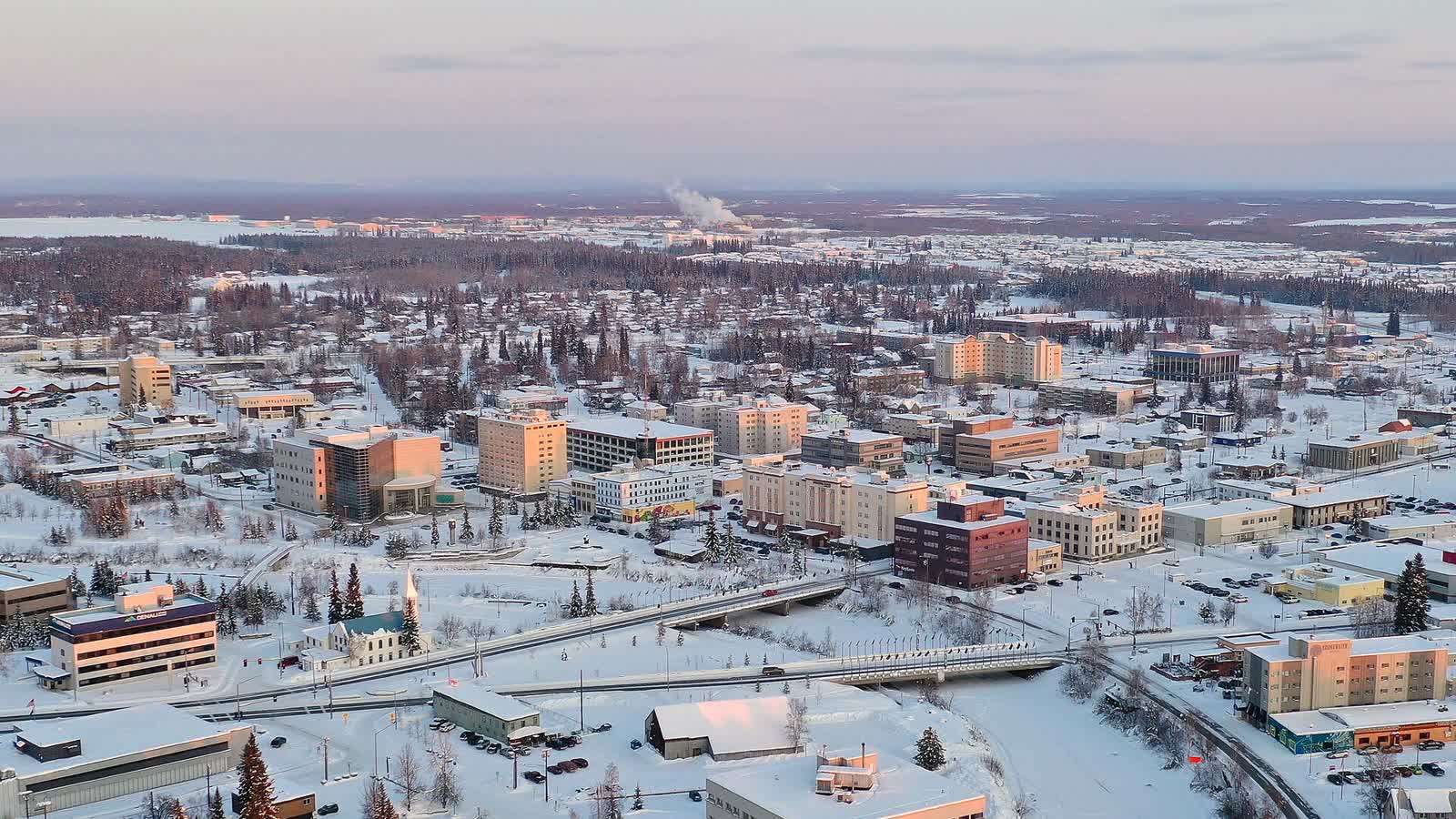
Aerial view of Fairbanks, Alaska with the Tanana River valley and Alaska Range in the distance
    Fairbanks, Alaska

    Pest Control Software Built for Fairbanks Operators

    Sixty-below winters that push mice and voles into every heated crawl space in the Goldstream Valley, a summer of near-constant daylight that triggers wasp nests almost overnight, and homes scattered across unincorporated borough land with no house-numbering system to speak of. Our AI systems handle the intake work that interior Alaska throws at a pest control office.

    Typical Fairbanks implementation goes live in about 30-90 days.

    Why Fairbanks pest work is defined by extreme cold and extreme light

    Fairbanks sits in a climate of genuine extremes, and the borough's dispersed, rural layout multiplies the effect on a pest company's intake and scheduling.

    Deep winter cold pushes rodents into every heated structure

    When temperatures fall below zero for weeks at a stretch, voles and red-backed mice move into any warm gap they can find, from cabin foundations in Goldstream Valley to commercial storage buildings near the airport, and calls come in steadily all winter rather than in a single spring wave.

    The short summer produces an intense, compressed wasp season

    With nearly 22 hours of daylight in June, paper wasps build nests fast around homes in College and Chena Ridge, and a homeowner who spots a nest usually wants same-week service since summer itself only lasts a few months.

    Rural borough properties complicate scheduling and routing

    Many Fairbanks North Star Borough addresses sit on unpaved roads without formal numbering, so dispatchers need clear directions captured up front or a tech can lose an hour just finding a driveway off Chena Hot Springs Road.

    Military PCS turnover at Eielson and Fort Wainwright creates recurring move-in demand

    Service members rotating through Eielson Air Force Base and Fort Wainwright need fast pest inspections timed to strict move-in and move-out schedules, and missing that narrow window means missing the account.

    What we build for you

    What that means for your phones and your crews

    We configure around a market where cold, not rain or heat, drives the bulk of pest activity, and where addresses alone are not always enough to find a property.

    Keep winter rodent calls moving without a seasonal staffing bump

    Voice AI answers every call about scratching in the walls or droppings in a crawl space, all winter long, and captures the details your crew needs before the truck even leaves the yard.

    See Voice AI

    Confirm rural driving directions before the truck rolls

    Messaging AI can request landmark-based directions from homeowners on unnumbered borough roads, so a tech heading out Chena Hot Springs Road does not waste daylight hunting for a driveway.

    See Messaging AI

    Catch Eielson and Fort Wainwright PCS-season demand

    The AI Sales System follows up automatically with military families around PCS season, booking move-in and move-out inspections before their tight relocation timeline closes.

    See the AI Sales System

    Want to see what this looks like against your own Fairbanks call volume? We will walk through it on a 30-minute call.

    Book a Discovery Call

    Operators across the Fairbanks North Star Borough

    Service areas from downtown Fairbanks out through the borough and toward the military bases are configured during onboarding.

    • Fairbanks
    • North Pole
    • College
    • Goldstream Valley
    • Ester
    • Eielson AFB

    Connected to the software you already run

    We have a deep, purpose-built FieldRoutes integration, and over 1,000 API connections available for everything else, so your Fairbanks operation keeps one source of truth instead of four.

    All third-party product names, logos, and brands are property of their respective owners. Use of these names does not imply endorsement or affiliation.

    What AI adoption looks like in Fairbanks

    Fairbanks operators deal with a climate of true extremes, from sixty-below winters that drive rodents indoors for months to a June stretch of near-continuous daylight that compresses an entire wasp season into a few weeks. AI systems that never sleep matter in a market where a missed call in February can mean a family living with mice for another cold month.

    • Sixty-below winters push rodents into any heated structure for months at a time
    • Nearly 22 hours of June daylight compresses wasp nesting into a short, urgent season
    • Unnumbered rural borough roads require landmark-based directions to avoid wasted drive time
    • Eielson AFB and Fort Wainwright PCS turnover creates recurring, deadline-driven move-in demand

    Deciding whether AI is right for your business at all is a separate question from which market you are in. We answer it honestly, including when the answer is not yet, in our AI decision guides, starting with should I use AI in my pest control business.

    Fairbanks' pest calendar: built around darkness, not rain

    Interior Alaska's extreme swings between near-total winter darkness and near-continuous summer daylight, rather than rainfall or humidity, set the pace for Fairbanks pest activity.

    March - April

    As temperatures climb above zero for the first time in months, voles and red-backed mice that spent winter in heated crawl spaces around Goldstream Valley begin testing for outdoor entry points again.

    May - June

    Nearly 22 hours of daylight triggers rapid paper wasp nest-building around homes in College and Chena Ridge, and calls come in fast since the entire wasp season plays out in just a few months.

    July - August

    Peak summer brings the year's heaviest outdoor pest activity, and PCS-season moves at Eielson Air Force Base and Fort Wainwright generate a steady stream of move-in and move-out inspection requests.

    September

    As daylight hours shrink fast, wasp activity drops off abruptly and the first rodent-entry calls of the season begin as voles and mice seek heated structures ahead of the coming cold.

    October - November

    Temperatures fall well below zero and rodent calls climb steadily as mice and voles move into any heated gap they can find, from Goldstream Valley cabins to commercial buildings near the airport.

    December - February

    Sixty-below stretches keep rodent pressure high and steady all winter rather than producing a single spring wave, with calls arriving from across the borough regardless of how remote the property is.

    Running routes across a spread-out interior Alaska borough

    Fairbanks' rural road network, extreme winter driving conditions, and scattered borough properties without formal addressing all shape how routes get built here.

    The Steese and Richardson Highways anchor most long-distance routes

    Technicians heading to North Pole or outlying borough properties typically route along the Richardson or Steese Highway, so those stops get grouped into dedicated blocks rather than mixed with in-town Fairbanks appointments.

    Unnumbered roads in Goldstream Valley require landmark directions

    Many properties off Chena Hot Springs Road and in Goldstream Valley lack formal house numbering, so dispatch needs mile-marker or landmark directions confirmed before a truck leaves the yard.

    Extreme cold shortens usable daylight for routing

    Winter routes have to work around just a few hours of daylight and add buffer time for vehicles that need extra warm-up in sixty-below conditions.

    Eielson AFB and Fort Wainwright require base-access coordination

    Appointments on military installations need clearance and access scheduling arranged in advance, so those stops are typically booked with more lead time than a standard residential visit.

    Ice fog and road conditions can add significant drive time

    Ice fog forming during extreme cold snaps can cut visibility on the highways connecting Fairbanks to North Pole and outlying areas, so winter dispatch builds in extra travel buffer during those weeks.

    College and Chena Ridge see denser in-town scheduling

    These closer-in neighborhoods allow tighter route packing during the short summer wasp season compared to the longer drives required for rural borough properties.

    Summer daylight allows for extended service hours

    With nearly 22 hours of daylight in June, some operators extend service windows well into the evening since crews and customers both have ample daylight to work with.

    Vehicle reliability in extreme cold shapes daily scheduling

    Trucks left running or plugged into block heaters overnight are standard practice, and any vehicle issue during a cold snap can affect the day's entire route rather than just one stop.

    Fairbanks pest control questions we get asked

    Fairbanks AI guides

    Location-specific guides written for the pest pressure, routes, and customer behavior of this market.

    Fairbanks overview
    • Should you use AIShould I use AI in my Fairbanks pest control business?Coming soon.
    • Will customers talk to AIWill pest control customers in Fairbanks talk to AI?Coming soon.
    • Best AI for pest controlWhat is the best AI for pest control in Fairbanks?Coming soon.
    • Speed to leadHow can Fairbanks pest control companies win with speed-to-lead?Coming soon.
    • Best software stackWhat is the best pest control software for Fairbanks operators?Coming soon.
    • Local marketingHow should pest control companies in Fairbanks market themselves locally?Coming soon.
    • Reviews & reputationHow can Fairbanks pest control companies get more reviews and protect their reputation?Coming soon.
    • Seasonal playbookWhat is the seasonal pest control playbook for Fairbanks?Coming soon.
    • Commercial AIHow does AI help commercial pest control accounts in Fairbanks?Coming soon.
    • Hiring vs AIShould Fairbanks pest control operators hire office staff or use AI?Coming soon.
    Free 48 KB PDF

    Download the Fairbanks, AK Pest Control AI Playbook

    A short one-pager on the Fairbanks market, the systems we build for operators here, and how implementation runs, written to be printed and passed around.

    • A Fairbanks market snapshot, the pressure that drives your call volume
    • The AI systems we run for operators here, in plain language
    • What a 30-day implementation actually looks like
    • Printable, so you can hand it to your office team

    Last updated 2026-09-17

    Loading the Fairbanks playbook form

    Three ways to see it working in Fairbanks

    Book a demo

    A 30-minute walkthrough against your own Fairbanks call volume.

    Book a Discovery Call

    Start a chat

    Try the messaging AI that answers texts, webchat, and social for pest control teams.

    Start a Chat

    Start free with PestGPT

    Use our free pest control AI assistant today, no contract, no setup call.

    Try PestGPT Free
    Final step

    Let's look at your winter call log

    Pull your numbers from last January and February. We'll show you how many rodent calls came in on the coldest nights and how many got a callback before your office opened.

    • A real review of your intake, not a canned demo
    • 30 minutes, and a typical implementation runs about 30-90 days
    • No contract to talk. We never share your details.

    Request your Fairbanks walkthrough

    Prefer to pick a time yourself? Book a Discovery Call