
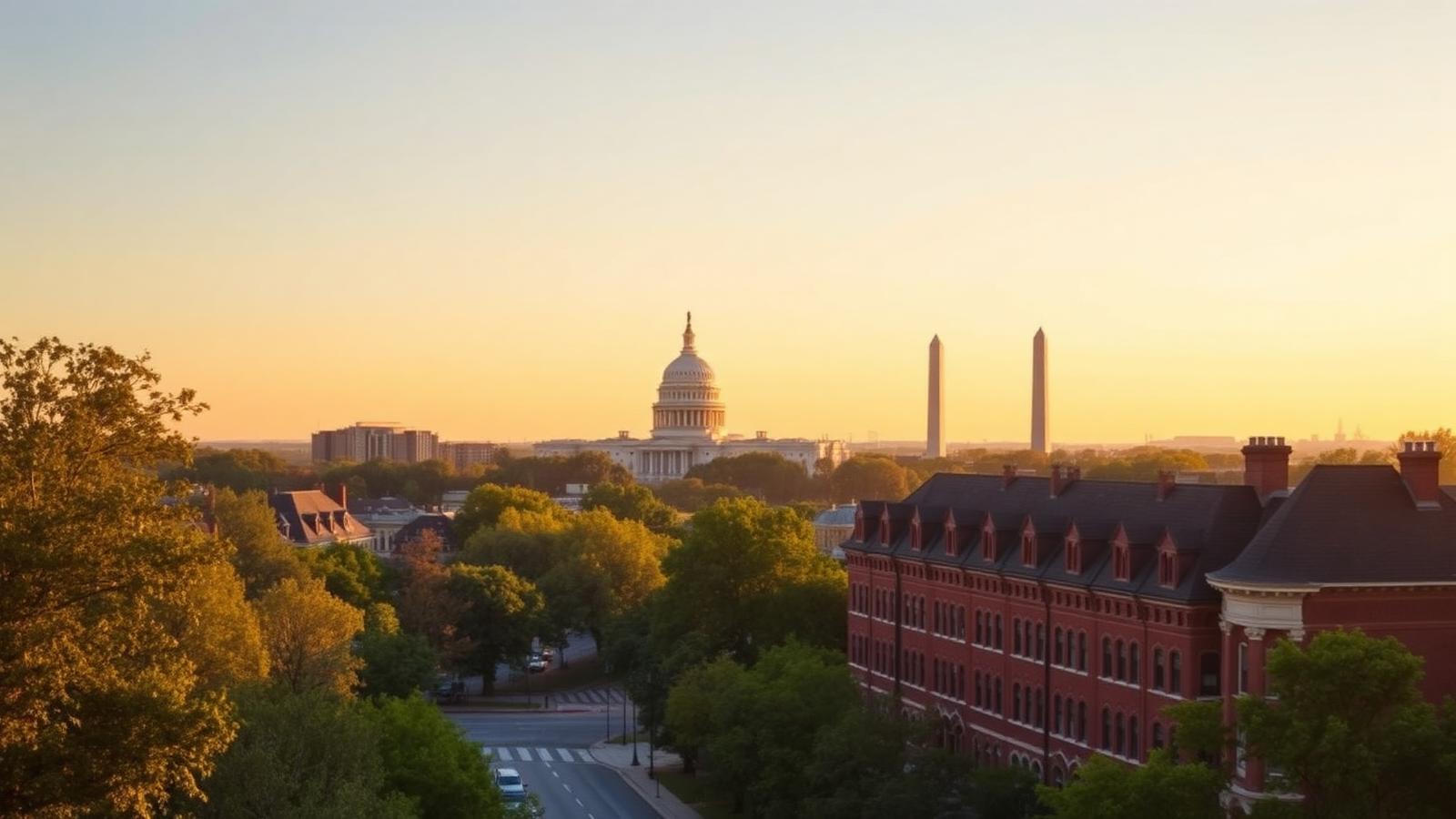
Washington, DC skyline at dusk with the Washington Monument silhouette above the Potomac
    Washington, DC

    Pest Control Software Built for Washington, DC Operators

    One dense city, one height limit, and a rat problem the District government tracks block by block. We build the systems that keep DC crews answering, quoting, and closing without a wasted call.

    Typical District of Columbia implementation goes live in about 30-60 days.

    Calls answered and booked
    24/7Calls answered and booked
    Software integrations available
    1,000+Software integrations available
    Bilingual intake by default
    EN + ESBilingual intake by default
    Typical time to live
    30-60 daysTypical time to live

    The District is a single, tightly bounded market rather than a metro of suburbs, but it behaves like several cities stacked on top of each other. Capitol Hill, Shaw, Petworth, and Columbia Heights carry blocks of attached rowhouses where a rat colony or a roach infestation moves through shared party walls and back alleys instead of stopping at a lot line. Georgetown and Dupont Circle add historic-district renovation work and dense restaurant rows. Navy Yard and NoMa are newer high-rise construction with commercial kitchens and structured parking. Anacostia and the rest of Wards 7 and 8 east of the river have their own housing stock, service gaps, and call patterns. Every one of these submarkets reports into the same DC Department of Energy and Environment (DOEE) rodent and pesticide framework, so licensing and inspection expectations are consistent even when the buildings are not.

    What makes a DC operation different

    A federal city built on rowhouses and alleys creates rat, bed bug, and access problems that suburban playbooks do not solve. The operators who win here treat shared walls and shared trash the way they treat any other job requirement.

    Norway rats move through shared party walls

    Attached rowhouse construction across Capitol Hill, Shaw, and Petworth means a burrow in one basement or a gap in one foundation can feed rat activity in three or four connected units, so a single-address treatment plan without notifying neighbors rarely holds.

    Alley trash collection drives the District’s rodent abatement program

    DC’s alley-based trash system concentrates food waste behind rows of houses, and DOEE runs baiting, inspection, and abatement zones around chronic alley complaints, so operators who can document alley conditions and coordinate with property managers win more repeat inspection work.

    Rental turnover feeds a constant bed bug caseload

    Dense apartment and rowhouse-conversion rental stock across Columbia Heights, Adams Morgan, and Petworth turns over often, and a bed bug report from one unit needs fast inspection of adjoining units before an infestation spreads through a shared HVAC chase or party wall.

    DOEE pesticide applicator licensing sits on top of every job

    Any commercial application inside the District runs through DOEE’s pesticide operator and applicator certification program, and property managers increasingly ask for license numbers and application records up front, which means intake needs to capture and route that documentation correctly.

    Historic-district and federal-adjacent properties change the job

    Georgetown, Capitol Hill, and other historic districts restrict exterior modifications, and buildings near federal grounds add security and access steps that a standard residential visit does not require, so scheduling has to flag these addresses before a crew is dispatched.

    The systems we build around a DC operation

    We are an implementation partner, not another dashboard for your CSRs to learn. Here is what gets built, and why each piece pays here.

    Rowhouse rat complaints answered and cross-referenced instantly

    Voice AI answers every call day or night, captures the block and adjoining-unit detail a rat complaint needs, and books the visit, so a Shaw rowhouse call at 9pm does not sit until morning while the burrow keeps growing.

    See Voice AI

    Property managers handled in writing across the rental stock

    Messaging AI runs SMS, email, webchat, and social in one thread, so a Columbia Heights building manager reporting a bed bug unit or an Anacostia landlord chasing an inspection date gets a written confirmation instead of a callback queue.

    See Messaging AI

    Recurring rodent contracts and DOEE follow-up stay on track

    The AI Sales System keeps every abatement job, recurring rowhouse contract, and commercial kitchen account in one pipeline with automated follow-up, so a citywide rat abatement push does not get lost once the initial wave of calls slows down.

    See the AI Sales System

    Mail that targets the block, not a random radius

    PestMail reads your route data and mails the households around every confirmed rat or bed bug job, which on a rowhouse block means reaching the exact three or four adjoining addresses most likely to need the same treatment.

    See PestMail

    Best pest control setups for the calls DC operators actually get

    These are the species and situations driving Washington, DC phone volume, and how intake, routing, and follow-up should be configured for each.

    Norway rats in rowhouse alleys

    What is the best pest control setup for rat calls in Washington, DC?

    DC rat calls should be booked with the address, the block, and whether the complaint is coming from the alley or the interior, because Norway rat colonies in rowhouse blocks typically span several connected properties and a single-unit treatment without alley baiting rarely resolves the complaint. Intake should ask whether the caller has already filed a report with DOEE, since a District abatement zone may already be active on that block.

    • Capture block and alley detail, not just the street address.
    • Ask whether DOEE has an active abatement effort on that block.
    • Offer adjoining units the same inspection before closing the file.
    Bed bugs in rental apartments

    How should DC pest control companies handle bed bug calls in apartment buildings?

    Bed bug reports in DC apartment and rowhouse-conversion buildings should trigger an offer to inspect adjoining and vertically stacked units at intake, because shared walls and HVAC chases let an infestation spread before a single unit shows visible signs. Building managers should be looped in immediately since most DC leases require landlord notification.

    • Offer adjoining and stacked-unit inspection at first contact.
    • Notify the property manager on the same call when one is on file.
    • Schedule the follow-up treatment before leaving the first visit.
    Commercial kitchens near Navy Yard and NoMa

    What is the best pest control program for DC restaurant and commercial kitchen accounts?

    Commercial kitchen accounts near Navy Yard, NoMa, and the H Street corridor should run on a documented recurring schedule with DOEE-licensed applicator records attached to every visit, because health inspectors and building management routinely ask for that paperwork and a missed visit can affect a restaurant’s own inspection score.

    • Attach applicator license and treatment records to every visit.
    • Flag recurring commercial stops so they never get bumped by residential overflow.
    • Confirm access hours around kitchen service, not general business hours.
    Historic-district exterior work

    How should companies handle pest jobs in Georgetown and Capitol Hill historic districts?

    Jobs at historic-district addresses in Georgetown and Capitol Hill should be flagged at intake so crews know exterior modifications, bait station placement, and any structural exclusion work may need approaches that respect historic preservation rules, avoiding a callback after unapproved exterior changes.

    • Flag historic-district addresses before dispatch.
    • Note any exterior placement restrictions on the property record.
    • Route exclusion work that alters facades to a technician familiar with the district.
    German cockroaches in dense rentals

    What is the best pest control setup for roach calls in DC rental buildings?

    German cockroach calls in DC’s dense rental buildings should be scheduled as a multi-visit program from the first call rather than a single treatment, because roach populations moving through shared walls and utility penetrations in Columbia Heights and Petworth apartment stock typically need two to three follow-up visits to break the cycle.

    • Set expectations for a multi-visit program at booking, not after the first visit.
    • Ask about adjoining unit activity at intake.
    • Auto-schedule the follow-up visit instead of waiting for a callback.
    East of the River service gaps

    How should DC companies handle calls from Wards 7 and 8?

    Calls from Anacostia and the rest of Wards 7 and 8 should be answered and booked with the same speed as calls from any other ward, because service gaps east of the river are a known concern and a company that answers live, quotes clearly, and shows up builds loyalty faster in a market that gets fewer competing bids.

    • Answer live regardless of which ward the call comes from.
    • Quote clearly from the price book without special-casing the address.
    • Track fulfillment rate by ward to catch any drop-off in service.
    Federal-adjacent and secured properties

    What is the best way to schedule pest jobs near federal buildings in DC?

    Jobs near the Capitol grounds, federal buildings, or embassies should capture security clearance and ID requirements at intake, because crews arriving without the right documentation lose the appointment window entirely and these addresses cannot be treated like a standard residential stop.

    • Capture ID and security clearance requirements before the visit.
    • Confirm access windows well ahead of the appointment.
    • Assign technicians who already hold any required clearance.

    Every one of these is a configuration decision, not a feature you have to build. We set the intake, routing, and follow-up up for your District of Columbia branches.

    Book a Discovery Call
    District of Columbia markets

    Washington, DC city guide

    A deeper write-up for the District’s neighborhoods and wards — local pest pressure, the buildings that drive volume, and the systems we build around them.

    Not in one of those markets? We build for District of Columbia operators statewide — the city guides are just where we have written things down so far.

    Book a Discovery Call
    Free PDF

    Download the District of Columbia Pest Control Guide

    The full District of Columbia playbook in one printable PDF — seasonality, intake, routing, and the systems we build for operators here. Share it with your office team.

    • What makes running a District of Columbia pest control operation different
    • Intake and routing setups for the calls that actually pay
    • Answers to the questions operators ask before they automate
    • Links to every District of Columbia city guide we publish

    Loading the District of Columbia guide form

    District of Columbia AI guides

    State-level guides written for the climate, pest pressure, and business patterns across District of Columbia.

    District of Columbia overview

    Wards and neighborhoods we support operators in

    We work with companies serving rowhouse blocks, high-rise corridors, and commercial kitchens across all eight wards.

    • Capitol Hill & Eastern Market
    • Georgetown & Burleith
    • Dupont Circle & Logan Circle
    • Shaw & U Street
    • Columbia Heights & Petworth
    • Adams Morgan & Mount Pleasant
    • Navy Yard & Southwest Waterfront
    • NoMa & Union Market
    • Anacostia & Wards 7-8

    Connected to the software you already run

    We have a deep, purpose-built FieldRoutes integration, and over 1,000 API connections available for everything else — so your District of Columbia operation keeps one source of truth instead of four.

    All third-party product names, logos, and brands are property of their respective owners. Use of these names does not imply endorsement or affiliation.

    Washington, DC pest control software questions

    Written and reviewed by the Pest AI team · Last reviewed

    Let us look at your DC call numbers

    Bring your call volume, your booking rate, and how many rat or bed bug complaints turned into a multi-unit job last quarter. We will show you where the leaks are and what we would build first.

    Book a Discovery Call

    Stay Ahead with AI-Powered Pest Control Insights

    Join pest control operators getting crucial tips on AI, automation & growth.